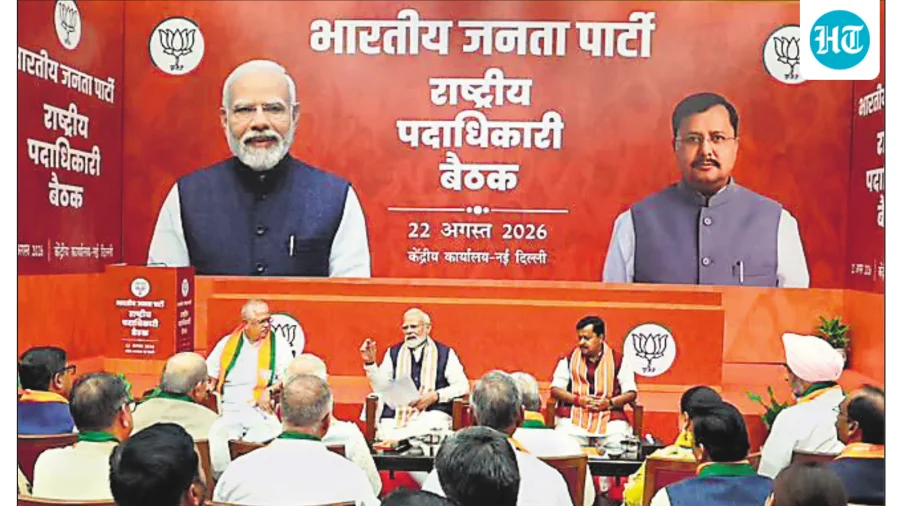
The BJP has drawn a fresh political line in the sand. By passing a resolution on Vande Mataram, the party has directly accused Congress of playing "vote-bank politics" — and announced a nationwide campaign built around the song's six stanzas. The message is clear: national identity is now a political battleground, and the BJP intends to own it.
What the BJP's Vande Mataram resolution actually says
The resolution, passed at a party meeting, goes beyond a simple tribute. It frames Vande Mataram as a symbol of national pride that Congress allegedly failed to honour. The BJP's core charge is that Congress, in pursuit of minority votes, distanced itself from the song's full legacy.
The party has now committed to a nationwide campaign to spread the history, meaning, and national significance of Vande Mataram. This is not just a statement — it is an organisational directive with ground-level execution planned across states.
Why the focus on all six stanzas matters
Most Indians are familiar with the first two stanzas of Vande Mataram, which are commonly sung at public events. The BJP's emphasis on all six stanzas is deliberate. It signals a push for a more complete understanding of the song's origins, written by Bankim Chandra Chatterjee, and its role in the freedom struggle.
By highlighting the full text, the BJP is also making a cultural claim — that the song's complete form deserves national reverence, not just a ceremonial rendition.
The 'vote-bank politics' charge explained
The accusation against Congress is specific: that it treated Vande Mataram with caution to avoid alienating certain communities. The BJP's resolution rejects this approach outright, arguing that national symbols should not be subject to political calculation.
This is a familiar ideological fault line. Congress has historically navigated the space between national symbolism and minority outreach. The BJP's resolution seeks to paint that balancing act as a betrayal of national pride.
How this affects ordinary citizens
For the average Indian, this resolution may translate into more visible celebrations of Vande Mataram — in schools, public events, and party programmes. It also reignites a broader conversation about how national symbols are used in political messaging.
Citizens may find themselves drawn into a debate that is as much about history as it is about electoral strategy. The emotional weight of Vande Mataram makes it a powerful tool for mobilisation.
Official response and political reaction
The BJP has framed the resolution as a corrective measure, arguing that Congress failed to give Vande Mataram its due respect. The party's leadership is expected to amplify this message in upcoming rallies and media appearances.
Congress has not yet issued a detailed public response to the specific resolution. However, given the history of such exchanges, a counter-narrative is likely to emerge, possibly focusing on the BJP's own record on secularism and minority relations.
What this means for the political landscape
This resolution is not an isolated event. It fits into a broader pattern of the BJP consolidating a nationalist narrative ahead of elections. By tying Congress to "vote-bank politics," the party is attempting to define the terms of political debate.
Analysts suggest this could energise the BJP's core base while putting Congress on the defensive. The campaign around the six stanzas gives the party a cultural mission that extends beyond electoral arithmetic.
Confirmed facts vs what remains unclear
Verified: The BJP has passed a resolution on Vande Mataram and announced a nationwide campaign to spread its history and significance. The resolution criticises Congress over "vote-bank politics."
Unclear: The specific wording of the resolution beyond the headline points has not been fully detailed. The exact timeline and scale of the campaign are yet to be announced. Congress's formal response is still pending.
The ideological battle over national symbols
Vande Mataram has always been more than a song. It was a rallying cry during the freedom movement and remains a marker of national identity. The BJP's resolution taps into this legacy, positioning itself as the guardian of that heritage.
Critics may argue that this is a selective reading of history, but the political impact is undeniable. The song's emotional resonance gives the campaign a reach that policy debates often lack.
Risks and balanced view
The BJP's strategy carries risks. Overemphasising a cultural symbol could alienate moderate voters who see it as divisive. There is also the question of whether the campaign will be seen as genuine patriotism or electoral opportunism.
Supporters, however, view this as a necessary correction. They argue that Congress's approach to Vande Mataram has been inconsistent and that the BJP is simply restoring its rightful place in national life.
A wider pattern in Indian politics
This resolution is part of a larger trend where cultural and historical symbols are increasingly central to political messaging. From temple movements to national song debates, identity politics is reshaping electoral discourse.
The BJP's campaign may set a precedent for how other parties engage with national symbols. It also raises questions about the role of cultural nationalism in a diverse democracy.
What readers should watch for next
Citizens should monitor how the campaign unfolds — whether it remains a symbolic exercise or translates into sustained ground-level activity. The response from Congress and other opposition parties will also be telling.
For those interested in the historical dimension, reading the full six stanzas of Vande Mataram and understanding their context would provide a more informed perspective on the debate.
Future outlook
The BJP is likely to integrate the Vande Mataram campaign into its broader election strategy. Expect more resolutions, public events, and social media pushes around the song's history and meaning.
The opposition's counter-strategy will determine whether this becomes a defining issue or fades into the background. What is certain is that Vande Mataram will remain a potent symbol in Indian political life.
Our Take
This resolution is a calculated political move wrapped in cultural patriotism. It forces Congress into a difficult position — defending its record without appearing unpatriotic. The focus on all six stanzas adds depth to the campaign, making it more than a slogan.
The real test will be whether the BJP can sustain this as a positive, unifying message rather than a divisive one. For now, the party has successfully placed Vande Mataram at the centre of the national conversation.
Frequently Asked Questions
What is the BJP's Vande Mataram resolution about?
The BJP passed a resolution accusing Congress of "vote-bank politics" over Vande Mataram and announced a nationwide campaign to spread the song's history, meaning, and national significance, including all six stanzas.
Why is the BJP focusing on all six stanzas of Vande Mataram?
Most people only sing the first two stanzas. The BJP wants to highlight the complete song, written by Bankim Chandra Chatterjee, to deepen public understanding of its role in the freedom struggle and national identity.
What does 'vote-bank politics' mean in this context?
The BJP is accusing Congress of avoiding full-throated support for Vande Mataram to avoid alienating minority communities. The BJP argues national symbols should not be subject to such political calculation.
How will the Vande Mataram campaign affect ordinary citizens?
The campaign may lead to more public celebrations and educational programmes about the song. It also reignites a national debate about cultural identity and political messaging, which citizens will encounter in media and public discourse.