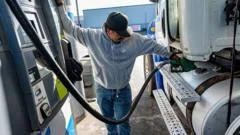
American drivers could see relief at the pump. European truckers, farmers, and households could see the opposite. President Donald Trump's threat to ban diesel exports has turned a domestic election-season promise into a live risk for the continent that buys more US diesel than anyone else.
What Trump Actually Said — And What It Would Mean
According to the original report, Trump has threatened to ban diesel exports as a way to ease fuel prices inside the United States ahead of the November elections. The logic is simple: keep more American-made diesel at home, and domestic prices should fall.
No formal order, rule, or regulatory filing has been confirmed. At this stage, it is a political threat — but in fuel markets, threats move prices before policy does.
Why Europe Is Watching This So Closely
Europe has become one of the largest buyers of US diesel and distillate fuel in recent years. When European refineries closed or scaled back, the continent leaned harder on imports — and American Gulf Coast exporters filled much of that gap.
That dependence means any restriction on US exports does not stay an American story. It becomes a European cost-of-living story.
How the Transatlantic Diesel Trade Grew This Large
Over the past decade, Europe's refining capacity shrank while its demand for diesel — for trucks, tractors, generators, and heating — held steady. The United States, meanwhile, became a structural exporter of distillates.
The result is a trade that runs quietly in the background of daily life, until someone threatens to switch it off.
Who Pays If the Tap Tightens
Diesel is not a luxury fuel. It moves freight, harvests crops, powers backup generators, and heats homes in parts of Europe. A supply squeeze would hit logistics companies, farmers, and consumers already stretched by years of energy volatility.
In the US, the intended beneficiaries are drivers and small businesses facing pump prices that remain politically sensitive.
No Official Confirmation — What We Know and Don't
What is confirmed: the threat was made publicly, and it is tied to the November elections. What is not confirmed: any executive action, export licence change, or timeline.
Analysts and traders will treat this as a signal until paperwork appears. Readers should treat any claim of an imminent ban as unverified.
Why This Is Harder to Do Than It Sounds
The US exports diesel through commercial contracts, pipeline and port infrastructure, and global pricing benchmarks. A sudden ban would disrupt those arrangements, invite legal challenges, and could push up prices in allied markets — including Europe.
It could also invite reciprocal pressure from trading partners, which is why past administrations have preferred targeted measures over blanket bans.
Risks and the Balanced View
Supporters of an export restriction argue that American fuel should serve American drivers first, especially in an election year. Critics warn that export bans distort markets, damage the credibility of US suppliers, and can backfire by reducing refinery output.
Both arguments are live. Neither has been settled by policy yet.
A Pattern, Not an Isolated Threat
This is part of a broader shift: energy is increasingly being used as a domestic political tool. From sanctions to export controls, fuel flows are now shaped as much by elections and geopolitics as by supply and demand.
Europe has been on the receiving end of that shift before — and is likely preparing for it again.
What Readers Should Do Now
European businesses that depend on diesel should review supply contracts and consider contingency sourcing. Investors should watch distillate futures and shipping data rather than headlines. US drivers should treat the threat as a possibility, not a policy.
For households, the practical advice is unchanged: energy costs remain volatile, and budgeting for that volatility is sensible.
What Could Happen Next
If the threat becomes policy, expect immediate market reaction, European diplomatic pushback, and possible emergency measures in Brussels. If it remains rhetoric, expect prices to settle — but the underlying vulnerability in Europe's diesel supply will not disappear.
Our Take
This story matters less for what has been done and more for what it reveals: Europe's energy security still leans on decisions made in Washington, sometimes for reasons that have nothing to do with Europe. That is the real headline — and it will outlast the November elections.
Frequently Asked Questions
Has Trump actually banned US diesel exports?
No. As of now, it is a threat, not a confirmed policy. No executive order or regulatory change has been verified.
Why does Europe depend on US diesel?
Because European refining capacity has declined while diesel demand for transport, farming, and heating has remained steady, making imports — especially from the US — essential.
What would a ban do to prices?
It could lower US domestic prices in the short term but tighten global supply, likely raising costs in Europe and other importing regions.
Should consumers in Europe worry right now?
Not immediately. But businesses and households should treat diesel supply as a risk factor heading into winter and the election period.