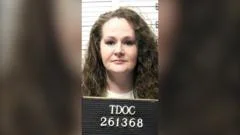
An execution that was supposed to end a life instead ended in a hospital emergency. Christa Pike, a death row inmate in the United States, survived two lethal injections and was taken to hospital, according to her lawyer. The lawyer says she is now being "provided life-saving measures" — a phrase that turns a routine legal procedure into a story about what happens when the state's most final act does not go as planned.
What We Know About the Christa Pike Case
According to her lawyer, Pike was administered two syringes of pentobarbital — a barbiturate commonly used in lethal injections in the United States. She survived both. The lawyer's statement says she was then taken to hospital and is receiving life-saving care. No independent official confirmation of her current medical condition was available at the time of writing, and details about the exact sequence of events remain limited.
Why a Failed Execution Is Legally and Ethically Complicated
When an execution does not result in death, it creates a legal grey zone. Courts, prison authorities, and medical teams must decide whether to attempt the procedure again, halt it, or treat the inmate as a patient. For the person on the gurney, the experience can be traumatic — and for the public, it raises uncomfortable questions about whether the method itself is reliable or humane.
How Lethal Injection Protocols Are Supposed to Work
Lethal injection typically involves a sequence of drugs intended to sedate, paralyse, and stop the heart. Pentobarbital, when administered in a sufficient dose, is meant to cause respiratory arrest and death. When a prisoner survives, it usually points to problems with dosage, administration, or the prisoner's physiology. Each of those possibilities carries its own legal and medical implications.
Who Is Affected — and Why It Matters Beyond One Case
Pike's case is not just about one inmate. It touches her family, the victims' families, the prison staff involved, and the wider debate over capital punishment. Every failed execution becomes evidence in the argument that the death penalty is prone to error — and that error, when it happens, is irreversible in its consequences even if the prisoner lives.
What Her Lawyer Has Said — and What Remains Unconfirmed
The lawyer's statement is the primary source of information so far. It describes Pike as having survived two injections and now receiving life-saving measures. What is not yet confirmed: her exact medical condition, whether the execution has been formally halted, and what legal steps will follow. These are the questions that will shape the next phase of the story.
Confirmed Facts vs What Remains Unclear
Confirmed: Pike's lawyer says she survived two lethal injections and was taken to hospital. Reported but not independently verified: the specific drug used (pentobarbital) and the number of syringes. Unclear: her current health status, the official response from prison authorities, and whether a new execution date will be sought. Readers should treat the lawyer's account as a claim, not a final official record.
Risks and Balanced View — The Case Against and For the Death Penalty
Supporters of capital punishment argue that it delivers justice for heinous crimes and that botched executions are rare. Critics say cases like this expose a system that is inconsistent, opaque, and sometimes cruel — even to those convicted of terrible acts. Both sides will watch how authorities respond. The risk here is not just legal; it is a crisis of public confidence in how the state carries out its most serious punishment.
The Wider Pattern: When Executions Go Wrong
This is not the first time an execution has failed to proceed as intended. Across the United States, several states have faced similar situations, leading to moratoriums, investigations, and changes in protocol. Each incident adds pressure on lawmakers and courts to re-examine how lethal injection is regulated — and whether the method can ever be considered fully reliable.
What Happens Next — Practical and Legal Steps
Pike's legal team is likely to seek a stay or further review. Prison authorities may be required to explain what happened. A court could order an independent medical assessment. For now, the immediate priority is her medical condition. The longer-term question is whether this case becomes a turning point in the debate over capital punishment — or another entry in a long list of contested executions.
Our Take
This story is not about whether Christa Pike deserves punishment — that was decided by a court. It is about whether the machinery of that punishment works as intended. When an execution fails, it forces everyone — courts, doctors, prison officials, and the public — to confront the gap between the law's intent and its reality. That gap is where the most difficult questions live.
Frequently Asked Questions
What happened to Christa Pike?
According to her lawyer, Pike survived two lethal injections of pentobarbital and was taken to hospital, where she is receiving life-saving measures.
What is pentobarbital?
Pentobarbital is a barbiturate used in lethal injections in some US states. In high doses, it is intended to stop breathing and cause death.
Can an execution be carried out again after it fails?
It depends on the jurisdiction and the courts. Some states have attempted second executions; others have halted them after legal challenges. The law is not uniform.
Why does this case matter?
It raises questions about the reliability and humanity of lethal injection, and it adds to the broader debate over whether the death penalty can be administered without error.