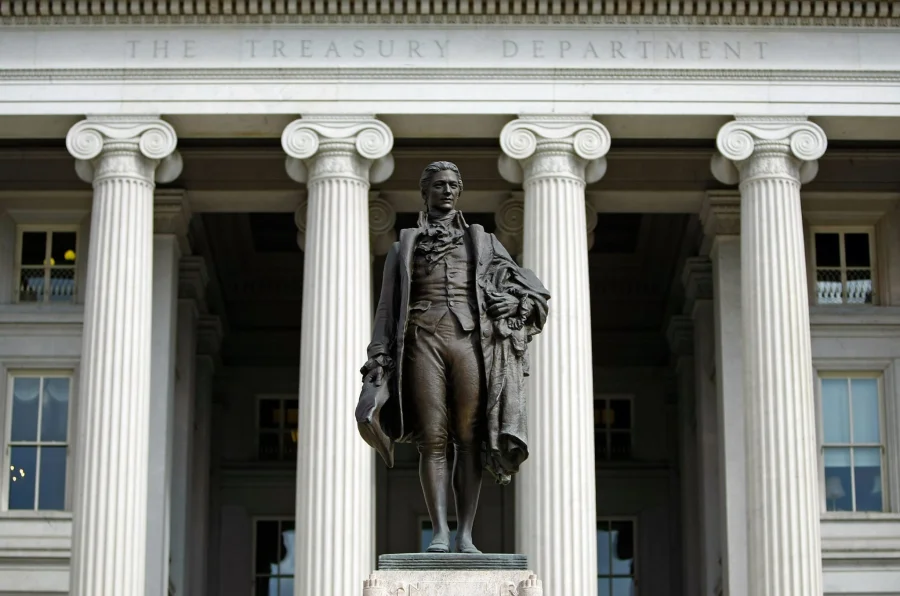
Every Fourth of July, Americans celebrate the Declaration of Independence—the bold political break from Britain. But 250 years later, a quieter, more consequential revolution is playing out in the bond market. The same national debt that once funded the birth of a superpower now threatens to consume it.
The 1790 Gamble That Built a Nation
When Alexander Hamilton became the first Treasury Secretary in 1789, the United States was a financial wreck. The Revolutionary War had left the federal government and states saddled with $75 million in debt—a staggering sum for a fledgling nation with no credit history. Foreign lenders, including France and the Netherlands, were skeptical. Domestic creditors, many of them war veterans, held worthless paper.
Hamilton proposed a radical solution: the federal government would assume all state debts and issue new bonds to replace them. Critics, including Thomas Jefferson, called it a power grab that would enrich speculators. But Hamilton saw debt differently—as a tool to bind the states together, create a liquid capital market, and establish American creditworthiness abroad.
Why Debt Was Once a Source of Strength
Hamilton’s plan worked because he understood a fundamental truth: debt, when managed wisely, unlocks resources. The new bonds gave investors a safe, liquid asset. Foreign capital flowed in. The Bank of the United States, chartered in 1791, used these bonds as reserves to issue currency and extend credit. Within a decade, American shipping, manufacturing, and trade boomed. The debt wasn’t a burden—it was the engine of growth.
For ordinary Americans, this meant jobs in new ports and factories, roads and canals funded by federal investment, and a currency that held its value. The debt was a promise—and the government kept it.
How the Sword of Damocles Replaced the Masterstroke
Fast forward to 2025. The U.S. national debt has ballooned to over $35 trillion. Interest payments alone now exceed $1 trillion annually—more than the entire federal budget in 1990. The bond market, once a source of stability, has become a source of anxiety. Every time the Treasury auctions new debt, investors demand higher yields, which in turn increases borrowing costs for the government, businesses, and homeowners.
The difference between 1790 and today is stark. Hamilton’s debt was productive—it built infrastructure, funded a navy, and created a national market. Today’s debt largely funds entitlement programs, defense, and interest on past borrowing. The return on investment is far lower.
Who Feels the Pinch: Real People, Real Consequences
This isn’t an abstract Wall Street problem. When the government spends more on interest than on education, infrastructure, or healthcare, ordinary Americans pay the price. Mortgage rates stay higher because Treasury yields set the floor for borrowing costs. Small businesses face tighter credit. Social Security and Medicare face cuts as debt service crowds out spending. Young people entering the workforce inherit a fiscal burden that limits their economic opportunities.
In 2024, the U.S. spent more on net interest than on Medicaid. By 2026, interest could surpass defense spending. That means fewer dollars for roads, bridges, research, and climate resilience—things that directly affect quality of life.
What the Treasury and Policymakers Are Saying
The Congressional Budget Office has repeatedly warned that the current fiscal path is unsustainable. Treasury Secretary Janet Yellen has called for a “balanced approach” of tax increases and spending cuts, but political gridlock has prevented any serious action. The Federal Reserve, meanwhile, faces a dilemma: raising rates to fight inflation makes debt service more expensive, while cutting rates risks reigniting inflation.
“We are in uncharted territory,” former Treasury Secretary Lawrence Summers said in a 2024 interview. “The combination of high debt, high interest rates, and low productivity growth is historically unprecedented.”
The Deeper Meaning: What Hamilton’s Legacy Teaches Us
Hamilton’s genius was not just in assuming debt—it was in creating institutions that made debt productive. The Treasury, the bond market, the banking system—all were designed to channel borrowed money into growth. Today, those same institutions are strained. The bond market, once a passive financier of government, has become an active disciplinarian. When investors lose confidence, yields spike, and the government’s borrowing costs rise instantly.
The lesson is not that debt is bad—it’s that debt without a growth strategy is dangerous. Hamilton used debt to build a nation. Modern policymakers have used it to avoid hard choices.
Confirmed Facts vs What Remains Unclear
Confirmed: Hamilton’s 1790 debt assumption plan was approved by Congress and successfully consolidated state debts into federal bonds. The U.S. national debt exceeded $35 trillion in 2024. Interest payments surpassed $1 trillion annually in fiscal year 2024. The CBO projects debt-to-GDP will reach 116% by 2034.
Unclear: Whether a fiscal crisis is imminent or decades away. Economists disagree on the “tipping point” for debt sustainability. The impact of AI and productivity gains on future growth is uncertain. Political will for reform remains unknown.
Why the U.S. Bond Market Still Matters—And Why It’s Fragile
The U.S. Treasury market is the deepest and most liquid in the world, serving as the benchmark for global finance. Foreign governments, pension funds, and central banks hold trillions in U.S. debt. This “exorbitant privilege” allows the U.S. to borrow at lower rates than other countries. But that privilege is not guaranteed. In 2023, credit rating agency Fitch downgraded U.S. debt from AAA to AA+, citing “erosion of governance.” Moody’s followed with a negative outlook in 2024.
If foreign buyers—especially China and Japan—reduce their holdings, yields could spike, triggering a crisis. So far, demand has remained steady, but the risk is real.
Risks and Balanced View: The Bull and Bear Cases
Bull case: The U.S. economy remains the world’s largest and most dynamic. The dollar is still the global reserve currency. Debt is manageable as long as growth exceeds interest rates. AI and energy independence could boost productivity and revenues.
Bear case: Entitlement spending is growing faster than the economy. Interest rates are unlikely to return to near-zero levels. Political dysfunction prevents reform. A sudden loss of confidence could trigger a debt spiral, as seen in Greece or the UK in 2022.
Most economists fall somewhere in between, warning that the longer action is delayed, the more painful the adjustment will be.
The Wider Pattern: Debt Crises Across History
The U.S. is not alone. Japan’s debt-to-GDP ratio exceeds 250%, but it borrows mostly from its own citizens. The Eurozone crisis of 2010–2012 showed how quickly bond markets can turn on sovereign borrowers. Emerging markets like Argentina and Lebanon have defaulted repeatedly. The common thread: debt becomes a crisis when growth stalls, confidence erodes, or political will collapses.
The U.S. has never defaulted on its debt, but the 2011 debt ceiling standoff caused a credit rating downgrade and market turmoil. The 2023 near-default over the debt ceiling was another warning.
What You Should Know and Do
For individual investors: diversify portfolios beyond U.S. Treasuries. Consider inflation-protected securities (TIPS) and foreign bonds. For homeowners: lock in fixed-rate mortgages while rates are still below historical peaks. For voters: pay attention to candidates’ fiscal plans. The next president and Congress will face critical decisions on taxes, spending, and debt.
For students and young professionals: understand that the debt will shape your economic future—through interest rates, job opportunities, and the social safety net. Financial literacy is no longer optional.
What Could Happen Next
Three scenarios are plausible: 1) Gradual adjustment—tax increases and spending cuts phased in over a decade, stabilizing debt. 2) Crisis-driven reform—a bond market panic forces emergency action, as in 2008. 3) Inflationary erosion—the Fed allows higher inflation to reduce the real value of debt, hurting savers and retirees.
None are painless. But the longer policymakers wait, the more severe the medicine will be.
Our Take
The story of U.S. debt is a story of two centuries. Hamilton saw debt as a tool of national ambition. Today, it has become a symbol of political paralysis. The irony is that the same bond market Hamilton created to build the nation now holds it hostage. The solution is not to eliminate debt—that’s impossible and unnecessary—but to make it productive again. That means investing in growth: infrastructure, education, research, and energy. It means reforming entitlements before they crowd out everything else. And it means rebuilding the political consensus that made Hamilton’s plan possible. The 250th anniversary of independence is a fitting moment to remember that debt, like freedom, requires responsibility.
Frequently Asked Questions
What was Alexander Hamilton’s debt plan in 1790?
Hamilton proposed that the federal government assume all state debts from the Revolutionary War and issue new bonds to replace them. This created a unified national debt, established U.S. creditworthiness, and laid the foundation for a modern financial system.
How did U.S. debt help build the American economy?
The bonds issued under Hamilton’s plan gave investors a safe asset, attracted foreign capital, and provided reserves for the Bank of the United States to issue currency and credit. This funded infrastructure, trade, and manufacturing, turning the U.S. into an economic power.
Why is U.S. debt considered a crisis today?
At over $35 trillion, debt service costs exceed $1 trillion annually, crowding out spending on education, infrastructure, and defense. Rising interest rates make borrowing more expensive, and political gridlock prevents reform. The debt-to-GDP ratio is at historic highs outside wartime.
Could the U.S. default on its debt?
The U.S. has never defaulted, but the risk has increased due to political brinkmanship over the debt ceiling. A default would trigger a global financial crisis. Most experts believe Congress will eventually raise the ceiling, but the uncertainty itself is damaging.