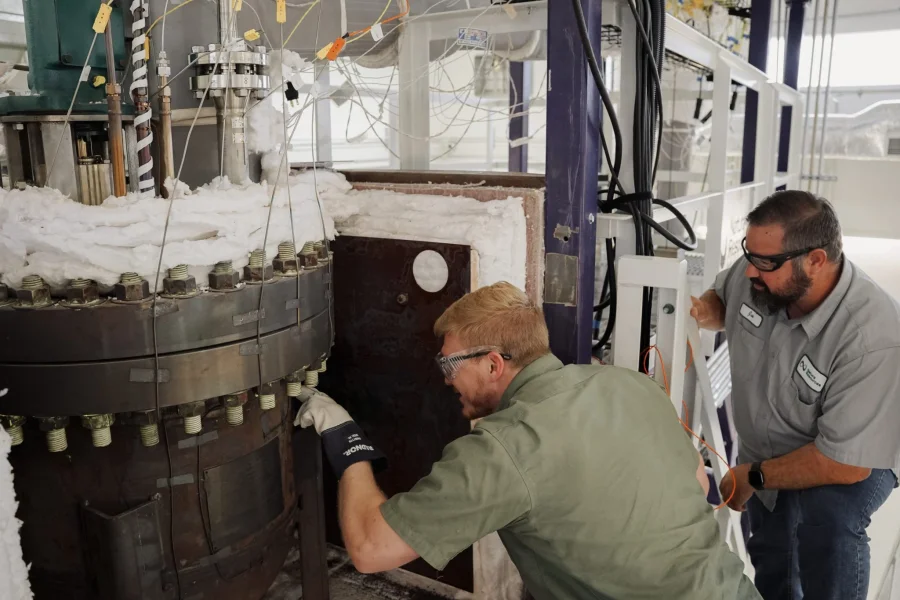
Nearly a decade ago, third-generation Texas oilman Doug Robison was plotting his retirement and the sale of his petroleum company. Then a trip to his children’s alma mater, Abilene Christian University, changed his career trajectory—at an atomic level.
The moment that rewired a retirement plan
Robison heard a brief talk from Rusty Towell, director of the school’s Nuclear Energy Experimental Testing lab (NEXT), on the potential of next-generation, molten-salt nuclear reactors for affordable power to lift much of the world out of poverty. Robison was sold. “I met him in the back of the room and said, ‘What would you do if you’re fully funded?’ I asked him three times, and he wasn’t ready for the question.” Two weeks later, Towell offered Robison a rough plan. “I said, ‘You’re funded. Let’s go.’”
Why a Christian college became the unlikely epicenter
Abilene Christian University, a small private Christian institution in West Texas, had been quietly running the NEXT lab for years, exploring molten-salt reactor designs that promised safer, cheaper, and more flexible nuclear power than traditional light-water reactors. The university’s faith-based mission to serve the poor aligned with Robison’s vision of bringing electricity to off-grid communities worldwide. “This wasn’t about making money,” Robison later told reporters. “It was about solving a real human problem.”
From organic farming to advanced nuclear
Robison’s $3.2 million investment didn’t go into a new entity. Instead, he redirected his existing organic farming company, Natura Resources, into the nuclear space. The company, originally focused on sustainable agriculture, pivoted to become a leading advanced nuclear startup. The move allowed Robison to leverage existing corporate infrastructure while pursuing a radically different mission. Today, Natura Resources is developing molten-salt reactors designed for off-grid industrial sites, remote communities, and data centers—markets where traditional nuclear plants are too expensive or too large.
How molten-salt reactors differ from conventional nuclear
Unlike conventional reactors that use solid fuel rods and water cooling, molten-salt reactors dissolve nuclear fuel in liquid salt, which acts as both coolant and fuel. This design operates at higher temperatures and lower pressures, reducing the risk of meltdowns and enabling smaller, factory-built units. Proponents argue they are inherently safer, more efficient, and cheaper to build. Critics note that the technology remains unproven at commercial scale, with regulatory hurdles and fuel supply chains still under development.
Who benefits from this technology
Robison’s vision targets the 1.2 billion people worldwide without reliable electricity, as well as industrial users in remote areas—mining operations, oil fields, and data centers—that currently rely on diesel generators. “If we can deliver affordable, carbon-free power to a village in Africa or a factory in West Texas, we’ve done something meaningful,” Robison said. The reactors are designed to be truck-transportable and operate for years without refueling.
Official response and expert views
Dr. Rusty Towell, who leads the NEXT lab, initially struggled to believe Robison’s offer. “I thought it was too good to be true,” Towell recalled. “But Doug was serious. He didn’t want a business plan—he wanted a mission.” The partnership has since attracted attention from the U.S. Department of Energy, which has funded advanced reactor research at Abilene Christian, and from private investors interested in the technology’s commercial potential.
What this means for the nuclear industry
Natura Resources is part of a broader wave of advanced nuclear startups—including TerraPower, NuScale, and Kairos Power—that aim to revive the U.S. nuclear industry with smaller, cheaper reactors. Unlike many competitors, Natura is focused on molten-salt technology and off-grid applications, carving a niche that larger players have largely ignored. Analysts say the company’s university partnership gives it access to research talent and testing facilities that would otherwise cost millions.
Confirmed facts vs what remains unclear
Confirmed: Robison invested $3.2 million into the NEXT lab and redirected his organic farming company into nuclear development. The partnership is ongoing, with Natura Resources actively designing molten-salt reactors. Unclear: The exact timeline for a first commercial reactor, the total funding raised to date, and whether the technology can achieve regulatory approval within a decade. Some details of Robison’s petroleum company sale remain private.
Company moat: Why Natura Resources matters
Natura Resources’ key advantage is its exclusive partnership with Abilene Christian University’s NEXT lab, which provides access to decades of molten-salt research and a dedicated testing facility. The company also benefits from Robison’s deep Texas network—connections in oil, gas, and state government that can accelerate permitting and site selection. Its focus on off-grid, industrial applications avoids direct competition with larger reactor developers targeting the grid.
Risks and balanced view
Molten-salt reactor technology has been studied for decades but never commercialized. Critics point to unresolved challenges: corrosion from hot salt, complex fuel chemistry, and the lack of a regulatory framework for non-traditional designs. The Nuclear Regulatory Commission has yet to license a single advanced reactor. Additionally, the pivot from organic farming raises questions about Natura Resources’ operational experience in nuclear engineering. Supporters counter that the university partnership provides the necessary technical depth.
The wider trend: Oil money meets clean energy
Robison is not alone. A growing number of oil and gas veterans are investing in advanced nuclear, seeing it as a natural extension of their energy expertise. Companies like Oklo, backed by OpenAI’s Sam Altman, and TerraPower, founded by Bill Gates, have attracted significant fossil-fuel-adjacent capital. The trend reflects a broader recognition that decarbonizing the grid requires baseload power that renewables alone cannot provide.
Practical guidance for readers
For investors: Advanced nuclear remains high-risk, high-reward. Natura Resources is privately held, but its progress could signal opportunities in the broader molten-salt reactor space. For students: Abilene Christian University’s NEXT lab offers rare hands-on experience in nuclear engineering at a small college. For policymakers: The story underscores the importance of university-industry partnerships in advancing clean energy technologies.
Future outlook
Natura Resources aims to deploy its first demonstration reactor within the next five to seven years, pending regulatory approval and additional funding. If successful, the company could provide a template for how small colleges and private capital can drive nuclear innovation outside the traditional government-led model. If it fails, the lessons will still inform the next generation of reactor designers.
Our Take
The Doug Robison story is a reminder that transformative energy ideas often come from unexpected places—a Christian college in West Texas, an organic farming company, a retiring oilman. It challenges the assumption that advanced nuclear requires Silicon Valley funding or federal megaprojects. Whether Natura Resources succeeds or not, its model of mission-driven, university-anchored innovation deserves attention. The world needs more such bets.
Frequently Asked Questions
What is a molten-salt nuclear reactor?
A molten-salt reactor uses liquid salt as both coolant and fuel carrier, operating at higher temperatures and lower pressures than conventional reactors. It is designed to be safer, smaller, and potentially cheaper.
How much did Doug Robison invest in the nuclear startup?
Robison invested $3.2 million into Abilene Christian University’s NEXT lab and redirected his organic farming company, Natura Resources, into advanced nuclear development.
Why did an oilman fund a nuclear reactor at a Christian college?
Robison was inspired by a talk on molten-salt reactors’ potential to provide affordable power to poor communities. He saw it as a mission aligned with the university’s values and his own desire to solve a real human problem.
Is Natura Resources a public company?
No, Natura Resources is privately held. Its funding comes from Robison’s personal investment and private capital, with additional support from U.S. Department of Energy research grants.