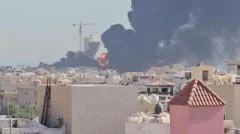
The United States and Iran have traded fire after two US soldiers were killed in a drone attack in Jordan, escalating tensions across the Middle East. The retaliatory strikes have now triggered secondary incidents, including a fire at a power plant in Kuwait and claims from Iran that a nuclear facility was hit.
How the Escalation Unfolded
The chain of events began with a drone attack on a US military outpost in Jordan, near the Syrian border, which killed two American service members and wounded several others. The US blamed Iran-backed militias for the attack, though Tehran denied direct involvement. Within hours, the US launched retaliatory strikes against targets inside Iran, according to Iranian state media.
Iran Says Nuclear Power Plant Hit
Iranian officials reported that US strikes hit an under-construction nuclear power plant in the country's southern region. The facility, which was not yet operational, sustained damage, though no radiation leak has been reported. Iran condemned the strikes as a violation of international law and warned of consequences.
Kuwait Reports Plant Fire After Second Attack
Kuwait confirmed that an electricity and water plant caught fire after what officials described as "the second such attack in two days." The plant, which supplies power and water to parts of the country, was hit by what appeared to be a drone or missile strike. Firefighting teams are working to contain the blaze, and authorities have urged residents to conserve water and electricity.
Who Is Affected and Why It Matters
The exchange of fire has raised fears of a broader regional conflict. For civilians in Kuwait, the plant fire means potential power cuts and water shortages. In Iran, the strike on a nuclear site — even an unfinished one — raises concerns about the safety of nuclear infrastructure. For the US, the loss of two soldiers in Jordan marks a significant escalation in the ongoing shadow war with Iran-backed groups.
Official Responses and Attribution
The US military has not officially confirmed the strikes on Iran's nuclear plant, but Pentagon officials said they had "taken proportionate action" against targets linked to the Jordan attack. Iran's Foreign Ministry called the strikes "a dangerous provocation" and said it reserved the right to respond. Kuwait's government has not publicly blamed any party for the plant fire but has increased security at critical infrastructure.
What This Means for Regional Stability
The tit-for-tat strikes represent a dangerous cycle that could spiral into a wider war. Analysts note that the Jordan attack was the first to kill US soldiers in the region since the Israel-Hamas conflict began, and the US response targeting Iranian territory — rather than just proxy groups — marks a significant shift. The involvement of Kuwait, a key US ally, adds another layer of complexity.
Confirmed Facts vs What Remains Unclear
Confirmed: Two US soldiers killed in Jordan drone attack; US launched retaliatory strikes; Kuwait plant is on fire after an attack; Iran says a nuclear power plant was hit. Unclear: Whether the Kuwait plant fire was directly linked to US-Iran exchanges; the full extent of damage to the Iranian nuclear site; whether any casualties occurred in the strikes; and whether Iran will retaliate further.
Risks and Balanced View
The situation carries significant risks: miscalculation could lead to a direct US-Iran war, drawing in Gulf states and impacting global oil prices. Critics of the US strikes argue they risk escalating the conflict without clear strategic goals. Supporters say the US had to respond forcefully to deter future attacks on its troops. Iran's claim about the nuclear plant may also be a propaganda move to rally domestic support.
Wider Pattern of Drone and Missile Attacks
This exchange is part of a broader pattern of drone and missile attacks across the Middle East since the Israel-Hamas war began. Iran-backed groups in Iraq, Syria, and Yemen have targeted US forces and commercial shipping, while the US has struck militia positions. The Jordan attack and subsequent retaliation represent the most direct US-Iran confrontation in years.
Practical Guidance for Affected People
Residents in Kuwait should follow local authorities' instructions regarding water and electricity conservation. Those in Iran near the affected nuclear site should monitor official safety advisories. Investors should watch for potential oil price volatility. Travelers in the region should check with their embassies for security updates.
Future Outlook
The next 48 hours are critical. Iran may retaliate against US targets in Iraq or Syria, or through proxy attacks on shipping in the Gulf. Diplomatic backchannels — possibly through Oman or Qatar — are reportedly active to de-escalate. The US has warned it will respond again if attacked. A full-scale war remains unlikely but the risk of further escalation is high.
Our Take
This is a dangerous moment. The killing of US soldiers in Jordan forced Washington to respond, but striking Iranian territory — especially a nuclear site — raises the stakes dramatically. Both sides appear to be calibrating their responses to avoid all-out war while still projecting strength. The Kuwait plant fire shows how quickly the conflict can spread to other countries. The coming days will test whether deterrence or escalation wins out.
Frequently Asked Questions
Why did the US and Iran trade fire?
The US launched retaliatory strikes after two American soldiers were killed in a drone attack in Jordan, which Washington blamed on Iran-backed militias. Iran responded by claiming US strikes hit a nuclear power plant.
What happened in Kuwait?
Kuwait reported that an electricity and water plant caught fire after the second such attack in two days. It is unclear who was responsible, but the incident is linked to the broader US-Iran escalation.
Did the US strike an Iranian nuclear power plant?
Iran claims that US strikes hit an under-construction nuclear power plant. The US has not confirmed this, and the facility was not yet operational. No radiation leak has been reported.
What should people in the region do now?
Residents should follow local safety advisories, conserve water and electricity if in affected areas, and monitor official updates. Travelers should check with their embassies for security guidance.