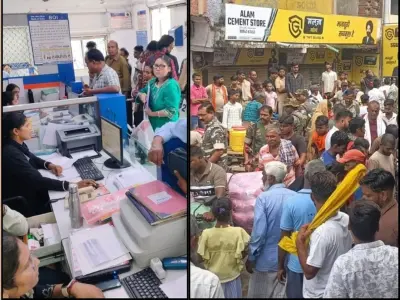
The CBI has arrested two more people in connection with a ₹11.42 crore digital arrest scam in Gujarat — a case that has exposed how fraudsters are using fear, fake uniforms, and video calls to drain life savings from ordinary Indians.
What Exactly Happened in the Gujarat Digital Arrest Case?
According to the CBI, the two new arrests were made after sustained interrogation of earlier suspects. The accused allegedly played key roles in a syndicate that impersonated police and CBI officers to threaten victims with fake legal cases.
Victims were told they were under "digital arrest" — a coercive tactic where fraudsters keep targets on video calls for hours or days, demanding money to "settle" non-existent charges.
Why This ₹11.42 Crore Fraud Matters Beyond Gujarat
Digital arrest scams are no longer isolated incidents. They are a fast-growing organised crime model that exploits fear of law enforcement and lack of digital literacy.
The ₹11.42 crore figure makes this one of the largest such cases in recent memory. It signals that these scams are not petty — they are run like businesses, with callers, fake documents, and mule accounts.
How the Scam Unfolded — A Timeline of Deception
While the CBI has not released a detailed timeline, the pattern is consistent with other digital arrest cases: victims receive a call or message claiming a parcel with illegal items was traced to them.
The call is then transferred to a "police officer" or "CBI official" on video, who shows fake IDs and threatens immediate arrest. Under pressure, victims transfer money to "safe" accounts — which are actually controlled by the fraudsters.
Who Are the Victims — and Why They Fall for It
Most victims are middle-aged or elderly, often retired professionals or homemakers. They are targeted because they are less familiar with cybercrime tactics and more likely to panic when threatened with arrest.
The emotional toll is severe. Many lose not just money but also their sense of safety. Some cases have reported victims suffering heart attacks or severe anxiety during the fake "digital arrest."
CBI's Response and the Larger Crackdown
The CBI has been actively pursuing digital arrest networks across multiple states. In this Gujarat case, the agency has already made several arrests and is now tracing the money trail.
Officials said the investigation is ongoing and more arrests are likely. The CBI is also coordinating with banks and payment gateways to freeze accounts linked to the fraud.
What Makes Digital Arrest Scams So Hard to Stop
These scams operate across borders. The callers may be in Myanmar, Cambodia, or other Southeast Asian countries, while the mule accounts are in India.
That makes jurisdiction a nightmare. Even when low-level operatives are caught, the masterminds often remain out of reach. The CBI's challenge is to dismantle the entire chain — not just the foot soldiers.
Confirmed Facts vs What Remains Unclear
Confirmed: Two more arrests by CBI in the ₹11.42 crore Gujarat digital arrest case. The scam involved impersonation of police and CBI officials.
Unclear: The exact roles of the new accused, their links to international syndicates, and whether any money has been recovered. The CBI has not disclosed these details.
Risks and Balanced View — What Could Go Wrong
While the arrests are a positive step, experts caution that digital arrest scams are evolving faster than law enforcement can adapt. New tactics — AI voice cloning, deepfake video calls — are already emerging.
There is also a risk of over-policing: innocent people may be caught in the net if investigations rely on weak digital evidence. The CBI must balance speed with fairness.
The Bigger Picture: India's Growing Cybercrime Challenge
Digital arrest is part of a broader surge in cyber fraud. According to government data, Indians lost thousands of crores to cybercrime in recent years, with impersonation scams among the fastest-growing categories.
The problem is not just technological — it is psychological. Fraudsters exploit trust in authority. Until public awareness catches up, these scams will continue to find victims.
What You Should Do If You Get a 'Digital Arrest' Call
First, do not panic. No Indian law allows "digital arrest." Police cannot detain you over a video call. If you receive such a call, disconnect immediately.
Report it to the National Cyber Crime Reporting Portal (cybercrime.gov.in) or call 1930. Inform your bank if you have already shared financial details. Time is critical — the faster you act, the better the chance of freezing the money.
What Happens Next in the CBI Probe
The CBI is expected to seek further custody of the two new accused to trace their connections. More arrests are possible as the agency maps the network.
For now, the focus is on recovery and prevention. The case will also serve as a test of how effectively India's agencies can tackle cross-border cybercrime.
Our Take
The ₹11.42 crore Gujarat digital arrest case is more than a crime story. It is a warning. As fraudsters get more sophisticated, the gap between public awareness and their tactics is widening.
The CBI's arrests are necessary, but they are not enough. India needs faster reporting mechanisms, stronger bank coordination, and a nationwide campaign to teach people — especially the elderly — that no police officer will ever arrest you over a video call.
Frequently Asked Questions
What is a digital arrest scam?
A digital arrest scam is a fraud where criminals impersonate police or CBI officials on video calls, threaten victims with fake legal cases, and force them to transfer money to "settle" the matter.
How many people have been arrested in the Gujarat digital arrest case?
The CBI has made multiple arrests, including two more recently. The total number is not fully clear from available information, but the investigation is ongoing.
Can the police really arrest you over a video call?
No. Indian law does not permit digital arrest. No police or CBI officer will ever arrest you over a video call or demand money to close a case.
What should I do if I get a digital arrest call?
Disconnect immediately. Do not share personal or financial details. Report the incident at cybercrime.gov.in or call 1930. Inform your bank if you have already transferred money.