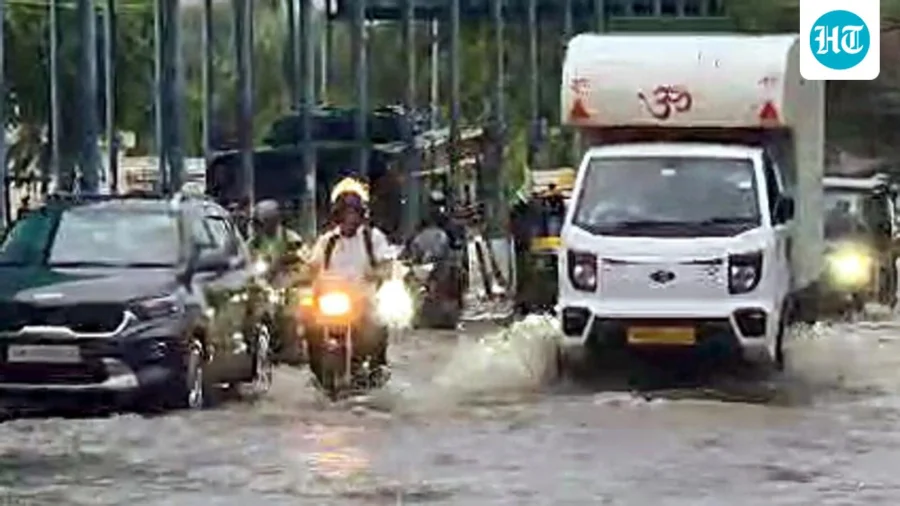
The Monday morning commute turned into a nightmare for thousands of daily travellers as heavy rain brought the Delhi-Gurugram Expressway to a standstill. What should have been a 30-minute drive stretched into hours of frustration, with a 10-kilometre traffic jam snaking back from the Shiv Murti stretch — a spot that has become all too familiar to monsoon-weary commuters.
How a Waterlogged Stretch Paralyzed the Delhi-Gurugram Corridor
The trouble began when intense rainfall overwhelmed drainage systems near Shiv Murti, a critical junction on the expressway. Water accumulated rapidly on the carriageway, forcing drivers to slow down to a crawl. Within a short window, the ripple effect created a massive backlog that stretched for 10 kilometres, leaving hundreds of commuters trapped in their vehicles.
For office-goers, parents dropping children at school, and essential service workers, the sudden gridlock meant missed meetings, delayed appointments, and an exhausting start to the day. Auto-rickshaw drivers and cab operators reported passengers abandoning vehicles to walk towards the nearest metro station.
Why This Stretch Floods Every Monsoon
The Shiv Murti area has historically been a trouble spot during heavy rainfall. Located at a low-lying point where the expressway meets arterial roads, the drainage infrastructure often fails to cope with sudden downpours. Experts have repeatedly pointed to inadequate stormwater management and encroachment on natural water channels as key reasons behind the recurring waterlogging.
This is not an isolated incident. Similar scenes have played out in previous monsoon seasons, raising questions about whether authorities have learned from past disruptions or if commuters are simply expected to endure the same ordeal year after year.
Hundreds Stranded: The Human Cost of a 10-Km Jam
The impact of the waterlogging went far beyond mere inconvenience. Commuters reported spending over two to three hours stuck in the same spot, with limited access to food, water, or restroom facilities. Public transport buses were delayed, and those relying on office cabs found themselves paying surge prices while making no progress.
For daily wage workers and those with strict reporting times, the delay carried financial consequences. Students appearing for exams or interviews faced the anxiety of missing crucial deadlines — all because a single stretch of road could not handle the rain.
Authorities Yet to Issue Detailed Response
As of the latest available information, no detailed official statement has been released regarding the timeline for clearing the waterlogging or measures to prevent a recurrence. In past incidents, traffic police have deployed additional personnel and diverted vehicles to alternative routes, but such interventions appeared limited during this disruption.
Commuters took to social media to express their frustration, sharing photos and videos of the submerged stretch. However, without official confirmation, the exact duration of the disruption and the full extent of the impact remain unclear.
What This Reveals About Infrastructure Readiness
This incident underscores a deeper issue: the infrastructure along one of India's busiest commuter corridors remains ill-prepared for extreme weather events. While the expressway handles lakhs of vehicles daily, its drainage systems and emergency response mechanisms have not kept pace with the growing traffic load and changing rainfall patterns.
Urban planners and civil engineers have long argued that climate resilience must be built into infrastructure projects. The repeated flooding at Shiv Murti suggests that reactive maintenance — clearing drains only after complaints — is not a sustainable solution.
Confirmed Facts vs What Remains Unclear
What is confirmed: Heavy rain caused severe waterlogging near Shiv Murti on the Delhi-Gurugram Expressway. A 10-km traffic jam resulted, and hundreds of commuters were stranded.
What remains unclear: The exact duration of the disruption, the specific response measures taken by authorities, and whether any injuries or vehicle breakdowns occurred during the jam. No official statement has been released detailing the timeline for restoring normal traffic flow.
Risks and Concerns for Daily Commuters
Beyond the immediate frustration, this incident raises safety concerns. Waterlogged roads can hide potholes and open manholes, posing risks to two-wheeler riders. Stalled vehicles in the middle of the expressway increase the likelihood of rear-end collisions, especially when visibility is poor during heavy rain.
There is also the question of accountability. When a known trouble spot floods repeatedly, commuters deserve clarity on what corrective action is being taken. Without transparent communication, public trust in infrastructure management continues to erode.
A Pattern of Monsoon Disruptions on NCR Roads
The Delhi-Gurugram Expressway is not alone in facing this challenge. Across the National Capital Region, key arterial roads routinely witness waterlogging during heavy rains. From stretches near IGI Airport to underpasses in South Delhi, the pattern is consistent: intense rainfall exposes the fragility of urban drainage systems.
This broader trend points to a systemic issue that requires coordinated planning across municipal boundaries. The Delhi-Gurugram corridor connects two states, and effective management demands collaboration between multiple agencies — a coordination that often falters during emergencies.
Practical Guidance for Affected Commuters
For those who regularly travel on the Delhi-Gurugram Expressway, staying informed is the first line of defence. Live traffic apps and social media updates from traffic police can provide real-time alerts about waterlogging and jams.
During heavy rain, consider alternative routes such as the Southern Peripheral Road, Golf Course Extension Road, or the NH-48 service lanes. If you are already stuck, avoid abandoning your vehicle in the middle of the road — this worsens the situation for everyone. Keep essentials like water and a power bank handy during monsoon months.
What Could Happen Next
As the monsoon season continues, similar disruptions are possible unless immediate remedial action is taken. Short-term measures could include deploying pumps at known trouble spots and stationing traffic personnel at vulnerable stretches during heavy rainfall.
Long-term solutions require investment in better drainage infrastructure and climate-resilient road design. Whether authorities will act proactively or wait for the next waterlogging incident to force their hand remains to be seen.
Our Take
The Delhi-Gurugram Expressway waterlogging is more than a traffic story — it is a reflection of how urban India struggles to adapt to climate realities. Every monsoon, the same stretches flood, the same commuters suffer, and the same promises are made. Until infrastructure planning shifts from reactive fixes to proactive resilience, thousands of daily travellers will continue to pay the price for systemic neglect.
Frequently Asked Questions
Why does waterlogging occur on the Delhi-Gurugram Expressway near Shiv Murti?
Waterlogging near Shiv Murti occurs primarily due to inadequate drainage infrastructure at a low-lying stretch of the expressway. Heavy rainfall overwhelms the stormwater system, causing water to accumulate on the carriageway and disrupt traffic flow.
How long did the traffic jam last on the Delhi-Gurugram Expressway?
Based on available reports, the 10-km jam left hundreds of commuters stranded for hours. The exact duration of the disruption has not been officially confirmed by authorities.
What are the alternative routes to avoid the Delhi-Gurugram Expressway during heavy rain?
Commuters can use the Southern Peripheral Road, Golf Course Extension Road, or NH-48 service lanes as alternatives during waterlogging. Checking live traffic updates before starting the journey is recommended.
Has the Delhi-Gurugram Expressway faced similar waterlogging issues before?
Yes, the Shiv Murti stretch has historically been a trouble spot during monsoon seasons. Similar waterlogging and traffic disruptions have been reported in previous years, highlighting a recurring infrastructure challenge.