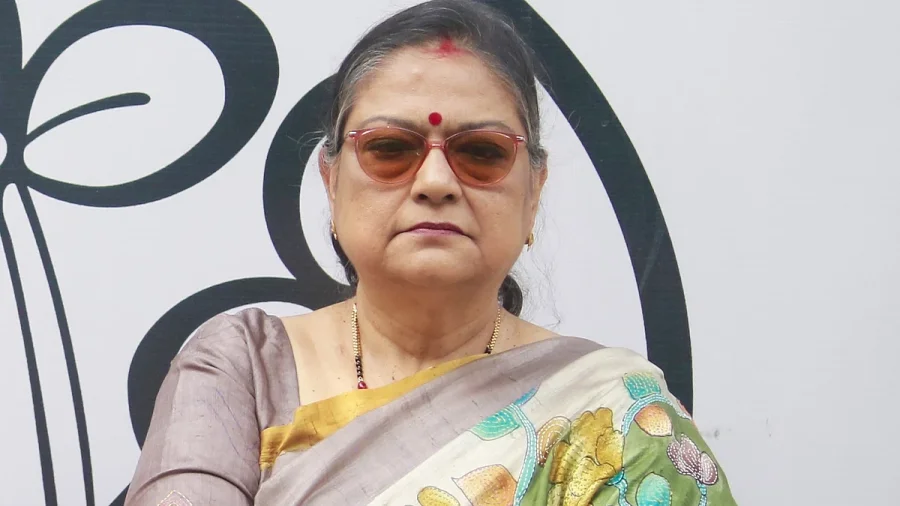
The cracks within the All India Trinamool Congress (AITMC) are no longer whispers — they are now public, sharp, and personal. On Sunday, senior MP Kakoli Ghosh Dastidar, a four-time representative from Barasat, resigned as the party’s organisational district president, taking "moral responsibility" for the TMC’s crushing defeat in the West Bengal assembly polls. But her resignation letter was not just an act of accountability — it was a pointed attack on the party’s campaign machinery, I-PAC, and the shifting power equations within the ruling party.
Kakoli Ghosh Dastidar Resigns as Barasat District Chief After Poll Defeat
The resignation of Kakoli Ghosh Dastidar, a seasoned MP who has represented Barasat for four consecutive terms, marks a significant moment of internal dissent within the TMC. In her letter to state party president Subrata Bakshi, she formally cited accountability for the party's poor performance in the Barasat region and parts of North 24-Parganas. However, the political undertone of her letter carried a far broader message — one that questioned the party’s strategic direction and the role of external consultants.
Why This Matters Right Now
This resignation is not an isolated event. It comes just days after Dastidar was removed as the TMC’s chief whip in the Lok Sabha and replaced by senior MP Kalyan Banerjee. The timing suggests a deeper pattern of internal restructuring and growing dissatisfaction among senior leaders following the party’s electoral setback. For the TMC, which has long prided itself on its grassroots unity, this public display of discord could signal more trouble ahead. For voters and political observers, it raises serious questions about the party’s internal health and its ability to mount a credible opposition in the future.
How the Resignation Unfolded
The sequence of events is telling. First came the removal from the chief whip position — a clear demotion for a four-time MP. Then, within days, came the resignation from the district president post. Dastidar’s letter, while formally accepting responsibility, did not shy away from pointing fingers. She took a sharp swipe at I-PAC, the political consultancy firm that has been closely associated with the TMC’s campaign strategy in recent years. The attack on I-PAC is significant because it reflects a growing sentiment among some party veterans that external strategists have too much influence over internal decisions.
Who Is Affected and What Officials Are Saying
The immediate impact is on the party’s organisational structure in Barasat and North 24-Parganas, a key region for the TMC. The resignation leaves a leadership vacuum at the district level, just as the party tries to regroup after the assembly poll defeat. While state party president Subrata Bakshi has not yet commented publicly, sources within the party suggest that the leadership is trying to contain the damage. The attack on I-PAC has also put the consultancy firm in the spotlight, with many wondering whether the TMC will reconsider its reliance on external strategists.
What We Know So Far — and What Remains Unclear
What we know: Kakoli Ghosh Dastidar has resigned as Barasat organisational district president. She cited moral responsibility for the party’s poor performance in the assembly polls. Her letter included a sharp critique of I-PAC and the party’s evolving power structure. She was recently removed as the TMC’s chief whip in the Lok Sabha.
What remains unclear: Whether this resignation is a one-off act of protest or the beginning of a larger exodus of disgruntled leaders. It is also unclear how the party leadership, particularly Mamata Banerjee, will respond. Will Dastidar be given another role, or will she be sidelined further? And what does this mean for the TMC’s relationship with I-PAC going forward?
Risks, Concerns, and the Balanced View
For the TMC, the risks are clear. Public infighting can erode voter confidence and provide ammunition to political rivals, particularly the BJP and the Left-Congress alliance. The attack on I-PAC also risks alienating a key strategic partner that has helped the party in past elections. However, from Dastidar’s perspective, her resignation can be seen as an act of principle — taking responsibility while also voicing concerns that many within the party may share but are afraid to express publicly. The balanced view is that while this incident highlights internal friction, it does not necessarily signal an imminent collapse of the party. The TMC has weathered internal storms before, but the timing and public nature of this resignation make it more significant.
Why Similar Internal Conflicts Are Growing in the TMC
This is not the first time a senior TMC leader has expressed dissatisfaction with the party’s direction. In recent months, there have been murmurs of discontent over the growing influence of a small circle of advisors and the marginalisation of long-serving grassroots leaders. The assembly poll defeat has only amplified these tensions. Dastidar’s resignation could encourage other disgruntled leaders to speak out, potentially leading to a wider internal crisis. The pattern is familiar in Indian politics: after a major electoral setback, parties often go through a period of introspection and internal conflict. The TMC is no exception.
- Kakoli Ghosh Dastidar is a four-time MP from Barasat, first elected in 2009.
- She was removed as TMC chief whip in Lok Sabha just days before her resignation.
- Her resignation letter specifically targeted I-PAC, the party’s campaign strategist.
- The TMC suffered a major defeat in the 2026 West Bengal assembly polls.
"Taking moral responsibility for the party's defeat in Barasat and parts of North 24-Parganas, I hereby resign as the organisational district president." — Kakoli Ghosh Dastidar, in her resignation letter to Subrata Bakshi
What Readers and Political Observers Should Know Now
For those following West Bengal politics, this resignation is a clear signal that all is not well within the TMC. The party’s leadership will need to address the concerns raised by Dastidar and other potential dissenters if it hopes to rebuild ahead of future elections. For voters, this incident highlights the importance of internal democracy and accountability within political parties. The attack on I-PAC also raises broader questions about the role of external consultants in Indian politics — are they helping parties win, or are they creating new fault lines?
What Could Happen Next
The immediate future will likely see efforts by the TMC leadership to contain the fallout. Dastidar may be offered an alternative role to keep her within the party fold, or she could be sidelined further if the leadership views her resignation as an act of rebellion. The attack on I-PAC could lead to a reassessment of the party’s campaign strategy, though such changes are unlikely to happen overnight. In the longer term, this incident could embolden other leaders to voice their concerns, potentially leading to a more significant internal restructuring. The BJP and other opposition parties will undoubtedly try to capitalise on this discord.
Our Take: Why This Resignation Matters Beyond One Incident
Kakoli Ghosh Dastidar’s resignation is more than just a routine political resignation. It is a symptom of deeper issues within the TMC — issues of power, strategy, and accountability. The attack on I-PAC is particularly noteworthy because it reflects a growing tension between traditional party workers and external professionals. In an era where political campaigns are increasingly driven by data and consultants, this incident serves as a reminder that politics is ultimately about people, relationships, and trust. The TMC’s ability to navigate this internal crisis will determine not just its immediate future, but also its long-term viability as a major political force in West Bengal.
FAQs
Why did Kakoli Ghosh Dastidar resign as Barasat district chief?
She resigned citing "moral responsibility" for the TMC's poor performance in the West Bengal assembly polls, particularly in the Barasat region and parts of North 24-Parganas. Her letter also included a sharp critique of the party's campaign machinery, I-PAC.
What did Kakoli Ghosh Dastidar say about I-PAC in her resignation letter?
While the exact wording of her attack on I-PAC has not been fully disclosed, sources indicate that she criticised the consultancy firm's influence over the party's strategy and decision-making, suggesting it contributed to the electoral defeat.
Was Kakoli Ghosh Dastidar removed from another position before this resignation?
Yes, just days before her resignation as district president, she was removed as the TMC's chief whip in the Lok Sabha and replaced by senior MP Kalyan Banerjee. This removal is seen as a precursor to her resignation.
What does this resignation mean for the future of the Trinamool Congress?
This resignation signals growing internal dissent within the TMC following its assembly poll defeat. It could lead to further public disagreements, a reassessment of the party's campaign strategy, and potential restructuring. It also provides ammunition for political rivals like the BJP.