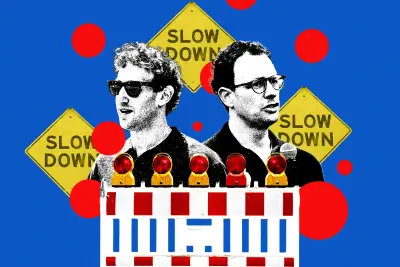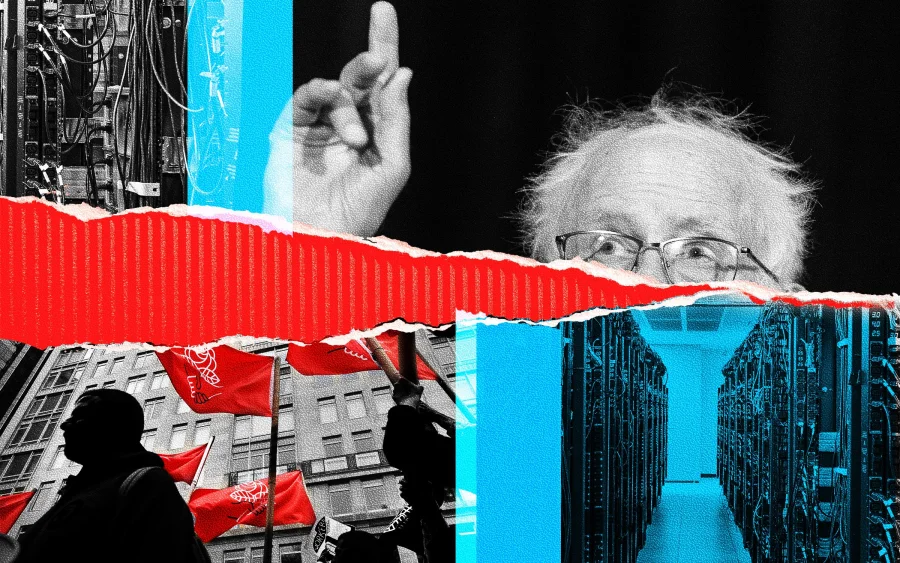
The political left has spent years warning that artificial intelligence needs guardrails. Now it can't agree on what those guardrails should protect against — or how loudly to sound the alarm.
The fracture is real, and it's complicating the one thing everyone assumed was settled: that AI regulation is a progressive cause.
Two Camps, One Label, Very Different Fears
On one side are those who treat AI as a potential existential threat — a technology that could escape human control and cause irreversible harm. For them, the priority is safety research, international coordination, and slowing down the most powerful systems until they're proven safe.
On the other side are those who see the doom framing as a distraction. Their concern is concentrated corporate power, labor displacement, surveillance, and bias. To them, the real danger isn't a rogue superintelligence — it's a handful of companies writing the rules for everyone else.
Why This Fight Is Harder Than It Looks
Both camps call themselves progressive. Both want regulation. But they disagree on what regulation should actually do.
Safety-first advocates often favor licensing regimes, compute thresholds, and mandatory testing before deployment. Power-focused critics worry those same rules would entrench incumbents who can afford compliance while smaller players and open-source projects get squeezed out.
That's not a small disagreement. It's a fight over who benefits from the rules.
How the Rift Became Visible
The split didn't appear overnight. It hardened as AI moved from research labs into everyday products — search, coding tools, customer service, creative work — and as governments started drafting real legislation.
Once regulation became plausible, the abstract debate turned concrete. Suddenly, positions had consequences: which bills to support, which companies to criticize, which risks to prioritize in testimony and public campaigns.
Allies who once shared a stage began publishing competing op-eds and backing different proposals.
Who Feels This Most
For ordinary workers, the split has a practical cost. A unified left could push for stronger worker protections, transparency requirements, and accountability for automated decisions. A divided left struggles to pass any of it.
For smaller developers and researchers, the stakes are different. Depending on which faction wins, they could face either light-touch rules or compliance burdens designed with large labs in mind.
And for the public, the noise makes it harder to tell which warnings are credible and which are political positioning.
What Advocates on Each Side Are Saying
Safety-focused voices argue that downplaying catastrophic risk is irresponsible — that once a powerful system is deployed, reversing course may be impossible. They point to rapid capability gains as evidence that caution is warranted now, not later.
Power-focused critics counter that doom narratives give tech executives a convenient shield. If the story is "AI might end the world," then the companies building it look like reluctant stewards rather than profit-driven actors. That framing, they argue, lets the industry write its own rules while claiming to save humanity.
Both arguments have internal logic. Neither has been resolved.
What's Confirmed and What Isn't
Confirmed: there is no single, unified left position on AI regulation. Different groups, thinkers, and policymakers are actively pushing competing frameworks.
Confirmed: the disagreement is substantive, not just stylistic — it concerns priorities, mechanisms, and who should bear compliance costs.
Unclear: which faction will ultimately shape legislation. Also unclear is whether the split will produce a stronger, more tested policy or simply gridlock.
Any claim that one side has "won" the internal debate would be premature.
The Deeper Divide Underneath
At its core, this isn't just about AI. It's about a recurring tension on the left: whether to focus on catastrophic, species-level risks or on the everyday harms of concentrated economic power.
That tension has appeared before — in debates over nuclear weapons, climate policy, and biotechnology. AI is the latest arena, but the underlying question is old: what kind of threat deserves the most urgent attention?
Risks of Staying Split
The obvious risk is that a fractured left cedes the regulatory agenda to industry-friendly voices who prefer voluntary guidelines over binding rules.
A second risk is overcorrection. If one faction dominates and pushes rules that ignore the other's concerns, the result could be legislation that either stifles innovation without improving safety or leaves real harms unaddressed.
There's also a credibility problem. A movement that can't agree on what it's afraid of is easier for opponents to dismiss.
A Pattern Beyond This Debate
This isn't the first time a broad political coalition has splintered once its abstract goal became a concrete policy question. The same thing happened with climate legislation, healthcare reform, and financial regulation.
Agreement on the problem is easy. Agreement on the solution is where coalitions break.
What Readers Should Take From This
If you follow AI policy, don't assume "the left" speaks with one voice. Pay attention to which groups are backing which proposals — that tells you more than any general label.
If you work in tech or policy, expect the internal debate to shape what's actually proposed. The winning faction's priorities will show up in bill language.
And if you're simply trying to understand the stakes, remember that both concerns — catastrophic risk and corporate power — are real. The question is how to address them without pretending one doesn't exist.
What Could Happen Next
The most likely path is continued fragmentation, with competing bills and advocacy campaigns emerging from different corners of the left.
A less likely but possible outcome is a negotiated synthesis — a framework that addresses both safety and power concentration. That would require the factions to treat each other as allies rather than obstacles.
Either way, the debate is far from settled, and its outcome will shape AI rules for years.
Our Take
The left's inability to agree on AI doom isn't a sign of weakness — it's a sign that the questions are genuinely hard. Catastrophic risk and concentrated power are both legitimate concerns, and pretending otherwise serves no one.
But a coalition that can't prioritize will struggle to govern. The real test isn't whether the left can agree that AI needs rules. It's whether it can agree on which rules matter most — and that answer is still being written.
Frequently Asked Questions
What is the leftist split over AI doom?
It's a disagreement within left-leaning politics about whether AI's biggest threat is existential risk or corporate power concentration — and what regulation should prioritize as a result.
Why can't the left agree on AI regulation?
Because the two main factions have different fears and different priorities. One focuses on catastrophic safety risks; the other focuses on labor, surveillance, bias, and corporate dominance. Their preferred policies often conflict.
Does this split affect actual AI legislation?
Yes. A divided coalition has less leverage to push comprehensive rules, which can slow or weaken regulation and give industry more influence over the outcome.
Which side is winning the AI regulation debate?
Neither side has clearly won. The debate is ongoing, and no unified left position has been formalized. The outcome will depend on which faction gains influence in upcoming policy fights.