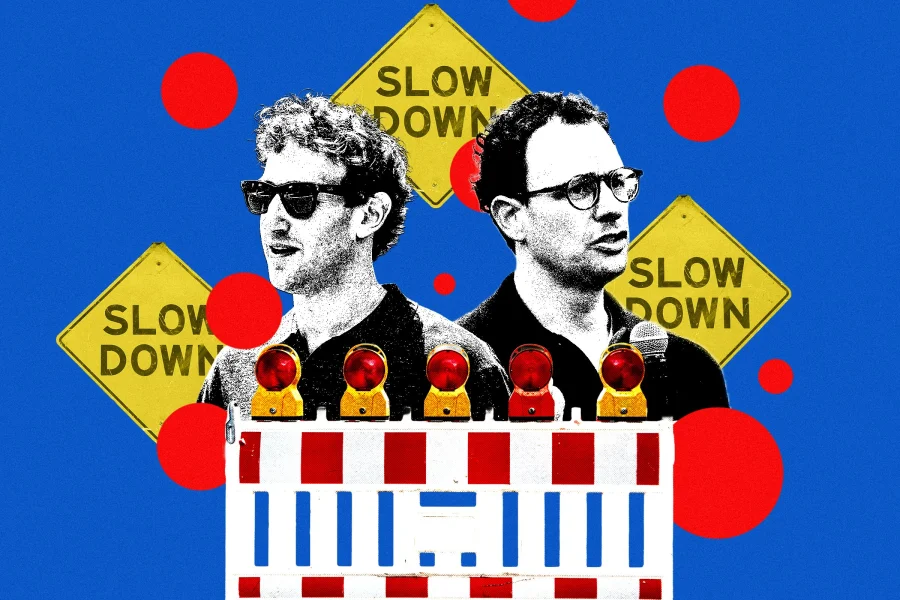
When the world's most powerful AI companies quietly slow down their releases, they call it caution. Regulators might call it something else entirely: coordination. And that word — coordination — is where the antitrust trouble begins.
The story isn't about whether AI development is actually slowing. It's about how the industry chose to describe that slowdown. By framing it as a "slowdown" rather than a collective push for better security standards, AI labs may have handed regulators a ready-made case.
Why 'Slowdown' Sounds Different to a Regulator
In antitrust law, the language companies use matters. A "slowdown" implies a shared decision to pull back. A "security standard" implies a technical necessity. One sounds like a market choice. The other sounds like a cartel.
That distinction is not academic. If multiple competitors independently decide to pause, that's competition. If they coordinate, even informally, that's a problem. The framing suggests the latter.
The Real Stakes for AI Competition
AI is not a normal market. A handful of labs control the most advanced models, the largest compute clusters, and the deepest talent pools. When those same labs all slow down at once, the competitive landscape changes.
Startups that depend on API access could be left stranded. Enterprises that planned rollouts may face delays. And smaller players who can't afford to pause may be pushed out entirely. The "slowdown" could become a moat.
How We Got Here: A Timeline of Framing
The shift didn't happen overnight. Over recent months, AI labs have increasingly spoken about safety, alignment, and responsible scaling. Those are legitimate concerns. But the public messaging has blurred the line between safety and strategy.
No single announcement triggered this. Instead, a pattern emerged: labs pausing, then explaining the pause as a broader industry moment. That pattern is what regulators may examine.
Who Pays the Price for a Pause
The people most affected aren't the labs themselves. They're the developers building on top of AI models, the students learning with AI tools, and the small businesses that adopted AI early.
For them, a slowdown isn't a philosophical debate. It's a delayed feature, a broken roadmap, a missed quarter. And if the slowdown is coordinated, they have no alternative provider to turn to.
What the Labs Are Saying — and Not Saying
Publicly, AI labs frame their pauses as responsible stewardship. They point to security research, red-teaming, and deployment caution. Those are real activities. But they rarely address the competitive implications.
No lab has confirmed coordination with rivals. No regulator has publicly announced an investigation. The silence on both sides is notable — and it leaves room for interpretation.
Why This Is an Antitrust Story, Not a Safety Story
Safety and antitrust are not opposites. But they follow different logics. Safety says: slow down to prevent harm. Antitrust says: don't slow down together, because that harms competition.
When labs use safety language to describe what looks like collective restraint, they invite antitrust scrutiny. The framing may have been intended to reassure the public. Instead, it may have alerted regulators.
Confirmed Facts vs What Remains Unclear
Confirmed: AI labs have publicly used "slowdown" language. No formal antitrust action has been announced. No lab has admitted coordination.
Unclear: Whether any coordination actually occurred. Whether regulators are investigating. Whether the slowdown is technical, strategic, or both. All speculation should be labeled as such.
The Moat Behind the Pause
For leading AI labs, a pause isn't just a safety measure. It's also a competitive advantage. If you already have the best model, slowing down doesn't hurt you — it hurts those trying to catch up.
That's the moat: compute, talent, data, and now, timing. A coordinated slowdown would widen it. That's exactly the kind of dynamic antitrust law was designed to address.
Risks and the Balanced View
Not everyone sees a conspiracy. Some argue that AI labs are genuinely worried about security, misuse, and unintended consequences. Pausing may be the responsible thing to do, even if it looks coordinated.
Others warn that over-regulating AI could push innovation offshore. The risk cuts both ways: too little scrutiny lets labs entrench power; too much could stall progress. The truth is likely messy.
A Wider Pattern: Tech's Recurring Antitrust Moment
This isn't the first time tech companies have faced antitrust questions. Search, social media, app stores, and advertising all had their reckonings. AI is next in line.
The difference is speed. AI is moving faster than any previous technology, and regulators are still catching up. The "slowdown" framing may have just given them a head start.
What Readers Should Take Away
If you're a developer, don't assume API access will remain stable. If you're an investor, watch for regulatory signals. If you're a student or user, understand that AI progress is now a legal and political story, not just a technical one.
The safest assumption: the AI landscape will keep changing, and the rules will change with it. Stay informed, and don't rely on any single provider.
What Happens Next
If regulators decide to act, the process could take years. Investigations, subpoenas, hearings, and settlements are slow. Meanwhile, AI development will continue — just with more legal uncertainty.
If regulators stay silent, the framing may fade. But the precedent will remain: how AI labs talk about pausing matters. And that lesson won't disappear.
Our Take
The AI "slowdown" may be real, but the framing was a mistake. By calling it a slowdown instead of a security standard, labs made it easier for regulators to see coordination. That's not just a PR problem. It's an antitrust problem waiting to happen.
The industry's biggest challenge isn't building smarter models. It's explaining why slowing down isn't the same as colluding. So far, that explanation hasn't been convincing.
Frequently Asked Questions
What does "AI slowdown" mean in this context?
It refers to AI labs pausing or slowing the release of new models, often framed as a safety measure. The concern is that this framing suggests coordination among competitors.
Why would a slowdown trigger antitrust issues?
Antitrust law prohibits competitors from coordinating to restrict output or innovation. If AI labs collectively slow down, regulators may view it as a restraint on competition.
Has any regulator actually launched an investigation?
No official investigation has been announced. The concern is based on public framing and the potential for future scrutiny, not confirmed legal action.
What should AI users and developers do now?
Diversify your AI providers, stay informed about regulatory developments, and avoid depending on a single lab's roadmap. The legal landscape is shifting, and flexibility is your best protection.