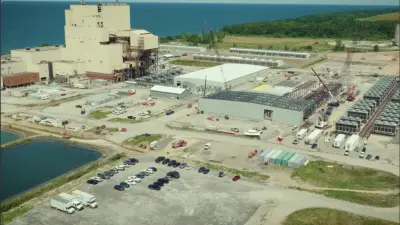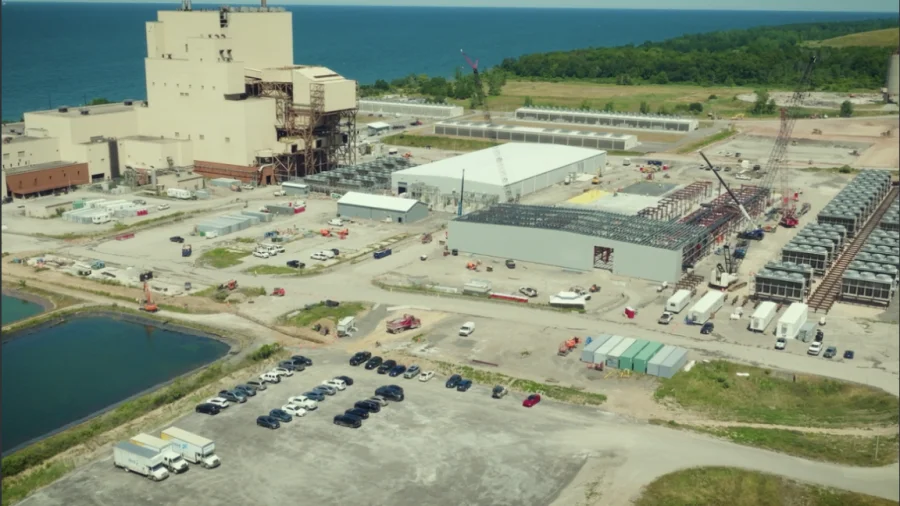
When the alarm never sounded, the first hint of trouble was the smoke. By the time firefighters arrived at the Lake Mariner data center in Somerset, New York, in early June, they were walking into a building that was still unfinished — and largely unknown to them. The blaze inside the $3.2 billion AI facility didn't just expose physical safety gaps; it revealed a corporate structure so layered that even those on the front lines weren't sure who was ultimately in charge.
A Blaze in the Dark: What Firefighters Actually Faced
Steve Matisz, chief of the Barker Fire Department, described the scene as a "difficult situation." His crew entered the building "kind of blind," according to local reports, pushing through heavy black smoke produced by chemicals they couldn't identify. The safety data sheets — documents that are legally required to inform first responders about hazardous materials on site — had reportedly burned up in the fire itself.
Matisz said he wasn't sure what to believe about that claim. The uncertainty, he suggested, was part of the problem.
Why the Lake Mariner Fire Matters Beyond One Building
This wasn't just a routine industrial fire. The Lake Mariner site, built on the grounds of a former coal mine, is part of a massive push to build AI infrastructure in the United States. The $3.2 billion price tag signals scale — and scale brings risk. When firefighters don't know what chemicals they're facing, or which corporate entity is responsible for safety protocols, the consequences can be deadly.
For residents of Somerset and surrounding towns, the fire raises a practical question: if something goes wrong at these facilities, who do they call — and who is accountable?
From Coal Mine to AI Hub: The Site's Rapid Transformation
The location's history adds another layer. A former coal mine repurposed for cutting-edge technology is a powerful symbol of economic transition. But it also means the site has legacy infrastructure, environmental considerations, and a community that remembers what industrial accidents can look like. The speed of the AI buildout — moving from coal to computing in a relatively short span — may have outpaced the safety protocols typically expected at such large-scale facilities.
The Human Cost of an Unfinished Safety Net
Behind the corporate filings and construction schedules are real people. Firefighters who volunteer their time. Workers who were on site when the blaze broke out. Neighbors who watched smoke rise over a facility they knew little about. For Chief Matisz and his team, the lack of information wasn't an administrative inconvenience — it was a direct threat to their safety.
"We went in kind of blind," Matisz said. That sentence should concern anyone who lives near a large-scale AI data center.
Who's Responsible? The Corporate Web Begins to Unravel
The fire has drawn attention to the ownership and operational structure behind the Lake Mariner facility. Large AI data centers are often financed through a maze of subsidiaries, joint ventures, and holding companies. Each layer can obscure who holds final responsibility for safety, maintenance, and emergency preparedness. In this case, the complexity appears to have left local officials without clear answers — even as they were called to fight a fire inside one of these buildings.
What the Fire Reveals About AI Infrastructure Oversight
This incident is a case study in a broader trend: the rapid expansion of AI data centers across the country, often in rural or semi-rural areas that lack the regulatory muscle of major cities. Local fire departments, zoning boards, and emergency planners are being asked to oversee facilities that are technologically and financially far beyond their usual scope. The Lake Mariner fire suggests that the systems in place to protect first responders and nearby communities may not have kept pace with the buildout.
Confirmed Facts vs. What Remains Unclear
What is confirmed: a fire broke out in an unfinished building at the Lake Mariner site in early June. Firefighters found no working alarm, no suppression system, and three dead hydrants. Chief Matisz stated his crew lacked adequate information about chemicals on site.
What remains unclear: the exact cause of the fire, the full list of corporate entities responsible for the facility's safety protocols, and whether the safety sheets truly burned or were simply unavailable. Matisz himself expressed doubt about that explanation. Until those questions are answered, the full picture of accountability remains incomplete.
Why This Corporate Structure Matters for the AI Boom
The Lake Mariner project is not an outlier. Across the United States, billions of dollars are flowing into AI data centers, often backed by complex financing arrangements designed to manage risk and maximize returns. But that complexity has a downside: when something goes wrong, it can be nearly impossible for local authorities to determine who to hold accountable. The fire in Somerset is a warning that the financial engineering behind AI may be outpacing the physical safety engineering on the ground.
Risks and Open Questions: A Balanced View
Supporters of the AI buildout argue that these facilities bring jobs, tax revenue, and technological leadership to communities like Somerset. They point out that construction-phase incidents are not uncommon and that safety protocols typically improve once facilities become operational.
Critics, however, see a pattern of inadequate oversight. The dead hydrants, the missing alarms, and the burned safety sheets — if confirmed — suggest that basic precautions were not in place. The question is whether this was an isolated failure or a symptom of a system that prioritizes speed over safety.
A Pattern Emerging Across the Industry
The Lake Mariner fire fits into a wider conversation about AI infrastructure. From water usage concerns in drought-prone regions to electricity grid strain and now fire safety, the physical footprint of AI is drawing increasing scrutiny. Communities are beginning to ask harder questions about what these facilities mean for their safety, their environment, and their future. Somerset may be one of the first, but it likely won't be the last.
What Local Residents and Officials Should Do Now
For communities hosting or considering AI data centers, the takeaway is clear: demand transparency before construction begins. Local fire departments should have access to up-to-date safety data sheets, chemical inventories, and emergency response plans — not just in theory, but in practice. Residents should attend zoning meetings, ask who owns the facility, and insist on clear lines of accountability. The time to ask questions is before the smoke appears, not after.
What Happens Next at Lake Mariner
The immediate priority is determining the cause of the fire and assessing the damage. Beyond that, the incident will likely prompt reviews of safety protocols at the site and possibly at other similar facilities. Whether those reviews lead to meaningful changes — or are lost in the corporate labyrinth — remains to be seen. For Chief Matisz and his team, the hope is that the next call is better informed than the last.
Our Take
The Lake Mariner fire is a reminder that the AI revolution is not just a story of algorithms and chips. It's a story of physical buildings, local communities, and the people who are asked to protect them. The corporate web behind the $3.2 billion project may be legal, but it raises a fundamental question: if no one can easily say who is responsible, then who is actually accountable? Until that question is answered, every community hosting an AI data center should pay attention to what happened in Somerset.
Frequently Asked Questions
What happened at the Lake Mariner AI data center?
A fire broke out in early June in an unfinished building at the Lake Mariner data center in Somerset, New York. Firefighters found no working alarm, no suppression system, and three dead hydrants. The facility is part of a $3.2 billion AI infrastructure project built on the site of a former coal mine.
Why were firefighters unprepared for the fire?
Chief Steve Matisz of the Barker Fire Department said his crew entered the building "kind of blind." Safety data sheets that would have identified chemicals on site reportedly burned in the fire. Matisz expressed uncertainty about that claim, and the lack of information made the response more dangerous.
What is the corporate structure behind the Lake Mariner project?
The project is tied to a complex web of entities typical of large AI data center investments. This structure can obscure which company holds direct responsibility for safety and emergency preparedness, complicating accountability for local officials and first responders.
What should communities near AI data centers do to stay safe?
Local officials should demand up-to-date safety data sheets, chemical inventories, and clear emergency response plans before construction begins. Residents should ask who owns the facility and insist on transparent lines of accountability. Preparation should happen before an incident, not after.