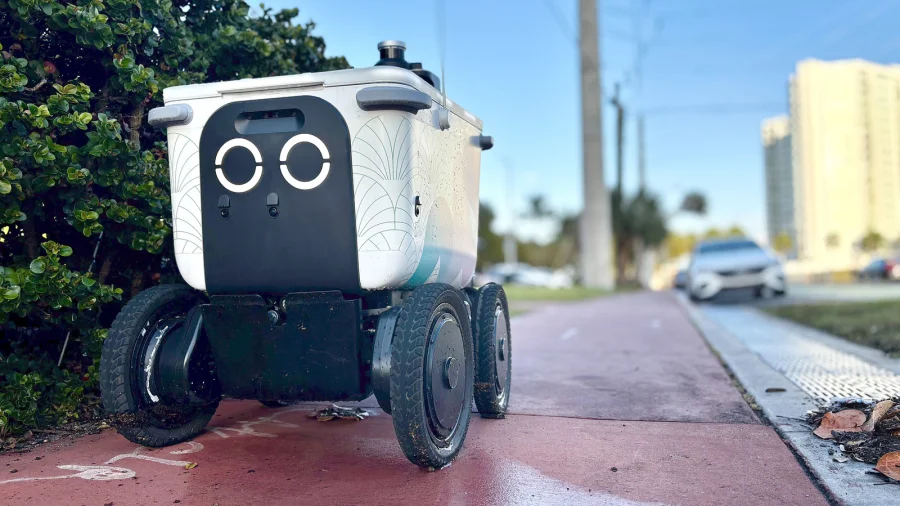
A delivery robot rolling down a sidewalk sounds like a glimpse of the future. In practice, it often looks more like a confused tourist — stopping unexpectedly, drifting into the wrong lane, and leaving pedestrians unsure who has the right of way.
That is the central finding behind the latest scrutiny of delivery robots: their biggest problems are exactly the ones you would expect. They do not reliably understand the rules of the road, or the sidewalk.
The Rules Robots Keep Getting Wrong
Delivery robots are designed to share space with people, cyclists, and vehicles. But reports and public observations consistently point to the same failures — hesitating at crossings, misjudging pedestrian movement, and failing to yield predictably.
For a machine built to move goods efficiently, the inability to read basic social and traffic cues is a fundamental flaw, not a minor bug.
Why Sidewalk Confusion Is a Real Safety Concern
Sidewalks are not highways. They are shared, unpredictable spaces full of children, elderly pedestrians, wheelchairs, and pets. A robot that cannot anticipate human behavior becomes an obstacle rather than a convenience.
For people with limited mobility or vision impairment, an unpredictable robot on the pavement is more than an annoyance — it is a genuine hazard.
How We Got Here: Fast Deployment, Slow Rulemaking
Delivery robot fleets expanded quickly in several cities, driven by demand for faster last-mile delivery. Regulation, however, has lagged behind. Many jurisdictions still lack clear rules on where robots can operate, at what speed, and who is liable when something goes wrong.
That gap between deployment and oversight is precisely where these rule-compliance problems have taken root.
Who Feels the Impact Most
The people most affected are ordinary pedestrians — especially those in dense urban areas where robot density is highest. Delivery workers and cyclists also share the same crowded space, often with less protection than a vehicle.
For city residents, the question is simple: if a robot cannot follow the rules, why is it on the sidewalk at all?
What Regulators and Companies Say
There is no single global standard for delivery robots. Some cities have introduced pilot permits and operating limits, while others have no specific framework. Companies generally maintain that their robots are safe and improving with each software update.
Critics argue that self-reported safety claims are not enough without independent oversight and transparent incident reporting.
The Deeper Problem: Teaching Machines Social Rules
Traffic rules are only part of the challenge. Much of sidewalk etiquette is unwritten — a nod, a pause, a slight step aside. Robots trained on sensor data struggle with these subtle human signals.
Until that gap closes, delivery robots will keep running into the same complaint: they simply do not understand how people move.
Confirmed Facts vs What Remains Unclear
Confirmed: Delivery robots operate in multiple cities, and rule-compliance issues — right-of-way, obstacle handling, predictability — are widely reported.
Unclear: The exact frequency of incidents, the full scope of regulatory response, and whether current technology can fully solve these problems remain open questions. Claims about specific incident numbers should be treated with caution unless verified by official sources.
Risks and the Balanced View
Delivery robots offer real benefits: lower delivery costs, reduced emissions compared to vans, and convenience for customers. But those benefits come with trade-offs — sidewalk congestion, safety concerns, and public frustration when robots behave unpredictably.
The industry's challenge is not proving the concept works. It is proving it works safely, consistently, and within the rules.
A Wider Pattern: Autonomy Outpacing Regulation
Delivery robots are part of a broader trend — autonomous systems entering public spaces faster than laws can adapt. Self-driving cars, drones, and sidewalk robots all face the same tension between innovation and public safety.
How cities handle delivery robots may set the template for how they handle the next wave of autonomous technology.
What Readers and Residents Should Know
If delivery robots operate in your area, know that rules vary and enforcement is uneven. Report unsafe behavior to local authorities or the operating company. If you are a city official or policymaker, the lesson is clear: clear operating rules and incident reporting should come before expansion, not after.
What Comes Next
Expect tighter local rules, more pilot programs with conditions, and continued pressure on companies to demonstrate real-world safety. Whether delivery robots become a trusted part of city life depends less on their sensors and more on whether they can finally learn the rules everyone else already follows.
Our Take
The headline writes itself: delivery robots have the problems you would expect. That is not a reason to dismiss the technology — but it is a reason to stop treating deployment as proof of readiness. The real test is not whether a robot can complete a delivery. It is whether it can do so without making the sidewalk worse for everyone else.
Frequently Asked Questions
What are the biggest problems with delivery robots?
The main issues are failure to follow traffic and sidewalk rules, unpredictable behavior around pedestrians, poor obstacle awareness, and inconsistent right-of-way judgment.
Are delivery robots safe on sidewalks?
They are generally designed to be low-speed and lightweight, but safety concerns remain because they can behave unpredictably in crowded or complex environments.
Who regulates delivery robots?
Regulation varies widely. Some cities require permits and set operating limits, while many jurisdictions have no specific rules for sidewalk delivery robots yet.
Will delivery robots improve over time?
Companies say software updates continuously improve navigation and safety. However, experts caution that teaching machines human social cues and edge cases remains a significant challenge.