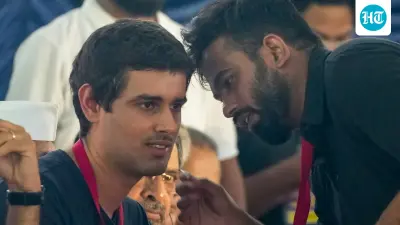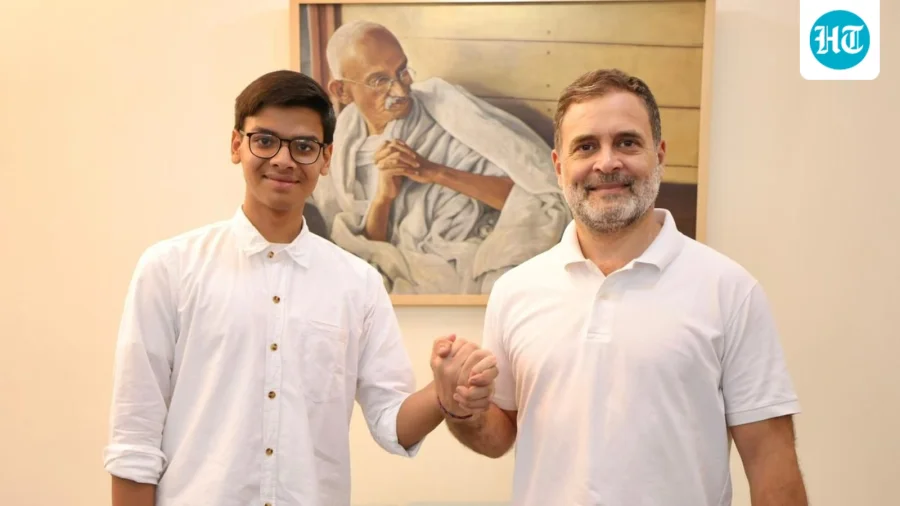
In a move that has caught the attention of students, parents, and political watchers alike, Congress leader Rahul Gandhi met Gen-Z blogger and whistleblower Sarthak Sidhant on Wednesday, publicly backing the teenager who has been exposing irregularities in the CBSE paper-checking process. The meeting comes just as the government has finally taken action on the issue, marking a significant turn in a controversy that has been simmering for weeks.
This is the second time in three days that Gandhi has stood behind a young whistleblower, earning him the informal title of “tender investigator” among supporters and critics alike. But beyond the political optics, the meeting highlights a growing trend: young Indians using digital platforms to hold powerful institutions accountable.
Who Is Sarthak Sidhant and Why His Investigation Matters
Sarthak Sidhant is not a seasoned journalist or a political activist. He is a Gen-Z blogger who started looking into the CBSE paper-checking process after hearing complaints from fellow students. What he found — alleged discrepancies in how answer sheets were evaluated, potential favoritism, and a lack of transparency — quickly went viral on social media.
His detailed posts, backed by documents and testimonies, forced the issue into the national spotlight. For weeks, students and parents demanded answers, but the government remained largely silent. That changed after Gandhi’s intervention and the growing public pressure.
Why This Matters Right Now
For millions of CBSE students across India, the fairness of the board exam evaluation is not a political issue — it is a life-altering one. Marks determine college admissions, scholarship opportunities, and career paths. Any hint of manipulation or negligence in the checking process can shatter dreams.
The fact that a teenager had to step in where institutions failed has sparked a wider conversation about accountability, transparency, and the power of citizen journalism in the digital age. Gandhi’s backing of Sarthak signals that this issue is no longer just a student grievance — it has become a political flashpoint.
What the Government Finally Did
After weeks of inaction, the Ministry of Education finally announced a formal inquiry into the CBSE paper-checking allegations. Officials confirmed that a committee has been formed to investigate the claims raised by Sarthak and other students. While details remain scarce, the move is being seen as a direct response to the mounting pressure.
“We take all allegations seriously and will ensure a fair investigation,” a ministry spokesperson said, without directly naming Sarthak or Gandhi. But the timing of the announcement — just hours after the meeting — has not gone unnoticed.
What We Know So Far — and What Remains Unclear
What we know:
- Sarthak Sidhant, a Gen-Z blogger, exposed alleged irregularities in CBSE paper checking.
- Rahul Gandhi met him and publicly supported his efforts.
- The government has announced a formal inquiry into the matter.
What remains unclear:
- The exact scope of the investigation.
- Whether the inquiry will be independent or internal.
- What specific corrective measures will be taken for affected students.
Risks, Concerns, and the Balanced View
While many have applauded Gandhi for amplifying a student’s voice, critics argue that the move is politically motivated, timed to embarrass the government ahead of upcoming elections. Others worry that Sarthak, a teenager, is being thrust into a high-stakes political battle that could put him under undue pressure.
Supporters, however, see it differently. They argue that when institutions fail, citizens — regardless of age — have the right to demand accountability. “He is not a pawn. He is a whistleblower who did what the system refused to do,” one social media user wrote.
Why Similar Trends Are Growing in India
Sarthak is not the first young whistleblower to gain national attention. In recent years, several teenagers have used social media to expose everything from corruption in local bodies to safety violations in schools. The trend reflects a broader shift: Gen-Z Indians are increasingly unwilling to accept institutional failures silently.
Rahul Gandhi’s decision to meet and back these young investigators suggests that political leaders are also recognizing the power of this demographic. Whether this translates into real policy change remains to be seen.
“The system failed students. A teenager had to step in. That should worry all of us.” — Social media reaction
What Students and Parents Should Know Now
For students awaiting CBSE results or those who suspect their papers were unfairly evaluated, the government’s inquiry is a positive first step. However, experts advise patience. Investigations of this nature can take months, and there is no guarantee of individual redress.
Students are encouraged to keep copies of their answer sheets and any communication with school authorities. Parents should stay informed through official CBSE channels and avoid relying solely on unverified social media claims.
What Could Happen Next
The coming weeks will be crucial. If the inquiry is thorough and transparent, it could restore faith in the CBSE evaluation process. If it is seen as a whitewash, the backlash could be severe — not just for the government, but for the credibility of the board itself.
Meanwhile, Rahul Gandhi’s “tender investigator” approach is likely to continue. With elections approaching, backing young whistleblowers could become a key part of his political strategy. For Sarthak, the spotlight is only getting brighter.
Our Take: Why This Story Matters Beyond One Incident
This is not just about CBSE or Rahul Gandhi. It is about a generation that refuses to stay silent. When a teenager’s blog post can force a government inquiry, something fundamental has shifted in Indian democracy. The question now is whether the system will listen — or simply pretend to.
FAQs
Who is Sarthak Sidhant and what did he expose?
Sarthak Sidhant is a Gen-Z blogger who investigated and exposed alleged irregularities in the CBSE paper-checking process, including potential favoritism and lack of transparency.
Why did Rahul Gandhi meet Sarthak Sidhant?
Rahul Gandhi met Sarthak to publicly support his efforts as a whistleblower. This is the second time in three days he has backed a young investigator, highlighting the issue of institutional accountability.
What action has the government taken on the CBSE paper-checking scandal?
The Ministry of Education has announced a formal inquiry into the allegations raised by Sarthak and other students. A committee has been formed to investigate the claims.
What should CBSE students do if they suspect their papers were unfairly checked?
Students should keep copies of their answer sheets and any communication with school authorities. They should follow official CBSE channels for updates and avoid relying on unverified social media claims.