A guest teacher in Haryana's Rohtak district, who was suspended for joining the Cockroach Janta Party's (CJP) protest in Delhi earlier this month, has been reinstated after the party publicly challenged the dismissal. The decision to revoke the suspension order came after the CJP issued a strong statement condemning the move as an attack on democratic rights and freedom of expression.
Why a teacher's suspension became a flashpoint
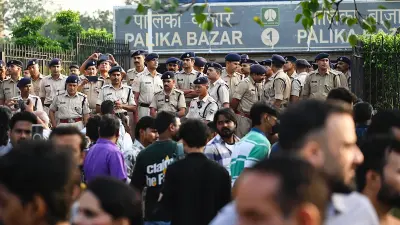
The teacher, employed on a guest basis in a government school in Rohtak, was issued a suspension order by the District Elementary Education Officer (DEEO) after she participated in the CJP's protest at Jantar Mantar in Delhi on June 6. The protest, led by CJP founder Abhijeet Dipke, drew thousands of citizens demanding accountability from political parties. The DEEO's order cited violation of conduct rules for government employees, stating that participation in such protests was not permissible under service regulations.
How the 'cockroach party' fought back
The Cockroach Janta Party, known for its unconventional name and youth-driven activism, did not stay silent. In a public statement, the party slammed the suspension as "undemocratic" and "an attempt to silence dissent." The CJP demanded immediate revocation of the order, arguing that the teacher had merely exercised her fundamental right to peaceful protest. The party's challenge quickly gained traction on social media, putting pressure on the Haryana education department.
Who is affected and why it matters
The reinstatement is a significant relief for the teacher, who faced uncertainty over her livelihood and career. For thousands of guest teachers across Haryana and other states, the case raises questions about the limits of their rights as government employees. Many guest teachers work on temporary contracts with limited job security, making them vulnerable to disciplinary action for activities outside school hours. The incident also resonates with citizens who see the right to protest as a cornerstone of democracy.
Official response and the reversal
Following the CJP's public challenge, the DEEO's office reviewed the suspension order. Sources indicate that the department decided to revoke the suspension after considering the teacher's explanation and the broader implications. The teacher has now resumed her duties at the school. The education department has not issued a detailed statement on the reversal, but the move is seen as a de-escalation of a controversy that could have drawn wider criticism.
What the suspension order said
The initial suspension order, a copy of which was reviewed by The Hindu, stated that the teacher had violated conduct rules by participating in a political protest without prior permission. The order noted that government employees are expected to maintain political neutrality and avoid activities that could be construed as partisan. However, the CJP protest was not affiliated with any mainstream political party, and the teacher's participation was as a citizen, not as a representative of the school.
Confirmed facts vs what remains unclear
What is confirmed: The teacher was suspended, the CJP challenged the order, and the suspension has been revoked. What remains unclear: Whether the teacher faced any formal inquiry before the suspension, and whether the education department will issue new guidelines for guest teachers regarding participation in protests. The DEEO has not clarified if the teacher received any warning or if the suspension was a first-time disciplinary action.
Risks and balanced view
While the reinstatement is a victory for the teacher and the CJP, it also highlights the delicate balance between employee conduct rules and democratic rights. Critics argue that government employees, including guest teachers, must adhere to service rules to maintain discipline and neutrality. Supporters of the teacher contend that peaceful protest is a fundamental right and that guest teachers, who often work without permanent benefits, should not be penalized for exercising it. The case could set a precedent for how similar incidents are handled in the future.
Wider trend: Guest teachers and protest rights
This incident is part of a broader pattern where temporary government employees face disciplinary action for activities that permanent employees might avoid. Across India, guest teachers, contractual workers, and daily-wage employees often operate in a grey area of service rules. The CJP's intervention in this case underscores the growing role of non-traditional political movements in defending individual rights against bureaucratic overreach.
Practical guidance for guest teachers
For guest teachers and other temporary government employees, this case serves as a reminder to understand their service conditions. While the right to protest is constitutionally protected, employees should be aware of any specific conduct rules in their contracts. Seeking legal advice or union support before participating in politically sensitive events can help avoid similar situations. The CJP's swift action also shows the power of collective public pressure in challenging administrative decisions.
Future outlook
The revocation of the suspension order may not be the end of the matter. The Haryana education department could review its policies on guest teachers' conduct, potentially issuing clearer guidelines. The CJP, emboldened by this success, may continue to monitor similar cases. For the teacher, the focus now shifts back to her classroom, but the incident has already sparked a wider conversation about the rights of temporary government employees.
Our Take
This story is not just about one teacher's reinstatement. It is about the tension between bureaucratic rules and democratic freedoms in a country where protest is a constitutional right. The CJP's challenge forced the education department to reconsider a decision that could have set a dangerous precedent. While the teacher is back at work, the underlying issue — the vulnerability of guest employees to disciplinary action for exercising their rights — remains unresolved. This case deserves attention as a reminder that democracy requires constant vigilance, even in the smallest of battles.
Frequently Asked Questions
Why was the Haryana teacher suspended?
The teacher was suspended by the District Elementary Education Officer (DEEO) in Rohtak for joining the Cockroach Janta Party's protest in Delhi on June 6. The suspension order cited violation of conduct rules for government employees.
How did the teacher get her job back?
The Cockroach Janta Party publicly condemned the suspension and demanded its revocation. Following the party's challenge, the education department reviewed the order and reinstated the teacher.
What is the Cockroach Janta Party?
The Cockroach Janta Party (CJP) is a youth-led political movement founded by Abhijeet Dipke. It organized a large protest at Jantar Mantar in Delhi on June 6, demanding accountability from political parties.
Can government employees participate in protests?
Government employees, including guest teachers, are subject to conduct rules that may restrict participation in political activities. However, the right to peaceful protest is a fundamental right, and the application of these rules varies case by case.