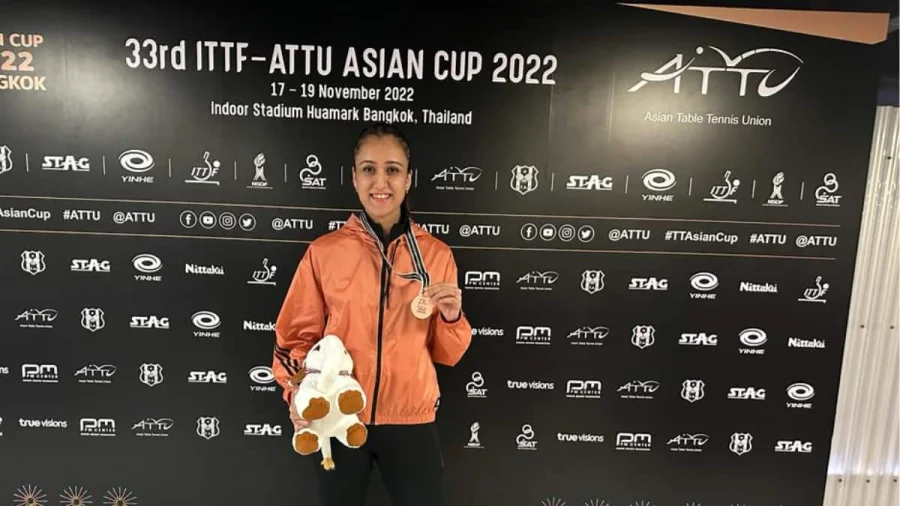
India's most decorated table tennis player, Manika Batra, is at the center of a growing controversy after being left out of the main squad for the 2026 Asian Games. The 2018 Commonwealth Games gold medalist has publicly questioned the selection process, demanding clarity on why she was named only as a reserve despite her stellar international record.
The Selection Shock: How Manika Batra Was Overlooked
The Table Tennis Federation of India (TTFI) announced the squad for the 2026 Asian Games, and the notable absentee was Manika Batra. She was named among the reserves alongside Swastika Ghosh, while the main team features players who are currently ranked higher in the national circuit. The decision has stunned fans and experts alike, given Batra's status as a trailblazer for Indian table tennis.
Why Was She Dropped? The Ranking Rule Explained
The core of the controversy lies in the selection criteria. The TTFI has reportedly based its selection on the national rankings, which are determined by performance in domestic tournaments. Manika Batra, who has been focusing on international events and professional leagues, did not participate in the required domestic tournaments. As a result, she does not feature in the current TTFI rankings, making her ineligible for automatic selection. This has raised a fundamental question: should a player's international pedigree outweigh domestic participation?
Manika Batra's Response: A Call for Transparency
Manika Batra did not stay silent. In a series of social media posts and statements, she expressed her disappointment and confusion. She questioned the logic of a system that sidelines a player who has consistently performed on the world stage. "I have always given my best for the country. I deserve to know why I was left out," she said, hinting at a deeper issue within the selection framework. She has appealed to the sports ministry to intervene and ensure a fair process.
The Human Impact: What This Means for Indian Table Tennis
This decision affects more than just one player. It sends a message to every Indian athlete that domestic tournaments may be prioritized over international success. For young paddlers aspiring to follow Batra's path, this could be a discouraging signal. The controversy also puts the TTFI under scrutiny, with many questioning whether the federation is supporting its top talent or creating unnecessary hurdles.
TTFI's Stance: Rules Are Rules
The TTFI has defended its decision, stating that the selection was based on a transparent and pre-defined ranking system. Officials have argued that the rules apply to everyone equally, and Batra's absence from domestic events was a choice she made. They maintain that the selected players earned their spots through consistent performance in national tournaments. However, critics argue that the system is rigid and fails to account for the unique demands of international athletes.
Analysis: A Clash Between Domestic and International Priorities
This controversy highlights a growing tension in Indian sports. Many top athletes, especially in individual sports, are increasingly focusing on international leagues and events to improve their game and rankings. However, national federations often rely on domestic tournaments for selection. The Manika Batra case is a classic example of this conflict. The question is not just about one player but about how India selects its teams for major multi-sport events like the Asian Games.
Confirmed Facts vs What Remains Unclear
What is confirmed: Manika Batra is not in the main squad and is a reserve. The TTFI used national rankings based on domestic tournaments. Batra did not play in those tournaments. What remains unclear: Whether the selection criteria were clearly communicated to all players in advance. Whether there was any flexibility or exception clause for top-ranked international players. Whether the sports ministry will intervene and review the decision.
Risks and Balanced View
From the TTFI's perspective, sticking to the rules ensures fairness and encourages participation in the domestic circuit. However, the risk is alienating the country's best talent. For Batra, the risk is losing valuable preparation time and match practice ahead of the Asian Games. A balanced view suggests that while rules are important, they must also be flexible enough to accommodate exceptional cases. The controversy could also damage the reputation of Indian table tennis on the global stage.
Wider Trend: The Growing Debate Over Selection Criteria in Indian Sports
This is not an isolated incident. Similar debates have occurred in other sports like badminton, athletics, and shooting, where top athletes have questioned selection policies. The core issue is often the same: a rigid domestic ranking system versus the need to support athletes who excel internationally. The Manika Batra case could become a landmark moment that forces federations to rethink their approach.
Practical Guidance for Athletes and Fans
For athletes: Understand the selection criteria of your federation well in advance. Balance domestic and international commitments if possible. For fans: Support the players but also understand the rules. For the sports ministry: This is a clear signal to review and standardize selection policies across all federations to ensure they are fair, transparent, and supportive of top talent.
Future Outlook: What Happens Next?
Manika Batra's appeal to the sports ministry could lead to a review. If the ministry intervenes, the TTFI may be asked to reconsider or provide a detailed explanation. If not, Batra will likely remain a reserve, and the controversy will continue to simmer. In the long term, this could lead to a policy change where international rankings and achievements are given more weight in selection for major events.
Our Take
The Manika Batra selection controversy is a classic case of a system failing its star. While rules are important, they must serve the larger goal of winning medals for the country. Excluding a player of Batra's caliber from the main squad weakens the team and sends the wrong message. The TTFI and the sports ministry must find a way to balance domestic participation with international excellence. This is not just about one player; it is about the future of Indian sports.
Frequently Asked Questions
Why was Manika Batra dropped from the Asian Games 2026 squad?
Manika Batra was not dropped but was named as a reserve. She was left out of the main squad because she did not participate in domestic tournaments, which are used to determine national rankings by the Table Tennis Federation of India (TTFI).
What is Manika Batra's response to the selection?
Manika Batra has publicly questioned the selection process, calling for transparency and clarity. She has appealed to the sports ministry to intervene and review the decision.
Who is in the main Indian table tennis squad for the Asian Games 2026?
The main squad features players who are ranked higher in the TTFI national rankings based on their performance in domestic tournaments. The specific names have been announced by the federation.
Can Manika Batra still play in the Asian Games 2026?
Yes, as a reserve, she can be called up if any player from the main squad is unable to participate due to injury or other reasons. However, she is not guaranteed a spot in the playing team.