The diplomatic fallout from the migrant crossings in Ceuta is escalating, with Spain now openly accusing some European Union partners of a "selfish" response to the crisis. The sharp rebuke comes as Italy took the unprecedented step of temporarily suspending its Schengen agreement with Spain, a move that signals deep fractures in the bloc's migration strategy.
Why Italy's Schengen Suspension Marks a Turning Point
Italy's decision to pause the Schengen arrangement with Spain is not a routine administrative measure. It is a direct political statement. Prime Minister Giorgia Meloni, who has taken a hardline stance on migration, described the scenes unfolding in Ceuta as "shocking," a characterization that has fueled the diplomatic row.
For the EU, the Schengen area represents one of its most tangible achievements—the free movement of people across borders. When a member state suspends it, even temporarily, it signals a profound loss of trust between capitals.
The 'Selfish' Label: What Spain Is Really Saying
Spanish officials have not minced words. By labeling the response of some EU countries as "selfish," Madrid is pointing a finger at nations that have offered little solidarity while Spain's southern border faces immense pressure. The criticism suggests that Spain feels abandoned by partners who are quick to protect their own borders but slow to share the burden of frontline states.
This is not merely about logistics; it is about the core principle of European solidarity. When a member state feels it is being left to manage a crisis alone, the entire framework of the union is weakened.
How the Ceuta Crossings Escalated Into a Diplomatic Crisis
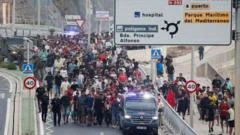
The events in Ceuta, a Spanish enclave on the North African coast, have been building for some time. A surge in migrant arrivals overwhelmed local authorities and created chaotic scenes that quickly circulated across news networks. The visual impact of these crossings—families, young men, and unaccompanied minors navigating the border—has forced the issue onto the political agenda in Madrid and Brussels.
While the immediate trigger was the crossing itself, the response from Italy has transformed a border management issue into a full-blown test of EU unity.
What This Means for Migrants and Border Communities
For the migrants who risked the journey to Ceuta, the political dispute has immediate consequences. Their fate is now entangled in a high-stakes diplomatic negotiation between EU capitals. For residents of Ceuta, the crisis has brought their city into the center of a continental debate, placing a heavy strain on local resources and social services.
The human cost is often lost in the political rhetoric, but it remains the most pressing element of this story.
Brussels and National Capitals: A Clash of Priorities
The European Commission has long advocated for a unified approach to migration, but the reality on the ground is that national interests often override collective action. Italy's move is a clear signal that Rome is willing to act unilaterally when it feels the EU's approach is failing. Spain's angry response shows that such unilateralism is deeply resented by frontline states.
Analyzing the Power Play Behind the Schengen Suspension
Italy's suspension is a calculated move. By invoking Schengen rules, Rome is forcing a conversation about border security that it believes the EU has avoided. For Spain, this is an attack on its sovereignty and an unfair shifting of blame. The result is a standoff that could redefine how the EU handles border emergencies in the future.
Confirmed Facts vs. What Remains Unclear
Confirmed: Italy has temporarily suspended the Schengen arrangement with Spain. PM Giorgia Meloni has publicly called the scenes in Ceuta "shocking." Spain has criticized the response of some EU countries as "selfish."
Unclear: The specific duration of the Schengen suspension. The full list of EU countries Spain is referring to in its "selfish" criticism. The immediate next steps for migrants currently in Ceuta.
Risks and the Fragile State of EU Unity
The risks of this dispute are significant. A prolonged suspension of Schengen between two major member states could encourage other countries to follow suit, effectively dismantling the border-free zone piece by piece. Critics of Italy's move argue that it plays into the hands of populist narratives that blame migrants for Europe's problems, while supporters see it as a necessary assertion of national control.
A Wider Pattern of Border Politics in Europe
This incident is not isolated. Across Europe, countries are increasingly testing the limits of EU rules to address domestic political pressures. From border fences to pushbacks, the trend is toward harder borders and less cooperation. The Ceuta dispute is the latest and most visible symptom of this shift.
What Should Travelers and Residents Watch For
For travelers, the suspension means potential checks at the Spain-Italy border, a rare inconvenience in the Schengen zone. For residents of Ceuta and the broader region, the focus should be on official announcements from Madrid and Brussels regarding the status of the crossings and any humanitarian aid packages.
The Road Ahead: Can the EU Rebuild Trust?
The immediate future depends on diplomatic backchannels. Spain will likely demand a retraction or explanation from Italy, while Rome may push for a broader EU commitment to border security. A resolution is possible, but it will require both sides to step back from the brink.
Our Take
This dispute is a warning sign for the European project. When member states begin to suspend core agreements over migration, it signals that the political consensus has broken down. The "selfish" label used by Spain is a symptom of a deeper ailment: the absence of a fair and functional EU-wide migration policy. Until that is addressed, crises like Ceuta will continue to test the union's foundations.
Frequently Asked Questions
Why did Italy suspend the Schengen agreement with Spain?
Italy temporarily suspended the Schengen arrangement with Spain following the migrant crossings in Ceuta. Italian PM Giorgia Meloni described the scenes as "shocking," leading to the suspension as a political and security measure.
What does the Schengen suspension mean for travelers?
The suspension means that temporary border checks may be reintroduced at the Spain-Italy border. Travelers should carry valid identification and expect potential delays when crossing between these two countries.
What is the "selfish" response Spain is criticizing?
Spain has criticized some EU countries for what it perceives as a lack of solidarity and a "selfish" response to the migrant crossings in Ceuta, implying that these nations are not sharing the burden of managing the crisis.
How does this affect the migrant situation in Ceuta?
The diplomatic dispute adds uncertainty to the situation in Ceuta. The political standoff between Spain and Italy could delay coordinated EU action to address the humanitarian and logistical needs of the migrants currently in the enclave.