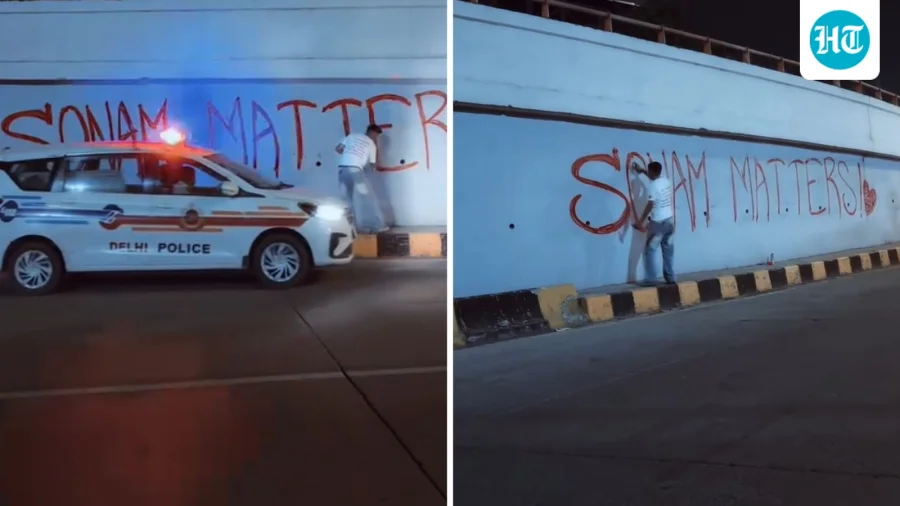
A massive graffiti on a Delhi flyover wall has turned heads and sparked conversations online. The artwork, which reads “Sonam Wangchuk matters” in bold white letters, comes as the climate activist enters the 19th day of his hunger strike. The message is simple, direct, and impossible to ignore.
Why this graffiti is drawing attention
The graffiti appeared on a flyover wall in the national capital, catching the eye of commuters and passersby. A video of the artwork has since gone viral on social media, with many sharing it as a show of solidarity. The timing is significant — Wangchuk has refused to end his hunger strike despite growing concerns over his health.
Who is Sonam Wangchuk and why is he on hunger strike?
Sonam Wangchuk is a well-known climate activist and education reformist from Ladakh. He is best known for his work on sustainable living and his role in inspiring the character of Phunsukh Wangdu in the Bollywood film 3 Idiots. His current hunger strike is aimed at drawing attention to climate change and the need for policy action in the Himalayan region.
The human impact of the protest
Wangchuk’s hunger strike has entered its third week, raising alarms among supporters and medical professionals. Despite appeals to end the fast, he has remained firm. The graffiti on the Delhi flyover wall serves as a public reminder that his cause has not been forgotten. For many, it is a visual expression of concern and support.
No official response yet
As of now, there has been no official statement from Delhi authorities or the police regarding the graffiti. It is unclear whether the artwork was created with permission or if it will be removed. The artist’s identity also remains unknown.
What the graffiti means for the movement
The appearance of such public art suggests that Wangchuk’s message is resonating beyond online spaces. Graffiti, especially in a high-visibility location like a Delhi flyover, can amplify a cause and create a sense of urgency. It also reflects a growing trend of using public art for political and social statements in India.
Confirmed facts vs what remains unclear
Confirmed: A graffiti reading ‘Sonam Wangchuk matters’ has appeared on a Delhi flyover wall. A video of it is circulating online. Wangchuk is on day 19 of his hunger strike. Unclear: The identity of the artist. Whether the graffiti is legal or will be removed. Any official response from authorities.
Risks and balanced view
While the graffiti has drawn positive reactions from supporters, it also raises questions about public property and legal boundaries. Some may view it as vandalism, while others see it as a legitimate form of protest. The lack of clarity on the artist’s identity also makes it difficult to verify the intent behind the artwork.
Wider trend of protest art in India
This is not the first time a Delhi wall has been used to make a political statement. In recent years, graffiti and murals have become tools for activists and artists to bypass traditional media and reach the public directly. From farmers’ protests to climate marches, walls in Indian cities have turned into canvases for dissent.
What readers should know
If you come across the graffiti, it is a reminder of an ongoing protest that has now entered a critical phase. For those following Wangchuk’s cause, the artwork may serve as a call to action. For others, it is a moment to reflect on the power of public art in shaping conversations.
Future outlook
It remains to be seen whether the graffiti will stay or be removed. What is clear is that Wangchuk’s hunger strike and the public response to it are far from over. The coming days may see more such acts of solidarity — or official action to curb them.
Our Take
The ‘Sonam Wangchuk matters’ graffiti is more than just paint on a wall. It is a snapshot of a moment when a protest moves from the personal to the public. Whether you agree with the method or not, the message is unmistakable: some causes refuse to be ignored. In a city where walls often speak louder than words, this one has found its voice.
Frequently Asked Questions
What does the ‘Sonam Wangchuk matters’ graffiti say?
The graffiti reads “Sonam Wangchuk matters” in large white letters on a Delhi flyover wall. It is a show of support for the climate activist who is on a hunger strike.
Who painted the Sonam Wangchuk graffiti?
The identity of the artist is currently unknown. The graffiti appeared anonymously on a Delhi flyover wall.
Why is Sonam Wangchuk on a hunger strike?
Sonam Wangchuk is on a hunger strike to demand policy action on climate change and environmental issues affecting the Himalayan region. He has been on strike for 19 days as of this report.
Will the graffiti be removed?
There has been no official statement from Delhi authorities about the graffiti. It is unclear whether it will be removed or allowed to remain.