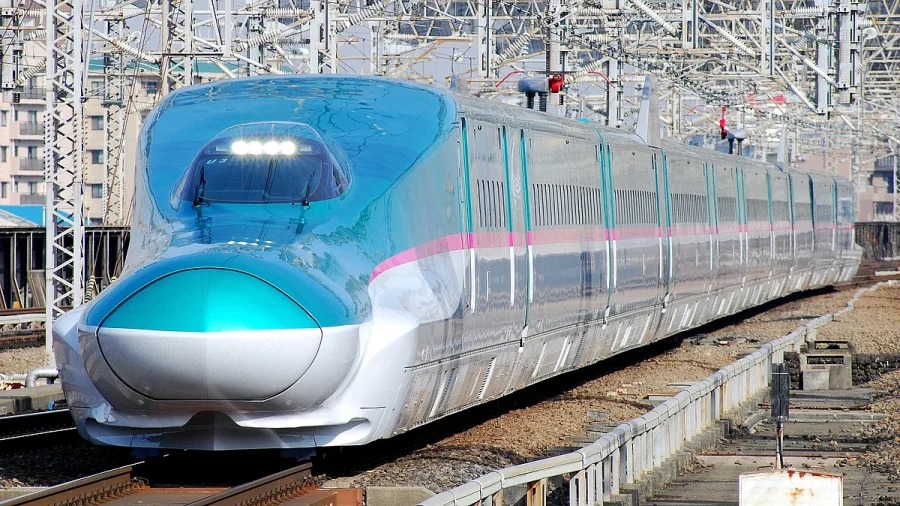
India has firmly rejected allegations by former Japanese minister Hideki Makihara, who blamed New Delhi for delays in the ambitious Mumbai-Ahmedabad bullet train project. Makihara, a member of Japan’s ruling Liberal Democratic Party, accused India of “recklessness” and repeatedly failing to honour commitments during negotiations.
What did the former Japanese minister say?
In a social media post, Makihara claimed that the responsibility for the delayed implementation of the high-speed rail project lay “entirely on the Indian side.” He said his experience in meetings and negotiations revealed “the sheer recklessness of the Indian side, repeated over and over.” Makihara also expressed concern over Japan’s alleged exclusion from the project’s signalling system, a key technological component.
Why this matters for India-Japan ties
The Mumbai-Ahmedabad bullet train project is a flagship symbol of India-Japan strategic partnership. Japan has provided financial and technological support, including a soft loan of over ₹88,000 crore. Any public friction over delays risks undermining trust between the two nations, especially as both seek deeper cooperation in infrastructure and defence.
India’s response: ‘Unfounded and baseless’
Indian officials swiftly dismissed Makihara’s remarks, calling them “unfounded” and “baseless.” In a statement, the Ministry of External Affairs reiterated India’s commitment to the project’s timely completion and said that all commitments made to Japan have been honoured. “India values the partnership with Japan and remains fully dedicated to the success of this transformative project,” an official said.
What is actually delaying the bullet train?
The Mumbai-Ahmedabad high-speed rail corridor, launched in 2017, has faced multiple hurdles. Land acquisition in Maharashtra and Gujarat has been a major bottleneck, with farmers and local communities resisting displacement. Regulatory approvals, environmental clearances, and the COVID-19 pandemic have also contributed to delays. Originally slated for completion by 2023, the project now has a revised deadline of 2028–2030.
Who is affected by these delays?
Commuters in Maharashtra and Gujarat, who were promised travel times of under three hours between Mumbai and Ahmedabad, remain the most directly affected. The delays also impact Japanese firms involved in supplying technology and equipment, as well as Indian contractors who have invested resources. For the broader public, the project represents a test of India’s ability to execute large-scale infrastructure projects with foreign partners.
Confirmed facts vs what remains unclear
Confirmed: Makihara made the allegations on social media; India has officially rejected them; the project has faced land acquisition and regulatory delays. Unclear: Whether Japan was actually excluded from the signalling system; the exact nature of Makihara’s involvement in negotiations; whether his views reflect official Japanese government positions.
Risks and balanced view
While India has defended its record, some analysts note that bureaucratic inefficiencies and land acquisition challenges are well-documented issues in Indian infrastructure projects. Critics argue that India must improve its execution capacity to maintain credibility with international partners. Supporters, however, point out that Japan’s own domestic high-speed rail projects have also faced delays, and that the partnership remains strong at the government level.
Wider trend: India-Japan infrastructure cooperation
The bullet train project is part of a broader pattern of Japan investing in Indian infrastructure, including the Delhi-Mumbai Industrial Corridor and the Chennai-Bengaluru Industrial Corridor. These projects are central to Japan’s “Free and Open Indo-Pacific” strategy, which seeks to counter China’s Belt and Road Initiative. Any friction over the bullet train could have ripple effects on other joint ventures.
What should readers know?
For those following the project, the key takeaway is that while public criticism has emerged, official channels remain engaged. The project is not abandoned, but its timeline remains uncertain. Investors and businesses should watch for any signs of strain in bilateral negotiations, while commuters should temper expectations for early completion.
Future outlook
Both sides are expected to continue technical and diplomatic discussions. India may seek to address Japan’s concerns over the signalling system while pushing for faster land acquisition. A resolution is likely, but the timeline for the bullet train’s completion remains fluid. The project’s fate will be a key indicator of India’s ability to manage complex international partnerships.
Our Take
The public spat between a former Japanese minister and India highlights the delicate nature of large-scale bilateral projects. While India’s rejection of the allegations is understandable, the underlying issues of land acquisition and execution capacity cannot be ignored. For the project to succeed, both sides must move beyond finger-pointing and focus on practical solutions. The bullet train remains a symbol of ambition—but also a reminder that ambition must be matched by execution.
Frequently Asked Questions
Why did the former Japanese minister criticize India?
Hideki Makihara accused India of “recklessness” and failing to keep promises, blaming New Delhi for delays in the Mumbai-Ahmedabad bullet train project.
How did India respond to the criticism?
India termed the remarks “unfounded” and “baseless,” reaffirming its commitment to the project and stating that all commitments to Japan have been honoured.
What is causing the bullet train delays?
Land acquisition issues in Maharashtra and Gujarat, regulatory hurdles, environmental clearances, and the COVID-19 pandemic have contributed to the delays.
Is the bullet train project still on track?
Yes, the project is ongoing, but the completion deadline has been revised from 2023 to 2028–2030. Both India and Japan remain committed to its success.