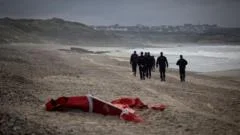
Thirty-one people climbed into a flimsy boat on a cold November night in 2021, hoping to reach Britain. None of them made it. This week, six men were jailed for manslaughter over the sinking — a verdict that finally attached criminal blame to the networks that put those passengers to sea.
What the Court Found
The trial concluded that the six convicted men were part of two separate smuggling networks that arranged the crossing. They were found responsible for the deaths of the 31 migrants who drowned when the boat went down in the Channel in November 2021.
The sinking remains the single deadliest incident recorded in the small-boats crisis that has defined UK–France border enforcement for years.
Why This Case Matters Beyond the Verdict
For years, prosecutions in the small-boats crisis have mostly targeted migrants themselves or low-level facilitators. Jailing organisers for manslaughter is a different legal approach — one that treats the deaths as a foreseeable consequence of the trade, not an accident.
That shift matters to families of the victims, who have long argued that the people who profited from the crossing faced far less scrutiny than those who boarded the boat.
How the Disaster Unfolded
In November 2021, a group of migrants set out across the Channel in a small, overcrowded vessel. The boat went down, and 31 people died. The trial established that the crossing had been arranged by two smuggling networks working in parallel.
Details of the specific evidence presented in court, and the exact sentences handed down, have not been independently verified in the material available for this report.
Who Is Affected
The immediate impact falls on the families of the 31 people who died — many of whom spent years waiting for accountability. The verdict also affects the wider migrant community, where word of prosecutions travels fast and shapes decisions about whether to attempt the crossing.
For the convicted men, the outcome is a custodial sentence and a criminal record for manslaughter.
What Authorities Have Said
The trial's central finding — that the guilty men belonged to two smuggling networks — is the key official conclusion available. Broader statements from prosecutors, police, or government officials have not been confirmed in the source material for this report and are therefore not quoted here.
Reading the Verdict in Context
Manslaughter convictions against smuggling organisers are legally difficult. Prosecutors must show the defendants' actions created a real risk of death, and that they knew or should have known it. In a case where the boat itself was unseaworthy and the Channel conditions were dangerous, that argument appears to have held.
The verdict does not end the small-boats crisis. It signals, however, that courts are willing to treat the organisers as criminally responsible when passengers die.
Confirmed Facts vs What Remains Unclear
Confirmed: 31 migrants died in November 2021 when their boat sank in the Channel; six men were convicted of manslaughter and jailed; the trial found they belonged to two smuggling networks.
Unclear: The precise length of each sentence, the names of the convicted men, the specific evidence that secured the convictions, and whether any appeals have been filed. These details are not confirmed in the available material and should not be treated as established.
Risks and a Balanced View
Supporters of the prosecution argue it strikes at the top of the smuggling chain and could deter organisers. Critics caution that prosecutions alone have not reduced crossings, and that the criminal networks adapt quickly — replacing arrested figures with new ones.
There is also a legal question about whether manslaughter convictions of this kind will be repeatable in future cases, or whether this one turns on unusually clear evidence.
The Wider Pattern
The Channel small-boats route has become one of the most dangerous irregular migration paths in Europe. Overcrowded, unseaworthy vessels and winter conditions have repeatedly produced mass-casualty incidents. This case is the most severe on record — and the first of its scale to end in manslaughter convictions against organisers.
What Readers Should Take From This
For anyone following migration policy, the takeaway is that the legal system is beginning to treat smuggling deaths as crimes with identifiable authors, not tragedies without blame. For families of victims, the verdict offers a measure of accountability, though not closure.
For those considering the crossing, the case is a reminder of the physical risk — and of the fact that the people arranging the journey are now themselves exposed to serious criminal liability.
What Could Happen Next
Appeals are possible, and further prosecutions of smuggling networks are likely as investigators build on this case. Whether the verdict changes the underlying economics of the trade — or the number of people attempting the crossing — remains an open question.
Our Take
This verdict is significant less for its length than for its logic: it treats 31 deaths as the predictable result of a commercial operation, not an unavoidable accident. That is a meaningful shift in how the Channel crisis is being handled in court. It will not stop the boats on its own — but it changes who is held responsible when they sink.
Frequently Asked Questions
What happened in the November 2021 Channel boat disaster?
A small boat carrying migrants sank in the English Channel in November 2021, killing 31 people. It is the deadliest single incident in the Channel small-boats crisis.
Why were six men jailed for manslaughter?
The trial found they were part of two smuggling networks that arranged the crossing. The court held them criminally responsible for the deaths of the 31 migrants.
Is this the first time smuggling organisers have been convicted of manslaughter?
Manslaughter convictions against organisers — rather than migrants or low-level facilitators — are rare in the small-boats context, making this case legally notable.
What does this mean for future Channel crossings?
It signals that courts may treat organisers as criminally liable when passengers die, which could shape future prosecutions. It is unlikely, on its own, to stop the crossings.