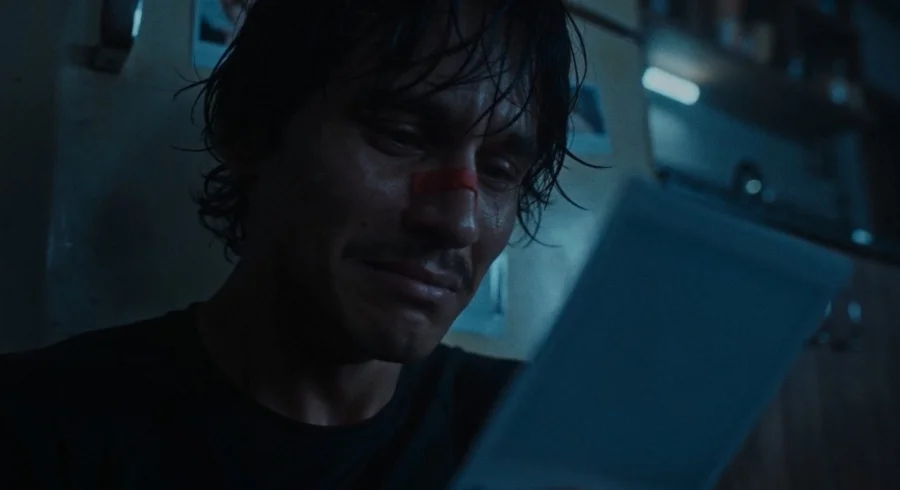
When Hell Grind premiered at Cannes this spring, it wasn't a Hollywood heavyweight or an Oscar-winning auteur that drew attention. It was the fact that the entire 95-minute action film — every actor, every backdrop, every explosion — was generated by artificial intelligence.
The film was made by a 15-person team at Higgsfield AI, a video startup, in under three weeks. The budget: $500,000. Four out of every five dollars went to computing power. The rest covered the humans behind the machines.
It's a milestone that raises a uncomfortable question for the film industry: if a feature-length movie can be produced this quickly and cheaply, what happens to the thousands of people who make movies the traditional way?
The $500,000 Movie That Could Change Everything
Hell Grind isn't a student project or a proof-of-concept. It's a full-length action film that screened at one of the world's most prestigious film festivals. And it was made for a fraction of what a typical Hollywood production spends on catering alone.
Higgsfield AI's approach relied entirely on synthetic actors and AI-generated visuals. No casting calls. No location shoots. No costume fittings. Just compute, code, and a small creative team guiding the output.
The result caught the public's imagination — not because of star power, but because of what its existence implies about the future of filmmaking.
Why This Matters Beyond the Red Carpet
Hollywood isn't just an entertainment hub. It's an ecosystem employing hundreds of thousands of people — actors, writers, editors, set designers, costume makers, lighting technicians, sound engineers, and more.
If AI can compress a three-week, $500,000 production into something that premieres at Cannes, the economic logic of traditional filmmaking starts to shift. Studios facing rising costs and shrinking margins may look at AI as a way to cut expenses. That could mean fewer jobs on set — and more roles for those who can work alongside AI tools.
For audiences, it could mean more content, made faster and cheaper. But it also raises questions about quality, originality, and whether AI-generated performances can ever carry the emotional weight of human ones.
How We Got Here: The Rapid Rise of AI Video Tools
AI video generation has moved from crude deepfakes to sophisticated scene creation in just a few years. Tools that once struggled to render a convincing human face can now produce full sequences with consistent characters and coherent action.
Higgsfield AI's Hell Grind is the most visible example yet of this leap. But it's part of a broader wave of AI adoption across pre-production, post-production, and everything in between — from script analysis to de-aging actors to generating background crowds.
The technology didn't arrive overnight. It's the result of years of research in generative models, massive computing investments, and a creative industry willing to experiment — sometimes reluctantly.
Who's Affected — And Why It's Not Just Actors
The immediate fear is for actors. If synthetic performers can carry a film, what happens to the thousands of working actors who fill supporting roles, background parts, and voice work?
But the impact extends far beyond the screen. Screenwriters, directors of photography, set builders, costume designers, editors, and visual effects artists all face a shifting landscape. Some roles may shrink. Others may evolve into new kinds of jobs — AI prompt engineers, synthetic performance directors, digital asset curators.
Higgsfield AI's own co-founder, Mahi De Silva, insists that future films will still need directors, screenwriters, set and costume designers — and yes, even actors. His argument: AI is a tool, not a replacement for human creativity.
Whether the industry agrees — or whether economic pressure overrides that view — remains to be seen.
What Higgsfield AI Says About the Future of Film
De Silva's position is notably measured for someone whose company just made a film without any human actors. He contends that AI will augment filmmaking, not eliminate the people who do it.
That's a common refrain among AI companies facing backlash from creative industries. It's also a claim that will be tested as the technology improves and studios weigh the cost savings against potential reputational risks and union pushback.
For now, Higgsfield AI has achieved something tangible: a Cannes-premiered film that exists as both a technical achievement and a warning shot.
What We Know — And What We Don't
Confirmed: Hell Grind is a 95-minute action film made entirely with AI-generated actors and visuals by a 15-person team at Higgsfield AI. It cost $500,000, with 80% spent on compute. It debuted at Cannes this spring.
Confirmed: Higgsfield AI's co-founder Mahi De Silva has publicly stated that future films will still require human directors, writers, designers, and actors.
Unclear: How audiences and critics received the film's quality, storytelling, and emotional impact. Whether major studios are actively pursuing similar AI-driven productions. How film unions and guilds will respond to AI-generated features. Whether AI-generated films will be eligible for major awards or subject to new regulations.
These are open questions — and their answers will shape how quickly AI becomes a standard part of Hollywood's toolkit.
Why Higgsfield AI Matters — And What Sets It Apart
Higgsfield AI isn't the only company working on AI video generation. But its Hell Grind project demonstrates a key differentiator: the ability to produce a complete, festival-ready feature film, not just short clips or experimental snippets.
That end-to-end capability — from concept to final cut — is what makes the startup noteworthy. It suggests a future where AI isn't just a tool for effects houses, but a production studio in its own right.
Whether Higgsfield AI can sustain that advantage as larger tech companies and established studios enter the space is another matter. But for now, it has something none of them do: a Cannes premiere and a proof point that AI filmmaking is no longer theoretical.
The Risks and the Pushback
Not everyone is celebrating. AI-generated films raise thorny questions about copyright, consent, and compensation. If an AI is trained on the work of human actors and filmmakers, do those humans deserve a cut? If synthetic actors replace real ones, what happens to their livelihoods?
Labor unions in Hollywood have already made AI a central issue in contract negotiations. The fear isn't just job loss — it's the devaluation of human creativity in an industry built on it.
There's also the question of quality. AI can generate images and motion, but can it generate meaning? Can it craft a performance that moves an audience to tears? Skeptics say no. Higgsfield AI's Hell Grind will be a test case.
A Broader Shift: AI Across Creative Industries
Film is just one front in AI's march through creative work. Music, advertising, video games, graphic design, and publishing are all grappling with similar disruptions.
The pattern is consistent: AI tools lower the barrier to entry, speed up production, and reduce costs. They also displace workers, challenge copyright norms, and force industries to redefine what "human-made" means.
Hollywood's response — a mix of experimentation, resistance, and negotiation — mirrors what's happening elsewhere. The outcome in film could set a precedent for how other creative fields navigate the same transition.
What This Means for Aspiring Filmmakers and Industry Professionals
For those working in or hoping to enter film, the message is clear: AI literacy is becoming as important as traditional skills. Understanding how to use AI tools — and how to work alongside them — will be a competitive advantage.
For actors, diversifying into voice work, motion capture, or live performance may offer some insulation. For writers and directors, the ability to integrate AI into workflows without losing creative vision will be key.
And for audiences, the question is simpler: will they accept AI-generated films as entertainment, or will they demand the human touch?
What Happens Next
Higgsfield AI has shown what's possible. The next phase will be about adoption, regulation, and reaction.
If studios see Hell Grind as a template, AI-generated films could become more common — especially for genres like action, where spectacle often matters more than nuanced performance. If unions and regulators push back, the transition could be slower and more contentious.
Either way, the conversation has shifted. AI in Hollywood is no longer a hypothetical. It's a Cannes premiere, a $500,000 budget, and a 15-person team that made a feature film in three weeks.
Our Take
Hell Grind is a landmark — not because it's necessarily a great film, but because it proves that AI can make one. That genie isn't going back in the bottle.
The real story isn't whether AI will replace human filmmakers. It's how the industry will adapt. History suggests that technological shifts in entertainment don't eliminate jobs wholesale — they transform them. The people who thrive will be those who learn to use the new tools, not those who pretend they don't exist.
But there's a caution here too. Cost savings and speed are seductive. If AI-generated content floods the market, audiences may tire of it — or they may not notice the difference. That's the uncomfortable uncertainty Hollywood now faces.
What's certain is that the conversation about AI and film has moved from speculation to reality. And the next Cannes may have even more AI premieres.
Frequently Asked Questions
What is Hell Grind and why is it significant?
Hell Grind is a 95-minute action film created entirely with AI-generated actors and visuals by Higgsfield AI. It's significant because it was made by a 15-person team in under three weeks for $500,000 — a fraction of traditional film costs — and premiered at Cannes, signaling AI's arrival in mainstream cinema.
Will AI replace actors and filmmakers in Hollywood?
Higgsfield AI's co-founder Mahi De Silva says no, arguing that future films will still need directors, writers, designers, and actors. However, AI is likely to change how those roles function, with some jobs shrinking and new ones emerging. The full impact will depend on industry adoption, union negotiations, and audience acceptance.
How much did it cost to make an AI-generated film?
Hell Grind cost $500,000, with 80% of that spent on computing power. The remaining 20% covered the 15-person team's work. By comparison, a typical Hollywood action film can cost $50 million or more.
What does AI in Hollywood mean for the future of filmmaking?
AI is likely to make film production faster and cheaper, potentially leading to more content and new creative possibilities. But it also raises concerns about job losses, copyright, and whether AI-generated performances can match human emotional depth. The industry is still figuring out how to balance innovation with protecting creative livelihoods.