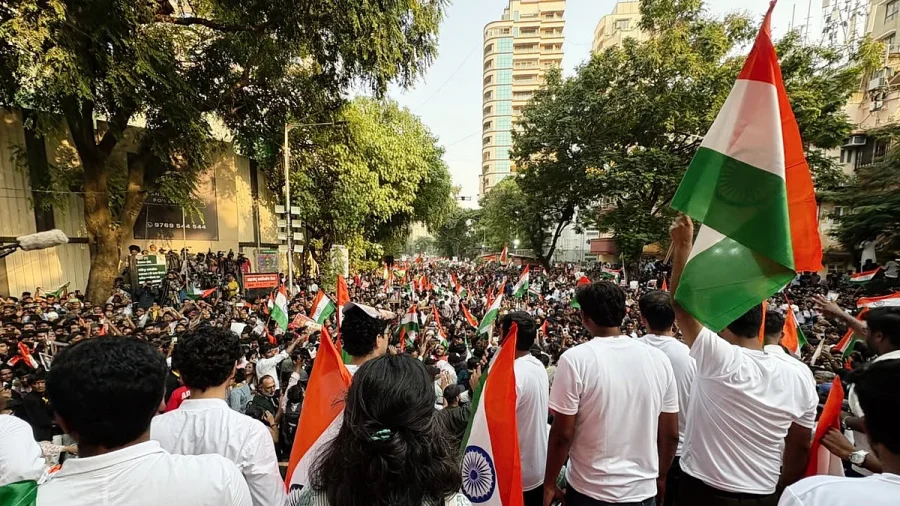
The heat was punishing. The police barricades were formidable. But neither could silence the roar that rose from Mumbai's Shivaji Park on Friday, October 2. Thousands of young protesters, their voices hoarse but resolute, chanted 'Gyanu must go,' transforming the historic ground into a cauldron of public dissent against the country's top election official.
A Defiant Gathering on Gandhi Jayanti
The protest, organized by the Cockroach Janta Party (CJP), was a 'jail bharo andolan'—a mass movement aimed at filling jails—demanding the resignation of Chief Election Commissioner Gyanesh Kumar. The choice of Gandhi Jayanti was symbolic, invoking the spirit of peaceful civil disobedience. Yet, the event was anything but sanctioned; Mumbai Police had explicitly denied permission for the gathering.
Despite the official ban, the crowds swelled through the afternoon. The air was thick with slogans and the palpable energy of a generation that feels its voice is being systematically undermined. The protesters were not just a faceless crowd; they were a cross-section of India's youth, joined by prominent voices from the arts and activism.
Why 'Gyanu Must Go'? The SIR and the Unanimity Question
At the heart of this anger is the Special Intensive Revision (SIR) of electoral rolls, a process that has sparked widespread controversy. The CJP and its supporters allege that the SIR is a tool for disenfranchisement, targeting specific communities and undermining the integrity of the voter list.
The demand for CEC Gyanesh Kumar's exit is further fueled by reports that two other election commissioners had raised objections to the SIR process. The protesters argue that if the decisions were truly unanimous, as the Election Commission of India (ECI) claims, why were there objections at all? This perceived disconnect between the official narrative and reported internal dissent has become a rallying cry.
Celebrities and Citizens Unite Against the Barricades
The presence of veteran actor Naseeruddin Shah, acclaimed actress Shabana Azmi, filmmaker Vishal Bhardwaj, singer Vishal Dadlani, and Tushar Gandhi, the great-grandson of Mahatma Gandhi, lent significant weight to the demonstration. Their participation elevated the protest from a student-led agitation to a broader cultural and civil society movement.
For the thousands of young people who braved the heat and the police barricades, the message was clear: this is not a partisan issue, but a fight for the soul of Indian democracy. The wall of police barricades, intended to contain the crowd, instead became a backdrop for a powerful display of unity.
The ECI's Stand: 'All Decisions Were Unanimous'
The Election Commission of India has consistently maintained that all decisions regarding the SIR were taken unanimously by the full commission. This official position directly contradicts the claims of dissent that have been circulating and which form the core of the CJP's demand.
By sticking to its stance, the ECI has positioned itself in direct opposition to the protesters' narrative. The commission's credibility is now on the line, caught between its official pronouncements and the public's growing skepticism. The protest at Shivaji Park is a direct challenge to that credibility.
Confirmed Facts vs. What Remains Unclear
Confirmed: The CJP organized a protest at Shivaji Park on October 2. Mumbai Police denied permission. Thousands attended, including several public figures. The ECI has stated all decisions were unanimous.
Unclear: The exact nature of the objections raised by the two election commissioners and whether they were formally recorded. The long-term impact of this protest on the SIR process and the ECI's functioning. Whether the police will take action against the protesters for defying the ban.
Risks and a Balanced View
While the protest was largely peaceful, the defiance of a police ban sets a risky precedent. It raises questions about the balance between the right to protest and the maintenance of public order. The ECI, on the other hand, faces a crisis of confidence. Its challenge is to conduct a free and fair election process while addressing the perception that it is not transparent.
The CJP's movement, while energetic, must also articulate a clear, constructive path forward beyond the demand for a resignation. The risk of the movement being co-opted or losing momentum is real if it remains solely focused on a single individual.
A Wider Pattern of Youth Mobilization
The Shivaji Park protest is not an isolated event. It is part of a growing trend of youth-led political mobilization across India. From climate strikes to anti-citizenship law protests, young Indians are increasingly taking to the streets to demand accountability from institutions.
This generation is digitally savvy, well-informed, and impatient with traditional political processes. The CJP's ability to mobilize thousands on a working day, despite a police ban, is a testament to this new energy. It signals a shift in how political dissent is organized and expressed in the country.
What This Means for the Common Citizen
For the average voter, the controversy surrounding the SIR and the CEC is not an abstract political debate. It directly impacts the integrity of their vote. If the electoral rolls are flawed, the very foundation of representative democracy is weakened.
Citizens should pay close attention to the ECI's responses and the government's stance. It is crucial to verify information from official sources and to engage in peaceful, democratic dialogue. The events at Shivaji Park are a reminder that the health of a democracy depends on the active participation and vigilance of its people.
Future Outlook
The CJP has vowed to continue its agitation. The coming weeks will be critical. Will the ECI offer any clarification or review of the SIR process? Will the government intervene? Or will this be the beginning of a sustained, nationwide movement?
The 'Gyanu must go' chant may have faded from Shivaji Park, but its echo is likely to reverberate in the corridors of power for some time to come. The battle for the narrative around India's electoral integrity has well and truly begun.
Our Take
The protest at Shivaji Park is more than a demand for one man's resignation. It is a symptom of a deepening trust deficit between the country's institutions and its citizens. The ECI's insistence on unanimity, in the face of credible reports of dissent, is a strategic misstep that has only fueled the fire.
For democracy to function, institutions must not only be impartial but also be seen to be impartial. The CJP's movement, however noisy, has tapped into a genuine anxiety about the sanctity of the vote. The onus is now on the ECI to address these concerns with transparency, not just with statements. The future of India's electoral credibility may depend on it.
Frequently Asked Questions
What is the CJP protest at Shivaji Park about?
The Cockroach Janta Party (CJP) organized a protest at Shivaji Park in Mumbai on October 2, demanding the resignation of Chief Election Commissioner Gyanesh Kumar over the Special Intensive Revision (SIR) of electoral rolls and alleged objections by two election commissioners.
Did Mumbai Police give permission for the protest?
No, Mumbai Police had denied permission for the gathering. However, thousands of protesters defied the ban and assembled at Shivaji Park.
What is the ECI's official stand on the SIR controversy?
The Election Commission of India has stated that all decisions regarding the SIR were taken unanimously by the full commission, denying any internal dissent.
Which celebrities joined the CJP protest in Mumbai?
Prominent figures like Naseeruddin Shah, Shabana Azmi, Vishal Bhardwaj, Vishal Dadlani, and Tushar Gandhi joined the student groups and activists at the protest.