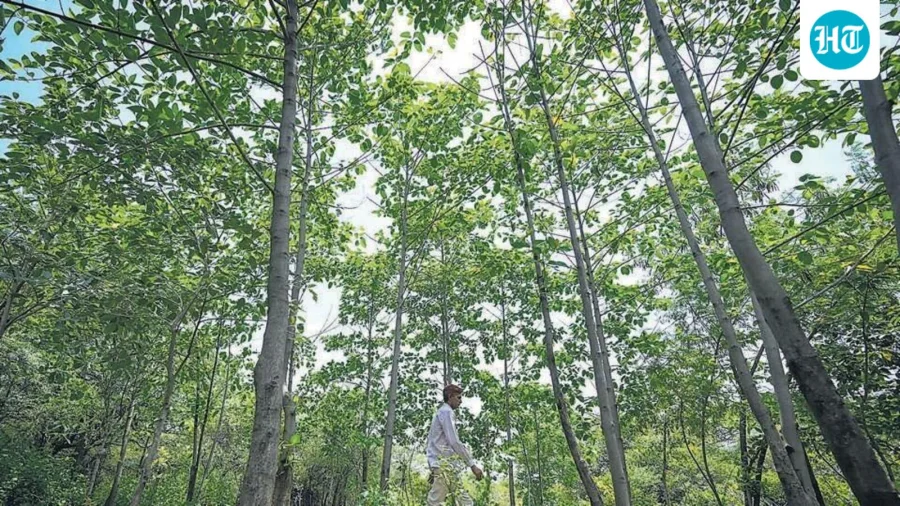
Delhi just gave 277.56 acres of the Northern Ridge the strongest legal shield a forest can have in India. The Delhi government has approved reserved forest status for this stretch under the Indian Forest Act — a move that turns a vulnerable green patch into land the state cannot easily hand over to builders, roads, or concrete.
For a city that loses trees faster than it plants them, this is not a small paperwork update. It is a legal line in the sand.
What Reserved Forest Status Actually Means for the Ridge
Under the Indian Forest Act, once an area is declared a reserved forest, almost every activity that damages it becomes an offence. Felling trees, grazing cattle, clearing land, quarrying, or building without permission can invite prosecution.
More importantly, reserved forest land cannot be diverted for non-forest use without approval from the central government — a much higher bar than ordinary revenue land. That single clause is what makes this approval significant.
Why the Northern Ridge Is More Than Just Trees
The Northern Ridge is part of the Aravalli hill system that runs through Delhi. It is one of the few remaining contiguously forested patches in the capital, home to native scrub, birds, reptiles, and small mammals that have nowhere else to go.
It also acts as a natural sponge — absorbing rainwater, cooling nearby neighbourhoods, and holding back dust. For residents of Kamla Nagar, Mukherjee Nagar, and Delhi University's north campus, the Ridge is the difference between a livable summer and an unbearable one.
How the Ridge Kept Shrinking — And Why This Approval Matters Now
Over the decades, the Ridge has been eaten away piece by piece. Encroachments, illegal construction, road-widening projects, and institutional expansion have all chipped at its edges.
Environmental groups and resident welfare associations have repeatedly flagged that without formal protected status, the Ridge remained legally soft — easy to reclassify, easy to hand over. Reserved forest status changes that equation. It does not make the Ridge untouchable, but it makes touching it far more expensive, legally and politically.
Who Benefits — And Who Is Watching Closely
For Delhi's residents, the benefit is long-term: cleaner air, cooler microclimates, and a green space that survives beyond one government's tenure. For students and walkers who use the Ridge trails, it means the landscape they know is less likely to vanish.
For environmental lawyers and activists, this is a test case. They will be watching whether the notification is followed by actual demarcation, fencing, and patrolling — or whether it remains a paper protection.
What Authorities Have Said — And What Remains Unclear
The Delhi government has approved the reserved forest status. Formal notification, boundary demarcation, and the exact survey numbers are details that will emerge as the process moves forward.
It is not yet clear how existing encroachments inside the 277.56-acre stretch will be handled, or what timeline the government has set for physical demarcation. Those are the questions that will decide whether this approval translates into real protection.
Confirmed Facts vs What Is Still Open
Confirmed: The Delhi government has approved reserved forest status for 277.56 acres of the Northern Ridge under the Indian Forest Act.
Unclear: The exact notification date, the survey boundaries, the plan for existing encroachments, and the enforcement mechanism on the ground. Until these are spelled out, the Ridge's protection is legally strong but operationally untested.
The Bigger Pattern: India's Shrinking Urban Forests
Delhi is not alone. Cities across India — Bengaluru, Mumbai, Hyderabad, Chennai — have seen their last green patches come under pressure from infrastructure and real estate. In most cases, protection arrives late, after significant damage is already done.
The Northern Ridge approval fits into a growing push to give urban forests formal legal identity before they disappear. Whether that push succeeds depends less on approvals and more on enforcement.
What Delhi Residents Should Do Now
If you live near the Ridge, this is the moment to pay attention. Watch for the formal notification, the boundary markers, and any signs of fresh construction or dumping inside the newly protected area.
Resident groups and environmental organisations typically track these developments closely. Reporting encroachment early — with photos, dates, and locations — is one of the most effective ways citizens can help enforce what the law now promises.
What Could Happen Next
The next steps will likely include a formal gazette notification, survey and demarcation of the 277.56-acre boundary, and instructions to the forest department for protection and monitoring.
If enforcement follows, the Northern Ridge could become a model for how Indian cities protect their last green spaces. If it does not, the approval will be remembered as a good decision that never reached the ground.
Our Take
Reserved forest status is the strongest legal tool available for protecting a forest in India. Giving it to 277.56 acres of the Northern Ridge is a meaningful step — not symbolic, not cosmetic.
But law on paper and forest on ground are two different things. The real test begins after the notification: whether the boundary is marked, whether encroachments are removed, and whether the forest department has the staff and political backing to say no when pressure arrives. Delhi's green future depends on that follow-through.
Frequently Asked Questions
What does reserved forest status mean for the Northern Ridge?
It means the 277.56-acre stretch is now legally protected under the Indian Forest Act. Activities like tree felling, encroachment, grazing, and construction are restricted, and any diversion for non-forest use requires central government approval.
Why is the Northern Ridge important for Delhi?
The Northern Ridge is one of the capital's last remaining contiguous forest patches, part of the Aravalli system. It supports local wildlife, helps recharge groundwater, cools nearby areas, and acts as a natural dust barrier.
Will this stop all construction and encroachment in the area?
Legally, it makes unauthorised activity much harder and punishable. Practically, enforcement depends on demarcation, patrolling, and how existing encroachments are handled — details that are still to be worked out.
What happens next after this approval?
The government is expected to issue a formal notification, survey and mark the boundary, and direct the forest department to protect the area. Residents and environmental groups will be watching how quickly and seriously this is implemented.