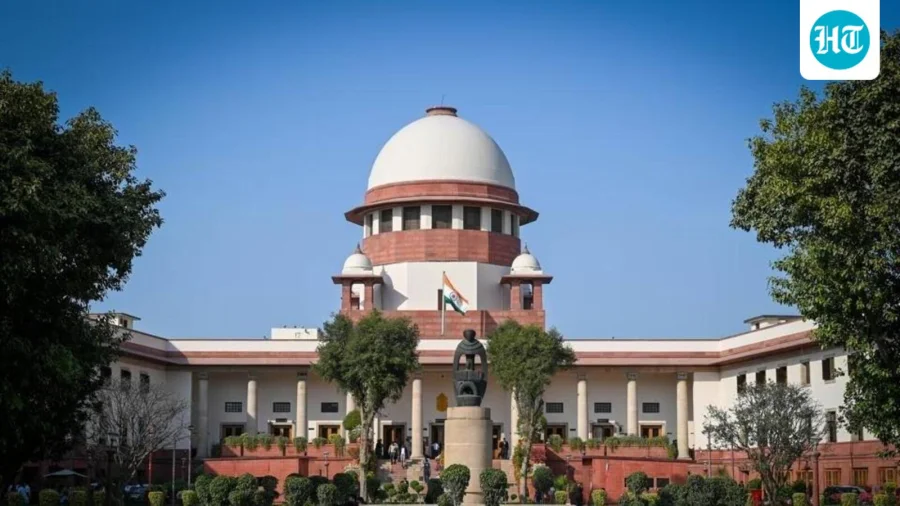
The Supreme Court of India is facing a fresh legal challenge — not over a verdict, but over the process behind it. A plea has been filed seeking recall of the court's September 23 order on the Chief Election Commissioner appointment law, citing an alleged conflict of interest involving Justice Satish Chandra Sharma. The core of the objection: his son reportedly serves as counsel for the Election Commission of India, the very institution the law governs.
A Recall Plea That Questions More Than the Order
The plea does not merely challenge the legal reasoning of the September 23 order. It questions whether the judicial process itself was compromised by a familial connection. According to the original report, the petitioner argues that Justice Sharma's son's role as ECI counsel creates an appearance of conflict — even if no actual bias existed. In judicial matters, the appearance of impropriety can be as consequential as impropriety itself.
Why the CEC Appointment Law Matters to Every Voter
The law governing the appointment of the Chief Election Commissioner and other Election Commissioners is not a technical statute. It directly shapes who runs India's elections — the largest democratic exercise in the world. Any perceived compromise in the judicial oversight of this law raises uncomfortable questions about the independence of the very body that conducts polls. For ordinary voters, this is not an abstract legal debate. It is about whether the referee of Indian democracy is chosen fairly.
How the September 23 Order Became the Flashpoint
The September 23 order was part of the Supreme Court's ongoing engagement with the CEC appointment law. While the exact contents of that order are not detailed in the available report, the plea seeking its recall suggests it was significant enough to warrant a fresh challenge. The timeline is tight: the order was issued in September, and the recall plea has followed, indicating that the conflict-of-interest concern emerged or was crystallised after the order was passed.
The Human Dimension: A Judge, a Son, and Public Trust
Justice Satish Chandra Sharma is not a distant figure in this story. He is a sitting judge whose family member's professional role has now become the centre of a Supreme Court plea. For the Sharma family, this is a personal matter made public. For the judiciary, it is a test of how transparently it handles such concerns. For the public, it is a reminder that judicial independence is not just about rulings — it is about how those rulings are perceived.
What the Supreme Court and ECI Have Said — and Not Said
As of now, there is no reported official response from the Supreme Court or the Election Commission of India on this specific plea. The absence of a statement is not an admission of anything — it is simply the current state of affairs. The plea is pending, and the court has not yet indicated whether it will hear the matter. Readers should note that no judicial finding has been made on the conflict-of-interest claim.
Reading the Silence: What This Plea Signals
Recall pleas are rare. They are not routine procedural filings. When one is filed citing a familial conflict, it signals that the petitioner believes the original order cannot stand without addressing the process behind it. Whether or not the Supreme Court accepts this argument, the plea has already achieved something: it has put the question of judicial propriety in CEC matters into the public domain. That alone may shape how future appointments are scrutinised.
Confirmed Facts vs What Remains Unclear
Confirmed: A plea has been filed seeking recall of the September 23 order. The plea cites Justice Satish Chandra Sharma's son's role as ECI counsel. The plea is pending.
Unclear: The exact contents of the September 23 order. Whether the Supreme Court will admit the plea. Whether Justice Sharma was part of the bench that passed the order. Whether the ECI or the judge have offered any response. The legal basis on which the recall is sought beyond the conflict-of-interest claim.
Speculation: Any suggestion that the order was actually influenced by the familial connection remains unproven and should be treated as allegation, not fact.
Risks and the Balanced View
There are two risks here. First, if the plea is dismissed without a thorough examination, it could deepen public cynicism about judicial accountability. Second, if recall pleas citing family connections become routine, they could be used to harass judges or delay proceedings. The balance lies in treating this plea seriously while insisting on evidence — not insinuation. The Supreme Court's handling of this matter will be watched closely, not just for its legal outcome but for its tone.
A Wider Pattern: Judicial Transparency Under Scrutiny
This plea is not an isolated event. Across democracies, the question of how judges handle conflicts — financial, familial, or professional — has become more urgent. In India, the absence of a formal mechanism for recusal in many cases means such concerns often surface only through pleas like this one. The CEC law context makes it sharper: election oversight is the one area where even the perception of bias can erode institutional trust.
What Readers Should Watch For
If you follow Indian politics or law, the next steps matter. Watch whether the Supreme Court lists this plea for hearing. Watch whether the ECI or the judge issue any clarification. Watch whether the recall plea leads to a broader examination of how CEC appointment matters are adjudicated. For now, the responsible approach is to track verified updates — not viral claims — and to distinguish between a plea being filed and a plea being accepted.
Future Outlook
The Supreme Court could dismiss the plea as lacking merit, admit it for a full hearing, or refer it to a larger bench. Each path carries different implications. A dismissal would close this chapter but may not resolve public questions. An admission would reopen the September 23 order and potentially the CEC law itself. Either way, the story is unlikely to end quietly.
Our Take
This plea is not about one judge or one son. It is about whether the Supreme Court — the final arbiter of electoral disputes — can be seen to be above familial influence. The court's response will matter less for its legal precision and more for its demonstration of institutional self-awareness. In a democracy, the referee must not only be fair but be seen to be fair. That standard applies to the judiciary as much as to the Election Commission.
Frequently Asked Questions
What is the plea seeking recall of the CEC law order about?
It seeks to recall the Supreme Court's September 23 order on the Chief Election Commissioner appointment law, citing an alleged conflict of interest involving Justice Satish Chandra Sharma's son's role as ECI counsel.
Who is Justice Satish Chandra Sharma?
He is a judge whose son reportedly serves as counsel for the Election Commission of India. The plea argues this creates an appearance of conflict in a matter concerning the ECI.
Has the Supreme Court responded to the plea?
No official response or hearing date has been reported. The plea remains pending.
Why does this matter for ordinary Indians?
Because the CEC appointment law governs who runs India's elections. Any question about judicial independence in this area affects public trust in the electoral process itself.