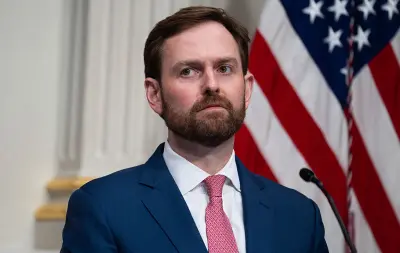
Imagine building your entire company’s future on a single AI model — and then waking up one day to find that model has changed, been shut down, or become a security liability. That is the nightmare scenario Microsoft CEO Satya Nadella is warning business leaders about.
Nadella’s stark warning: One AI model is a single point of failure
In a recent statement, Satya Nadella argued that companies which trust one AI for everything may not survive. He believes the future belongs to businesses that either build their own models or deploy an “AI gateway” — a layer of infrastructure that separates their prompts from the model itself. This, he says, prevents vendor lock-in and ensures strategic flexibility.
Why this matters for every business leader right now
The warning is not theoretical. Many companies have rushed to integrate a single AI provider — often OpenAI, Google, or Anthropic — into their core operations. Nadella’s point is that this creates a dangerous dependency. If the model’s pricing changes, its capabilities shift, or a security flaw emerges, the entire business could be compromised. For Indian startups and enterprises, where cost sensitivity is high, this risk is even more acute.
The AI gateway concept explained simply
An AI gateway acts like a smart router. Instead of sending your company’s sensitive data directly to a single AI model, the gateway manages which model handles which task, encrypts prompts, and ensures compliance. Nadella’s argument is that without this layer, companies are essentially handing over their strategic control to an external AI provider. Think of it as the difference between owning your own server room versus renting space in someone else’s building — with no lock on your door.
Who is affected and what it means for them
This warning hits hardest at mid-sized tech firms, fintech startups, and any company building AI-powered products. For example, a Bengaluru-based SaaS startup relying solely on one large language model for customer support, code generation, and data analysis could face catastrophic disruption if that model is suddenly deprecated or becomes too expensive. Nadella’s message is clear: diversify your AI infrastructure now.
What Nadella’s comments reveal about Microsoft’s strategy
Nadella’s warning also reflects Microsoft’s own positioning. The company has invested heavily in OpenAI but also offers Azure AI services that support multiple models. By promoting the “AI gateway” concept, Microsoft is subtly encouraging businesses to use its cloud infrastructure as the intermediary — a move that strengthens its ecosystem while protecting customers from single-model risk. Critics may see this as self-serving, but the underlying logic is sound.
Confirmed facts vs what remains unclear
Confirmed: Nadella has publicly warned against single-model AI dependency. The concept of AI gateways is part of his recommended strategy. Unclear: The exact context of his remarks (specific event or interview) and whether he named any particular AI provider. The warning appears to be a general strategic principle rather than a response to a specific incident.
Risks and balanced view: Is Nadella overstating the danger?
Some industry analysts argue that for small businesses, using a single, well-established AI model is practical and cost-effective. Building your own model or deploying a gateway requires significant technical expertise and investment. Others point out that Nadella’s warning conveniently aligns with Microsoft’s commercial interests. However, even critics acknowledge that over-reliance on any single technology provider has historically led to problems — from cloud vendor lock-in to the collapse of once-dominant platforms.
The wider trend: AI infrastructure is becoming a strategic battleground
Nadella’s comments are part of a larger industry shift. Companies like Amazon, Google, and Microsoft are racing to offer multi-model AI platforms. Meanwhile, startups like LangChain and others are building open-source gateway tools. The message is clear: the era of “one AI to rule them all” is ending. The future is about choice, flexibility, and control.
Practical guidance for business leaders
If you run a company that uses AI, start by auditing your current dependencies. Ask: What happens if our primary AI model changes its pricing or policies tomorrow? Can we switch to another model without rebuilding our entire product? Consider experimenting with AI gateway tools — even open-source ones — to decouple your prompts from the model. For startups, this may seem like an extra cost, but it is insurance against future disruption.
What could happen next
Expect more companies to announce multi-model AI strategies in the coming months. Microsoft will likely double down on its Azure AI gateway offerings. Regulators may also take notice, as single-model dependency raises competition and data security concerns. Nadella’s warning could become a defining moment in how enterprises approach AI adoption.
Our Take
Satya Nadella’s warning is both a strategic insight and a commercial pitch. But that does not make it wrong. History is littered with companies that bet everything on one technology — from BlackBerry’s reliance on its own OS to businesses that tied themselves to a single cloud provider. The AI landscape is evolving too fast for such bets. Whether you build your own model or use a gateway, the principle is the same: own your AI destiny. For Indian businesses, where agility is a survival trait, this advice is especially relevant.
Frequently Asked Questions
What did Satya Nadella say about companies using one AI model?
Nadella warned that companies relying on a single AI model for all their operations may not survive. He recommends building your own models or using an AI gateway to separate prompts from the model.
What is an AI gateway?
An AI gateway is an infrastructure layer that manages which AI model handles each task, encrypts data, and allows companies to switch between models without rebuilding their systems. It prevents vendor lock-in.
Why is relying on one AI model risky?
It creates a single point of failure. If the model’s pricing, capabilities, or security changes, the entire business could be disrupted. It also limits flexibility and strategic control.
Should small businesses follow Nadella’s advice?
For small businesses, the cost of building custom models or deploying gateways may be high. However, even small steps — like using multiple AI tools for different tasks — can reduce dependency risk.