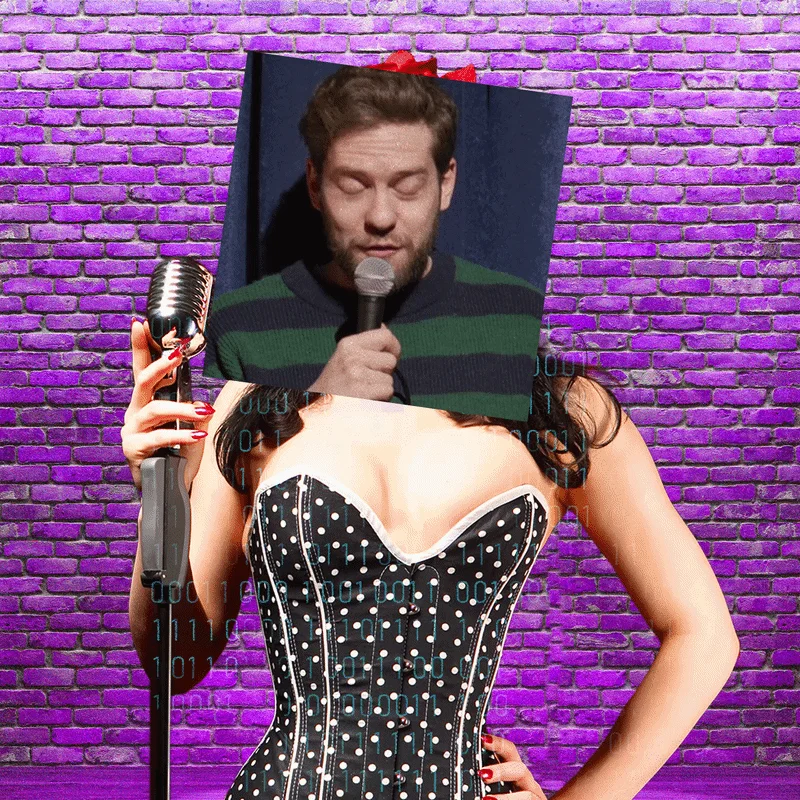
Stand-up comedy has always been a grind — open mics, small clubs, years of writing before a single joke lands. Now some of that hard-won material is being fed into a different machine entirely: AI-generated "models" who don't write, don't perform, and don't need to be funny.
According to reporting on the phenomenon, a network of these virtual accounts is lifting comedians' routines and repurposing them as bait — content designed to pull viewers toward adult subscription platforms like OnlyFans and Fanvue. The comedians being copied often find out only when fans tell them.
The Joke Is the Bait, Not the Product
The mechanics are simple and cynical. An AI-generated persona posts a clip, a caption, or a bit that sounds familiar — because it is. The material draws engagement. That engagement becomes a funnel. The endpoint is a paid adult subscription account.
The comedian's craft is the hook. The payoff goes somewhere else entirely.
Why This Hurts More Than a Repost
Comedians already deal with joke theft — it's an old, ugly tradition in the industry. But this is different in kind. A human thief at least has to stand on stage and tell the joke. An AI network can scale the theft across dozens of accounts, in multiple languages, around the clock.
For working comics, material is inventory. It's what they sell tickets with. When it's stripped of context and used to sell something else, the damage isn't just financial — it's reputational. Fans who stumble on the AI account may not realize the comedian had nothing to do with it.
How the Accounts Operate
These AI-generated models typically present as attractive women with consistent visual identities — same face, same aesthetic, same tone across posts. The content is synthetic but polished. The comedy bits are inserted to give the account a personality and a reason to follow.
From there, the funnel is standard: tease, redirect, monetize. The adult platform accounts behind the personas collect subscription revenue. The comedians whose material seeded the audience see none of it.
The Legal Gray Zone Comedians Are Stuck In
Copyright law was not built for this. A joke, told aloud, is notoriously difficult to protect — courts have generally treated short-form comedy as too ephemeral or too tied to delivery to qualify cleanly for protection. Add AI generation and anonymous accounts into the mix, and enforcement becomes nearly impossible.
Even when a comedian can identify the account, the person behind it may be in a different jurisdiction, operating under a pseudonym, with no traceable business entity. Cease-and-desist letters go nowhere. Platform takedowns are slow and inconsistent.
What Comedians Can Actually Do — and What They Can't
In practice, options are thin. Comedians can report accounts to the platforms hosting them, but AI-generated content policies vary widely and enforcement is uneven. They can try to trademark catchphrases or signature bits, though that's expensive and rarely practical.
What they can't easily do is stop the underlying practice. The economics favor the AI accounts: low cost, high volume, no performance overhead.
Confirmed Facts vs What Remains Unclear
Confirmed: AI-generated model accounts are using comedians' material to drive traffic to adult subscription platforms. The practice is ongoing.
Unclear: The exact scale of the network, the identities of the operators, whether any comedians have pursued legal action, and whether platforms are taking specific steps to address it. No official statements or filings have been confirmed.
The Bigger Pattern: AI as a Theft Engine
This is not an isolated story. It fits a broader pattern of AI systems being used to strip value from human creators — writers, illustrators, musicians, and now comedians — and redirect it toward low-cost, high-margin synthetic content. The comedy angle is new. The dynamic is not.
What makes this case particularly stark is the mismatch: a comedian spends years developing a voice. An AI account can mimic the output in minutes and monetize it immediately.
What This Means for Anyone Creating Online
If you publish creative work — jokes, scripts, songs, essays — assume it can be scraped, repurposed, and monetized without your knowledge. Watermarking, monitoring, and documenting your material helps, but it is not a guarantee.
The more practical takeaway is structural: creators need better platform-level protections and clearer legal pathways. Until those exist, the burden falls on individuals who are already stretched thin.
Where This Could Go Next
Regulators in several countries are beginning to look at AI-generated content and impersonation, but comedy theft is unlikely to be a priority. Platform policy changes are possible but slow. The most likely near-term outcome is that the practice continues, and comedians keep finding out from their fans.
Our Take
The story isn't really about AI or adult content. It's about what happens when the cost of copying drops to zero and the cost of enforcing ownership stays high. Comedians are the canary here. The same dynamic is already playing out across every creative industry — and the legal system is years behind.
Frequently Asked Questions
What is happening with AI models and comedians?
AI-generated virtual models are using comedians' jokes and routines as content to attract followers, then funneling that audience toward paid adult subscription accounts on platforms like OnlyFans and Fanvue.
Can comedians sue over this?
It's very difficult. Jokes are hard to protect under copyright, the accounts are often anonymous, and operators may be in different jurisdictions. Practical enforcement options are limited.
Are the platforms doing anything about it?
No confirmed platform-level action has been reported. AI content policies vary, and enforcement is generally slow and inconsistent.
Why does this matter beyond comedy?
It shows how easily AI can strip value from human creators across any field — writing, music, art — and redirect it toward synthetic, monetizable content with almost no accountability.