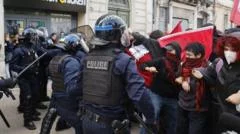
Riot police have confronted students on the streets of France as a wave of education protests — sparked by teacher shortages and falling classroom standards — escalated into open confrontation. More than 600 schools have reported disruption, and the unrest shows no sign of fading.
What Sparked the Biggest School Crisis France Has Seen This Year
The protests did not erupt overnight. They are the product of months — arguably years — of mounting frustration inside France's education system. Teachers have been leaving the profession in growing numbers, classrooms are overcrowded, and parents say standards are slipping.
Students, who say their futures are being compromised, have taken to the streets. What began as scattered demonstrations has now spread to hundreds of schools nationwide.
Why 600 Schools Going Dark Matters Beyond France's Borders
France's education system is one of the most centralised and closely watched in Europe. When it stumbles, the ripple effects are felt in neighbouring countries dealing with similar pressures — ageing teacher workforces, budget constraints, and post-pandemic learning gaps.
For French families, the disruption is immediate: children out of classrooms, parents scrambling for childcare, and uncertainty about what the school year will look like if protests continue.
How the Standoff Escalated to Riot Police on School Streets
The decision to deploy riot police marks a significant escalation. Security forces are typically reserved for the most volatile public order situations in France. Their presence outside schools signals that authorities view the protests as a serious threat to public order — or that they are struggling to contain them through other means.
Clashes between police and students have been reported, though the full extent of injuries or arrests remains unclear from available information.
The Students and Teachers Caught in the Middle
Behind every disrupted school is a classroom of students whose education is on hold. For many, this is not an abstract political moment — it is their exam preparation, their university applications, and their daily routine being upended.
Teachers, meanwhile, find themselves in a difficult position. Many share the students' concerns about resources and standards but may not support the methods being used to express them.
What French Authorities Have Said — and What They Haven't
Official statements have been limited. The French government has not yet outlined a comprehensive response to the scale of disruption, leaving a vacuum that both protesters and the public are watching closely.
Education ministry officials have previously acknowledged challenges in teacher recruitment and retention, but whether those acknowledgements will translate into concrete action remains an open question.
Reading the Deeper Signal in France's Classroom Revolt
France has a long tradition of street protest — it is woven into the country's political DNA. But protests centred on schools carry a particular weight. They touch on national identity, social mobility, and the promise of equal opportunity.
When students and police face off outside schools, it suggests a breakdown in the normal channels of dialogue. That is the real warning sign here — not just the clashes themselves, but what they say about how disconnected decision-makers have become from those inside the system.
Confirmed Facts vs What Remains Unclear
Confirmed: More than 600 schools have faced disruption. Riot police have clashed with students. Protests are ongoing across multiple locations in France.
Unclear: The exact number of arrests or injuries. Whether union negotiations are underway. What specific policy concessions — if any — the government is prepared to offer. Whether the protests will expand or contract in the coming days.
Readers should treat social media footage and unverified claims with caution. The situation is fluid.
Risks and the View From the Other Side
Not everyone supports the protest methods. Some parents and educators worry that disrupting schools harms the very students the movement claims to protect. There are also concerns that clashes with police could turn public sympathy away from the protesters' cause.
On the other hand, critics of the government argue that without disruption, education funding and teacher shortages would continue to be ignored. Both perspectives carry weight — and both are part of the story.
A Pattern Across Europe: Education Under Strain
France is not alone. From the UK to Germany, education systems are grappling with teacher burnout, budget shortfalls, and declining student outcomes. The French protests may be the most visible flashpoint, but the underlying pressures are continental — and in many cases, global.
What happens in France could influence how other governments respond to similar tensions in their own school systems.
What Students, Parents, and Observers Should Watch For
If you are a student or parent in France, monitor official school communications for closures and updates. If you are following the story from outside, watch for three signals: whether unions call for a nationwide strike, whether the government offers a formal response, and whether the clashes escalate or subside.
These three factors will determine whether this remains a wave of protests or becomes a sustained national crisis.
What Could Happen Next
The coming days are critical. If the government opens a dialogue with unions and student representatives, the protests could de-escalate. If it responds with further police force or silence, the movement may harden and grow.
France's history suggests that ignoring street-level anger rarely works. But so does the history of protest movements that lose public sympathy through disruption. The next move belongs to both sides.
Our Take
This is not just a story about riot police and students. It is a story about what happens when a country's education system — the engine of its social contract — starts to fail the people it is meant to serve. France's protests are a warning shot, not just for Paris, but for every government that has deferred investment in teachers and classrooms. The question is not whether France will resolve this. It is whether it will listen before the next clash.
Frequently Asked Questions
Why are students protesting in France?
Students are protesting over declining education standards and a shortage of teachers in French schools. They say the system is failing them and that authorities have not done enough to address the crisis.
How many schools have been affected by the protests?
More than 600 schools have reported disruption, according to available information. The number could rise if protests continue or expand.
Have there been arrests or injuries?
Clashes between riot police and students have been reported, but the exact number of arrests or injuries remains unclear from currently available information.
What is the French government doing about the protests?
The government has not yet issued a comprehensive public response to the scale of the disruption. It remains unclear whether formal negotiations with unions or student groups are underway.