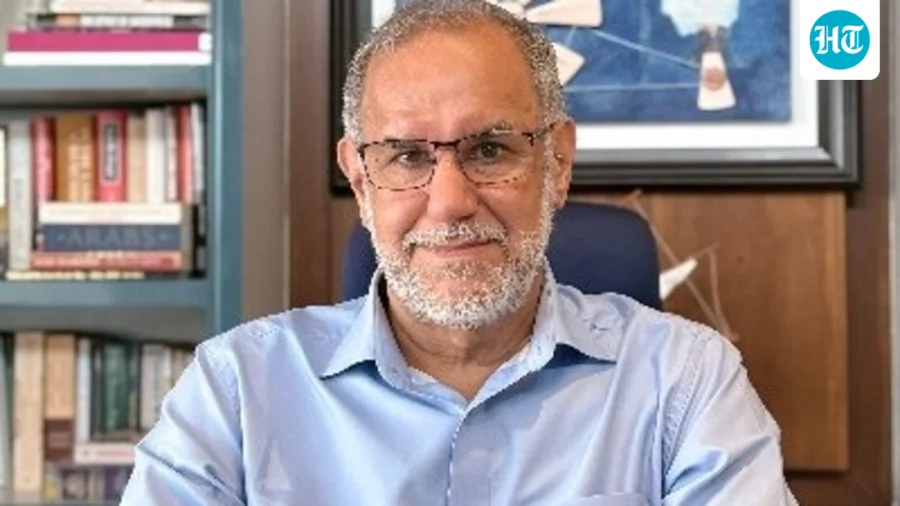
Imagine spending decades representing India on the global stage — in three different nations — only to be told back home that your documents "do not match" and you need to prove you are Indian. That is exactly the ordeal former diplomat Navdeep Puri says he faced with Punjab's Special Investigation Report (SIR) process.
A Diplomat's Unexpected Hurdle in Punjab's SIR Verification
Navdeep Puri, who served as India's High Commissioner in key diplomatic posts, has publicly shared his frustration after being caught in a bureaucratic tangle. According to his account, when he approached the authorities for a Special Investigation Report (SIR) — a routine verification process — he was told that his documents did not align with their records.
The instruction was stark: he would need to return with fresh documents proving he is an Indian citizen. For a man who has formally represented the Republic of India in three foreign nations, the request struck a deeply ironic chord.
Why This Verification Process Matters to Ordinary Citizens
While Puri's case involves a high-profile individual, the SIR process is a reality for countless Indians. Special Investigation Reports are often required for passport verifications, government job background checks, and police clearance certificates. When the system flags a mismatch, it can delay travel plans, job offers, or even pension clearances.
If a former High Commissioner — whose entire career was built on official government documentation — can face such hurdles, it raises uncomfortable questions about how the system treats the average citizen who may not have the resources or connections to navigate these bureaucratic roadblocks.
The Background: A Career Spent Representing India Abroad
Navdeep Puri is not a name unknown to the Indian establishment. His diplomatic career spanned decades, with postings that placed him at the heart of India's foreign policy. Serving as High Commissioner in three nations meant he was the official face of India — signing agreements, representing the country at international forums, and holding an Indian diplomatic passport that was renewed and verified multiple times by the Ministry of External Affairs.
The fact that his credentials were impeccable at the international level, yet flagged at a state-level verification desk, highlights a disconnect between central government records and state-level administrative processes.
The Human Impact: Dignity vs. Red Tape
For Puri, this is not just about a document. It is about the dignity of service. After years of serving the nation, being asked to "prove" his citizenship in a local office is an experience that many retired officials and senior citizens can relate to. It reflects a system that often prioritizes procedure over people, and paperwork over common sense.
The emotional weight of his statement — "I represented India in 3 nations" — is a reminder that behind every bureaucratic form is a human story. For a retired diplomat, this verification is not just a formality; it is a question mark on a lifetime of documented service.
What the Authorities Have Said So Far
As of now, there has been no detailed official statement from Punjab Police or the SIR department addressing Puri's specific complaint. The former envoy's account, shared publicly, suggests that the officials at the SIR desk were following protocol as per their records, but the mismatch in documentation has not been explained.
It remains unclear whether this is a data entry error, a change in verification norms, or a case of outdated records not being synced with central databases. Without an official clarification, the public is left to speculate on how such a glaring oversight could occur.
Analyzing the Disconnect: Central Records vs. State Verification
This incident sheds light on a systemic issue: the lack of seamless data integration between the Ministry of External Affairs (which issues diplomatic passports) and state police departments (which conduct SIR verifications). A diplomatic passport is issued after rigorous background checks by the central government. Yet, when the same individual approaches a state-level SIR process, the records appear to be siloed.
Experts suggest that this is not an isolated case. Many citizens face delays because state databases do not always reflect updates made in central records, leading to unnecessary friction and repeated visits to government offices.
Confirmed Facts vs. What Remains Unclear
What is confirmed is Puri's public statement about being asked to return with documents proving his Indian citizenship. What remains unclear is the exact nature of the "mismatch" — whether it was a spelling error, a missing document, or a database synchronization failure. The authorities have not yet provided a detailed explanation, and Puri has not specified which documents were flagged.
Until an official clarification is issued, the full picture of what went wrong remains incomplete.
The Wider Pattern: Bureaucratic Friction in Public Services
Puri's ordeal is part of a larger, well-documented pattern of bureaucratic friction in India. From pensioners being asked to prove they are alive to citizens being asked for documents they have already submitted, the "prove you exist" syndrome is a recurring complaint. The push for digital governance and the DigiLocker system aims to reduce such friction, but ground-level implementation often lags behind policy intent.
This case is a stark reminder that while India has made significant strides in digital infrastructure, the human element of administration — empathy, common sense, and respect for an individual's record — still has a long way to go.
Practical Guidance: What to Do If Your SIR or Verification Is Flagged
For citizens facing a similar situation, experts suggest a few practical steps. First, always carry copies of all previous government-issued documents, including old passports, voter IDs, and Aadhaar. Second, ask the SIR office for a written list of exactly which documents are mismatched — this prevents multiple trips. Third, if the issue persists, escalate to a senior officer or use the Centralized Public Grievance Redress and Monitoring System (CPGRAMS) portal to file a formal complaint.
For retired officials, it is also advisable to keep a digital and physical copy of their last issued diplomatic or official passport, as it serves as a strong reference point for verification.
Future Outlook: Will This Prompt Administrative Reform?
While this incident may not immediately trigger a policy overhaul, it adds to the growing chorus of voices calling for administrative simplification. If a former High Commissioner's case gains traction, it could prompt state governments to review their SIR processes and improve data sharing with central ministries.
The hope is that this becomes a catalyst for change — not just for the elite, but for every citizen who has ever been caught in the frustrating loop of "your documents do not match."
Our Take
Navdeep Puri's ordeal is more than a personal grievance; it is a mirror held up to the Indian administrative system. When a man who has signed treaties on behalf of India is asked to prove he is Indian, the system is not just failing him — it is failing the very concept of documented service. This story matters because it highlights the gap between the India we project globally and the India we experience locally. It is a reminder that administrative efficiency is not just about speed, but about respect for the citizen.
Frequently Asked Questions
Who is Navdeep Puri?
Navdeep Puri is a retired Indian diplomat who served as India's High Commissioner in three nations. He is a former officer of the Indian Foreign Service with decades of experience representing India abroad.
What is a Special Investigation Report (SIR)?
A Special Investigation Report (SIR) is a verification process conducted by state police departments, often required for passport applications, government job background checks, and other official clearances. It verifies the identity and background of an individual.
Why was Navdeep Puri asked to prove his Indian citizenship?
According to Puri's public account, Punjab SIR authorities told him his submitted documents "do not match" their records. He was asked to return with fresh documents proving he is an Indian citizen, despite his long diplomatic career.
What should I do if my SIR verification is flagged as mismatched?
Ask for a written list of the mismatched documents, carry all previous government-issued IDs, and if the issue persists, escalate to a senior officer or file a grievance on the CPGRAMS portal.