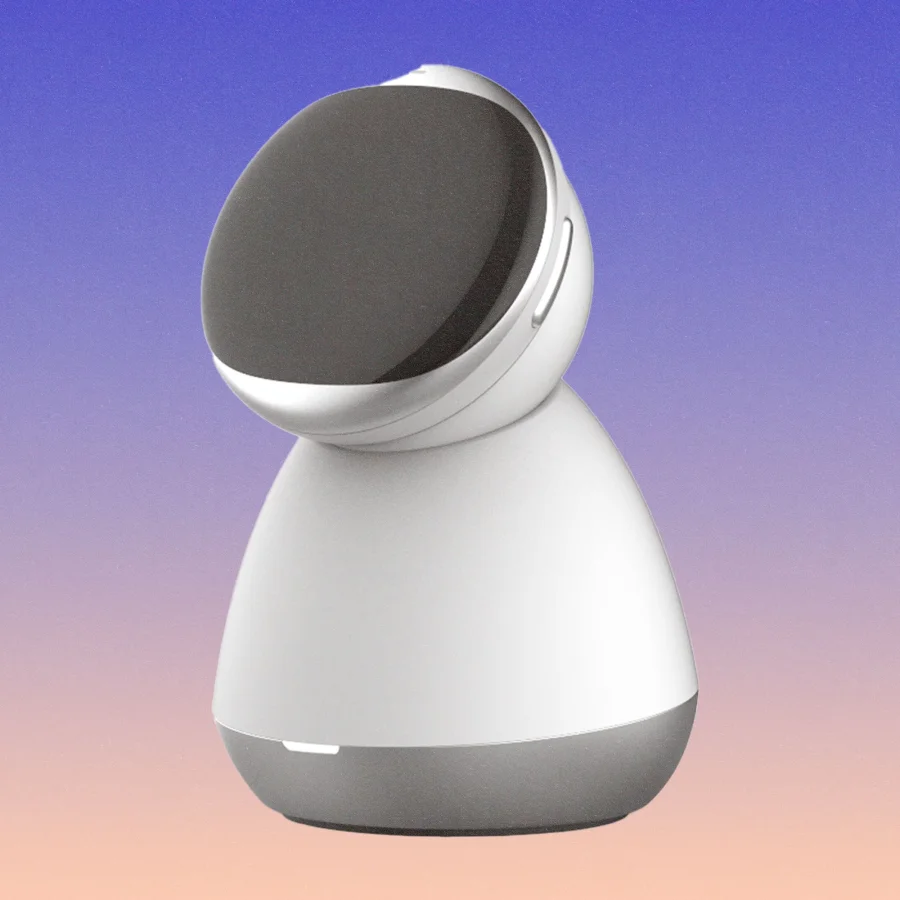
Remember Jibo, the cute, expressive robot that promised to be your family’s companion but ended up as a cautionary tale of overpromised AI? Its spiritual successor has arrived — and it’s not a robot at all. It’s a wearable, or a desk-mounted device, called iKairos, and it’s designed to turn your life into AI-generated content. Think of it as an “AI journal” that takes your family moments and transforms them into synthetic images and videos. The question is: do we really want our memories to become AI slop?
What Is iKairos, the Jibo Successor?
iKairos is a small, wearable or desk-mounted device that captures snippets of your daily life — conversations, meals, kids playing — and then uses generative AI to turn those moments into stylized images and short videos. The company behind it says it has the “blessings” of the original Jibo founders, positioning it as a continuation of that vision: a device that lives with you, not just a tool you use. But where Jibo was a physical robot with a personality, iKairos is more like a passive observer that outputs AI slop — a term used to describe low-effort, algorithmically generated content that often feels hollow or uncanny.
Why This Matters for Your Family Memories
The core promise of iKairos is emotional: it helps you “never forget” the beautiful, mundane moments of family life. But there’s a darker side. By turning real memories into AI-generated images, the device could replace authentic experiences with synthetic ones. A child’s first laugh, a birthday cake, a quiet evening — all could be reimagined by an algorithm. Over time, what you remember might not be what actually happened, but what the AI decided was worth remembering. For families already struggling with screen time and digital detachment, this raises uncomfortable questions about what we’re outsourcing to machines.
From Jibo’s Promise to iKairos’s Reality
Jibo launched in 2014 with a $2.2 million Kickstarter and a vision of a friendly home robot. It raised over $70 million in venture funding but ultimately failed, leaving early backers with a bricked device after the company shut down in 2019. iKairos seems to learn from that failure by being simpler: no moving parts, no complex AI personality. Instead, it’s a passive recorder and generator. The founders’ “blessings” suggest a lineage, but the product is fundamentally different — less a companion, more a memory factory.
Who Is Affected by This Device?
iKairos is aimed at families, parents, and anyone who wants to “capture” life without holding a phone. The pitch is emotional: you can be present in the moment while the device quietly documents it. But the real impact may be on children, whose childhood memories could be curated and altered by AI without their consent. Privacy advocates are already concerned about a device that constantly records audio and video in the home, even if it’s marketed as a journal. The data — your family’s most intimate moments — would be processed by cloud-based AI, raising questions about who owns those memories.
What the Creators Say About iKairos
The team behind iKairos has positioned the device as a “blessed” successor to Jibo, emphasizing emotional connection over utility. In early marketing materials, they describe it as “an AI that lives with you, not just a gadget you use.” They claim the device is designed to be unobtrusive and that all data is encrypted. However, no independent reviews or detailed privacy policies have been released. The company has not responded to requests for comment on data retention or whether users can delete their AI-generated memories permanently.
The Deeper Problem: Turning Life Into AI Slop
The term “AI slop” has emerged to describe the flood of low-quality, algorithmically generated content that fills social media feeds. iKairos takes this concept into the home. Instead of scrolling through AI-generated images on Instagram, you’re now the subject of them. The device doesn’t just document your life — it reimagines it. A family dinner becomes a Renaissance painting. A child’s drawing becomes an animated short. The result may be beautiful, but it’s also a distortion. Over time, the line between what was real and what was generated could blur, especially for young children who may not understand the difference.
Confirmed Facts vs What Remains Unclear
Confirmed: iKairos is a wearable/desk device that uses generative AI to create images and videos from real-life moments. The company claims it has the blessing of Jibo’s original founders. The device is in early announcement phase.
Unclear: Pricing, release date, data privacy practices, whether the device records continuously or on demand, and how AI-generated content is stored or shared. No independent reviews exist. The term “AI slop” is used critically by observers, not by the company itself.
Why iKairos Matters Beyond the Gadget
iKairos is a symptom of a larger trend: the commodification of memory. From Google Photos’ “Memories” feature to AI-generated year-in-review videos, we’re already outsourcing our recollection to algorithms. iKairos takes it a step further by actively creating new memories that never happened. For families, this could be a tool for joy — or a subtle erosion of authenticity. The device also raises questions about consent: can a child consent to having their childhood turned into AI slop? And what happens when those AI-generated images are shared online?
What Should You Do Before Buying iKairos?
If you’re considering iKairos, wait for independent reviews and a clear privacy policy. Ask: Does the device record continuously? Where is my data stored? Can I delete all AI-generated content permanently? Who owns the images and videos created by the AI? For now, the safest approach is to treat it as an interesting concept, not a must-have device. If you want to preserve family memories, a simple camera or journal may be more authentic — and less likely to turn your life into content for an algorithm.
What’s Next for iKairos and AI Memory Devices
iKairos is likely the first of many devices that blend passive recording with generative AI. If it succeeds, expect competitors from Apple, Google, or startups. If it fails — like Jibo — it will become another cautionary tale about the gap between emotional marketing and real-world utility. The bigger question is whether society wants to remember life as it was, or as an algorithm thinks it should be. The answer may define how we experience memory in the AI age.
Our Take
iKairos is a fascinating but unsettling product. It promises to preserve memories while simultaneously replacing them with synthetic versions. The blessing of Jibo’s founders gives it a nostalgic halo, but the device itself is a radical departure from Jibo’s vision of a companion. Instead of a friend, iKairos is a filter — one that could quietly rewrite your family’s history. For now, the best memory device is still your own mind, supported by a simple photo album. Let’s not outsource our most precious moments to an algorithm that doesn’t know the difference between a real laugh and a generated one.
Frequently Asked Questions
What is iKairos?
iKairos is a wearable or desk-mounted device that uses generative AI to turn real-life family moments into AI-generated images and videos. It is marketed as an “AI journal” and claims to have the blessing of Jibo’s original founders.
How is iKairos different from Jibo?
Jibo was a physical robot with a personality designed to be a family companion. iKairos is a passive recording device that outputs AI-generated content. It is simpler, cheaper, and focused on memory creation rather than interaction.
Is iKairos safe for privacy?
There are no independent reviews or detailed privacy policies yet. The company claims data is encrypted, but questions remain about continuous recording, cloud storage, and whether users can permanently delete their data. Proceed with caution.
Should I buy iKairos for my family?
Wait for independent reviews and a clear privacy policy. Consider whether you want your family’s real memories to be replaced by AI-generated versions. For now, traditional cameras and journals offer more authenticity and control.