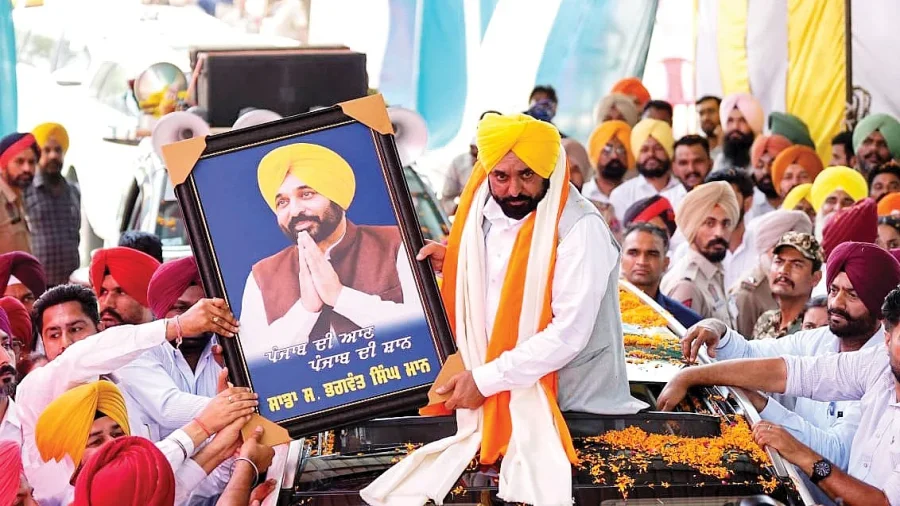
Punjab Chief Minister Bhagwant Mann thought it would be a masterstroke. On Baisakhi, 13 April, he convened a special session of the Vidhan Sabha with a single-point agenda: to pass the Jaagat Jot Sri Guru Granth Sahib Satkar (Amendment) Bill, 2026. The bill introduces much stricter punishments for acts of sacrilege (beyadbi) against the Sikh holy text. But the move has backfired, leaving the government facing accusations of political opportunism on one of Sikhism’s most sacred days.
For families across Punjab, sacrilege is not a political issue — it is deeply personal. Every act of disrespect against the Guru Granth Sahib triggers widespread anguish and protests. Mann’s decision to use Baisakhi, a day of harvest and religious celebration, to push through a law that successive governments had promised but failed to deliver, was meant to position him as a decisive leader. Instead, it has raised uncomfortable questions about timing and intent.
What the New Sacrilege Law Changes
The amendments substantially expand a 2008 Act, which primarily regulated the printing and handling of the Guru Granth Sahib. The new bill prescribes a minimum punishment of 10 years for acts of sacrilege. This is a significant escalation from the earlier framework, which did not have such stringent sentencing guidelines.
The symbolism of the date was unmistakable. Beyadbi is an emotionally charged issue in Punjab. By choosing Baisakhi, Mann attempted to align his government with the religious sentiments of the Sikh community. But critics argue that the special session was rushed, lacking proper debate or consultation with religious leaders.
Why the Masterstroke Backfired
The backlash stems from the perception that the bill was more about political positioning than genuine reform. The opposition has accused Mann of using a sacred occasion for political gain. Religious groups have questioned why the government did not consult the Shiromani Gurdwara Parbandhak Committee (SGPC) or other Sikh bodies before tabling the bill.
What was intended as a masterstroke has instead exposed the government to charges of insensitivity. The very emotion Mann sought to harness — the public outrage over sacrilege — has turned against him, with many seeing the move as a calculated political stunt rather than a sincere effort to protect the Guru Granth Sahib.
What This Means for Punjab
The controversy has deepened the trust deficit between the government and religious institutions. For ordinary Punjabis, the question is not just about stricter punishment but about the process. A law that affects the most sacred text of the Sikh faith should ideally emerge from consensus, not a single-day special session.
The bill’s passage may now face legal or political challenges. The government will have to defend not just the content of the law but the manner in which it was enacted.
Our Take: Editorial Analysis
The bottom line is that Mann miscalculated. On an issue as sensitive as sacrilege, symbolism matters as much as substance. By choosing Baisakhi for a political move, he invited scrutiny he was not prepared for. The lesson for political leaders is clear: when dealing with faith, speed and surprise are not virtues. Trust and consultation are. This masterstroke has backfired because it ignored the very community it claimed to protect.