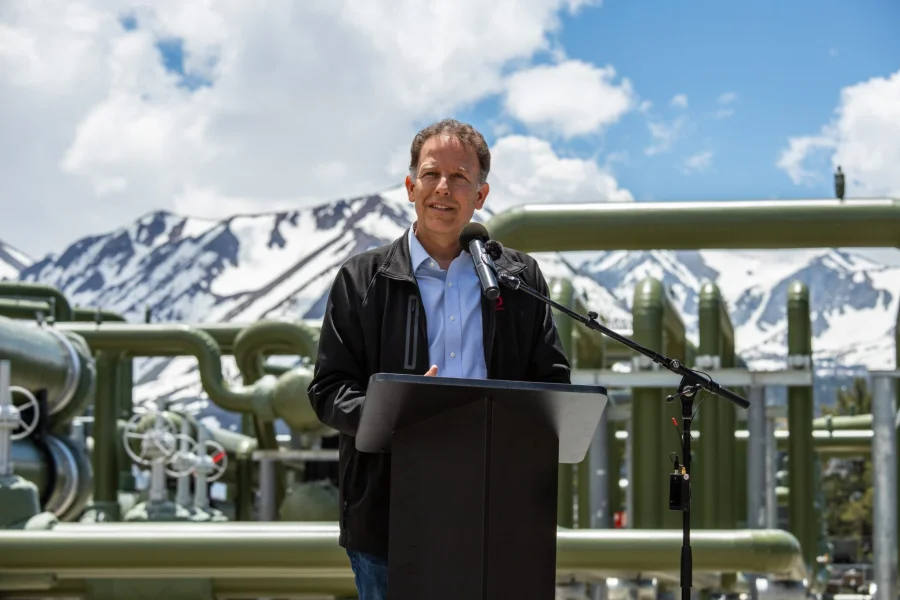
For six decades, Ormat Technologies has quietly mastered a niche craft: pulling clean, reliable power from the earth's natural heat. Now, the world's largest geothermal operator is betting that the same underground expertise can power the most demanding customer of the 21st century—the artificial intelligence data center.
The AI Energy Hunger That Geothermal Could Feed
The calculus is simple. AI data centers require immense, round-the-clock electricity—a "baseload" demand that intermittent solar and wind cannot consistently meet. Ormat believes its geothermal plants, which run 24/7, are the perfect match for this new digital gold rush.
This is not just about building more of the same. The company's growth strategy hinges on a technology called Enhanced Geothermal Systems, or EGS.
EGS: Marrying Old Heat with New Drilling Tricks
Traditional geothermal, Ormat's bread and butter, requires specific natural conditions: underground reservoirs of high-pressure water or steam, often found along the Pacific "Ring of Fire." This limits where plants can be built.
EGS aims to change that. The concept borrows the newest oil-drilling and fracking techniques to fracture hot, dry rock deep underground, creating the very reservoir that nature didn't provide. This could theoretically allow for next-generation geothermal power to be built almost anywhere a customer wants it.
From the Ring of Fire to the Western United States
Ormat's history is written across volcanic zones from Asia to the Americas. Its future, however, is being drawn across the Western United States, where the company hopes to deploy EGS to serve the growing cluster of data centers.
The shift represents a significant evolution. The company is no longer just a developer of power plants where nature allows; it is positioning itself as a strategic energy partner for the tech industry, offering a clean, carbon-free solution to AI's soaring power appetite.
Why This Pivot Matters for the AI Race
The AI boom has created a paradox: the more powerful the models, the more energy they consume. Tech giants are scrambling for clean, reliable power sources to meet climate goals while expanding capacity.
If Ormat's EGS bet pays off, it could provide a critical missing piece. It offers a path to build large-scale clean power plants in locations previously considered geologically impossible, directly addressing the bottleneck of data center expansion.
Ormat's Moat: Six Decades of Underground Mastery
Ormat's advantage is not just its existing fleet. It is the institutional knowledge accumulated over 60 years of operating in some of the most geologically challenging environments on Earth.
This experience in drilling, reservoir management, and power conversion is a formidable barrier to entry. Newcomers may have the fracking tools, but Ormat has the operational playbook for turning subterranean heat into a reliable, grid-scale business.
Risks and the Challenge of Fracking for Power
The pivot is not without significant hurdles. EGS is still an emerging technology, and proving its commercial viability at scale is a major undertaking.
Furthermore, the use of fracking techniques, even for clean energy, is likely to face regulatory and public scrutiny. Concerns about induced seismicity and water usage will need to be addressed transparently. The company must also compete with other clean baseload options, such as advanced nuclear, for the attention of data center developers.
A Wider Shift: The Grid's Search for Firm Power
Ormat's move is part of a broader industry trend. As renewables grow, the grid's need for "firm," always-available power is becoming the central challenge of the energy transition.
Geothermal, with its ability to provide clean baseload power, is increasingly seen as a key solution. Ormat's aggressive push into EGS signals that the industry believes the technology is finally ready for prime time, driven by the unprecedented demand from the AI sector.
What This Means for the Future of Cloud Computing
For the average user, this means the cloud that powers everything from search to streaming could soon be running on heat from the earth's core.
For investors and industry watchers, it represents a potential inflection point for a 60-year-old company. Ormat is not just adapting to the AI era; it is attempting to define how the AI era gets its power.
Confirmed Facts vs. What Remains Unclear
Confirmed: Ormat is the world's largest geothermal operator with 60 years of experience. The company is pursuing EGS technology to target the AI data center market in the Western U.S.
Unclear: The specific locations of planned EGS plants, the timeline for commercial deployment, and the final cost per megawatt compared to other energy sources remain unconfirmed. The success of the technology at scale is still unproven.
Our Take
Ormat's pivot is a compelling narrative of an old-world energy company reinventing itself for the digital age. It is a high-stakes bet that the skills honed in volcanic fields can be transplanted to the shale fields of the American West.
This is more than a corporate strategy; it is a test case for whether the energy grid can keep pace with the exponential demands of artificial intelligence. If Ormat succeeds, it won't just power the cloud—it will have unlocked a new era for clean, reliable energy.
Frequently Asked Questions
What is Ormat Technologies' new strategy?
Ormat is pivoting to target AI data centers by developing Enhanced Geothermal Systems (EGS) to build clean, baseload power plants in the Western United States.
What is Enhanced Geothermal Systems (EGS)?
EGS is a next-generation technology that uses oil-drilling and fracking techniques to fracture hot, dry rock deep underground, creating a geothermal reservoir where natural ones don't exist.
Why is geothermal power attractive for AI data centers?
AI data centers need constant, reliable electricity. Geothermal provides "baseload" clean power that runs 24/7, unlike intermittent sources like solar and wind.
Where has Ormat traditionally built its plants?
Ormat has historically built plants over natural underground reservoirs of high-pressure water or steam, often located along the Pacific "Ring of Fire" from Asia to the Americas.