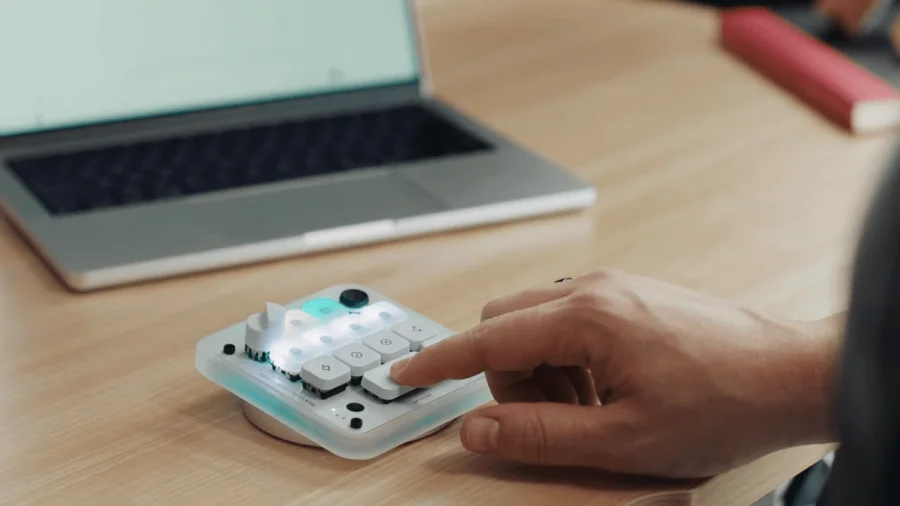
When OpenAI unveiled its first hardware device on July 15, few expected a keyboard to become the hottest resale item in tech. The Codex Micro, a $230 square keyboard with 12 keys, a joystick, and neon lights, was designed specifically for coders using OpenAI’s Codex AI tool. Within days, it appeared on eBay with price tags as high as $1,850 — more than eight times the original cost.
Why a $230 keyboard is now selling for $1,850
The Codex Micro is not a mass-market gadget. It’s a limited-edition collaboration between OpenAI and boutique keyboard maker Work Louder. The keyboard is aimed at professional developers who use Codex, OpenAI’s AI-powered coding assistant. The scarcity — combined with OpenAI’s brand power — has created a frenzy among collectors and coders willing to pay a premium.
What the Codex Micro keyboard actually does
The keyboard is a compact 12-key pad with a joystick and customizable RGB lighting. It connects via USB-C and is designed to streamline coding workflows with Codex. Users can map shortcuts, trigger AI commands, and navigate code more efficiently. It’s a niche tool for a specific audience — not a general-purpose consumer device.
Who is affected by the resale surge
For coders who missed the initial launch, the resale market is the only option — but at a steep price. The $1,850 listings on eBay reflect both genuine demand and speculative flipping. For OpenAI, the resale frenzy signals strong brand loyalty but also raises questions about accessibility. The company has not indicated whether it will produce more units.
OpenAI’s response and what it means
OpenAI has not publicly addressed the resale surge. The company has described the Codex Micro as a “one-off project” separate from its planned consumer AI companion device, expected in 2025. This suggests the keyboard was never intended to be a mainstream product — but the market is treating it as a collector’s item.
How the Codex Micro fits into OpenAI’s hardware strategy
The keyboard is OpenAI’s first hardware device, but it’s not the company’s big hardware play. OpenAI has been working on a consumer AI companion — a gadget that could rival smart speakers or wearables — for over a year. The Codex Micro is a niche, developer-focused product that tests the waters for hardware manufacturing and brand extension.
Confirmed facts vs what remains unclear
Confirmed: The Codex Micro launched July 15 at $230. It was developed with Work Louder. eBay listings show prices up to $1,850. OpenAI has called it a one-off project. Unclear: Whether OpenAI will produce more units. Whether the resale prices reflect actual sales or just listings. Whether the keyboard will be integrated into future OpenAI hardware.
Why Work Louder matters in this story
Work Louder is a boutique keyboard maker known for high-end, customizable mechanical keyboards. Their involvement gives the Codex Micro credibility among enthusiasts. The collaboration also signals that OpenAI is willing to partner with specialized hardware firms rather than building everything in-house — a strategy that could extend to future devices.
Risks and balanced view
The resale frenzy could backfire if buyers feel exploited by scalpers. Some coders may view the keyboard as overpriced for what it offers — a 12-key pad with a joystick. Critics argue that OpenAI should have produced more units to meet demand. On the other hand, the limited release creates exclusivity, which may be intentional for a developer-focused tool.
Wider trend: AI companies entering hardware
OpenAI is not alone. Google, Amazon, and Meta have all launched AI-powered hardware — from smart speakers to glasses. The Codex Micro represents a new category: AI-specific input devices. As AI tools become more integrated into workflows, specialized hardware like this could become more common.
What coders and collectors should do now
If you’re a coder who wants the Codex Micro for daily use, consider waiting. OpenAI may release a second batch or a more affordable version. If you’re a collector, verify the seller’s reputation and check whether the keyboard is new or used. Avoid paying over $1,000 unless you’re certain of authenticity.
What’s next for OpenAI hardware
OpenAI’s next hardware move is expected to be a consumer AI companion device, possibly launching in 2025. The Codex Micro serves as a proof of concept — showing that OpenAI can design, manufacture, and market hardware. Whether the company can scale beyond niche keyboards remains to be seen.
Our Take
The Codex Micro resale frenzy is a textbook case of scarcity driving demand. But it also reveals something deeper: OpenAI’s brand has become so powerful that even a niche keyboard becomes a status symbol. For coders, the keyboard is a tool. For collectors, it’s a piece of AI history. For OpenAI, it’s a low-risk experiment that could inform much bigger hardware ambitions. The real test will come when the company launches a device meant for everyone — not just developers.
Frequently Asked Questions
What is the OpenAI Codex Micro keyboard?
It’s a 12-key keyboard with a joystick and neon lights, designed for coders using OpenAI’s Codex AI tool. It launched July 15 at $230.
Why is the Codex Micro keyboard selling for $1,850 on eBay?
Limited supply, OpenAI’s brand cachet, and demand from collectors and coders have driven resale prices to over eight times the original cost.
Will OpenAI make more Codex Micro keyboards?
OpenAI has called it a one-off project and has not announced plans for additional production. The company is focused on a consumer AI companion device expected in 2025.
Is the Codex Micro keyboard worth buying at resale prices?
For daily coding use, probably not — the $1,850 price is driven by scarcity, not functionality. For collectors, it may hold value as a limited-edition OpenAI artifact.