The three most powerful AI companies in the world have been talking to each other about safety — quietly, for weeks — while the government that will soon regulate them signals it has other priorities.
OpenAI has confirmed it held extended discussions with Anthropic and Google DeepMind on AI safety. No joint framework has been announced. No press conference was called. But the fact that these rivals are even in the same conversation is the story.
Three rivals, one table, no press release
OpenAI, Anthropic, and Google DeepMind compete fiercely for talent, compute, and customers. They rarely coordinate publicly. According to OpenAI's confirmation, that has not stopped weeks of safety-focused discussions behind closed doors.
The talks reportedly centre on shared concerns: how frontier models should behave, what guardrails make sense, and how to avoid a race where speed outruns caution.
Why this matters more than any single model launch
Frontier AI is not a normal industry. A single model release can reshape labour markets, information ecosystems, and national security assumptions within months.
If the three leading labs align on even basic safety norms, those norms can become de facto global standards — long before any law is written. If they don't, the alternative is a fragmented landscape where each company defines safety on its own terms.
How we got here — and why now
Pressure on AI labs has been building for over two years. Regulators in the EU moved first with the AI Act. The US took a lighter, executive-order-driven approach. China pushed its own rules.
Meanwhile, each new generation of models raised fresh questions about misuse, misinformation, and control. The labs' decision to talk directly to each other appears to be a response to that pressure — and to the possibility that governments may not act fast enough.
Who actually feels this — and how
For ordinary users, the outcome is invisible until it isn't. Safety norms shape what chatbots refuse to do, how they handle sensitive queries, and what safeguards exist when things go wrong.
For developers and enterprises building on these models, shared standards reduce uncertainty. For policymakers, private coordination can either ease the burden — or expose how far behind they are.
Washington's message: speed first
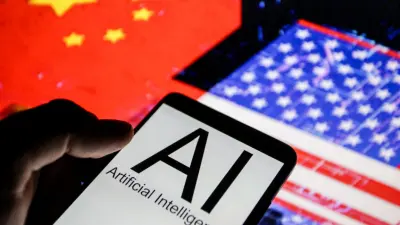
The incoming Trump administration has made its position clear. Safety-first framing has been dismissed in favour of a competitiveness-first posture, with China as the benchmark to beat.
That stance puts the labs in an awkward position: coordinating on safety internally while the government they answer to publicly downplays the same concerns.
What we know — and what we don't
Confirmed: OpenAI has acknowledged weeks of safety discussions with Anthropic and Google DeepMind.
Unclear: What was actually discussed, whether any shared commitments exist, and whether the talks will produce anything public. No joint statement, framework, or timeline has been announced.
Speculation: Any claim that a formal agreement is imminent should be treated as unverified.
Why these three companies, specifically
OpenAI, Anthropic, and Google DeepMind sit at the frontier. They train the largest models, employ the most sought-after researchers, and set the pace others follow.
Their combined influence means any coordination between them carries more weight than a dozen smaller labs acting together. That is also why their silence on specifics matters.
The risks of talking without committing
Private talks can produce real progress — or they can become a way to appear responsible without changing anything.
Critics of voluntary safety efforts argue that without enforcement, transparency, or external audits, coordination between competitors is easy to announce and easy to abandon. The absence of any public framework so far leaves that question open.
A pattern, not an isolated moment
This is not the first time AI labs have coordinated quietly. Earlier safety commitments — some public, some not — followed similar patterns: internal discussion, limited disclosure, and slow external visibility.
What is different now is the political backdrop. The labs are talking safety while the incoming US government talks speed.
What readers should take away
If you use AI tools daily, nothing changes tomorrow. But the direction of these talks will shape what those tools can and cannot do over the next two to three years.
For investors and analysts, the signal is that frontier labs see safety coordination as strategically necessary — not just ethically desirable. For policymakers, it is a reminder that the industry is moving ahead of them.
What happens next
Watch for three things: whether the labs publish any shared principles, how the incoming administration frames AI policy in its first 100 days, and whether China's own AI trajectory forces a faster response.
None of these are certain. All of them matter.
Our Take
The most important AI safety conversation in the world right now is not happening in Congress or at a global summit. It is happening between three companies that compete for everything — except, apparently, on this.
That is either a sign of maturity or a sign that governments have abdicated the job. Possibly both.
Frequently Asked Questions
What are the OpenAI, Anthropic, and Google DeepMind AI safety talks about?
According to OpenAI's confirmation, the discussions focus on AI safety — how frontier models should behave, what guardrails make sense, and how to manage risks as capabilities grow. Specific details have not been disclosed.
Has any formal agreement been reached?
No. No joint framework, public commitment, or formal agreement has been announced. The talks are described as ongoing discussions.
Why is the Trump administration's stance relevant?
The incoming administration has signalled a competitiveness-first approach to AI, prioritising speed to keep pace with China over safety-first regulation. That puts it at odds with the framing of the labs' own discussions.
What does this mean for regular AI users?
In the short term, very little changes. In the medium term, any shared safety norms adopted by these three labs could shape how AI tools behave globally — including what they refuse to do and how they handle sensitive topics.