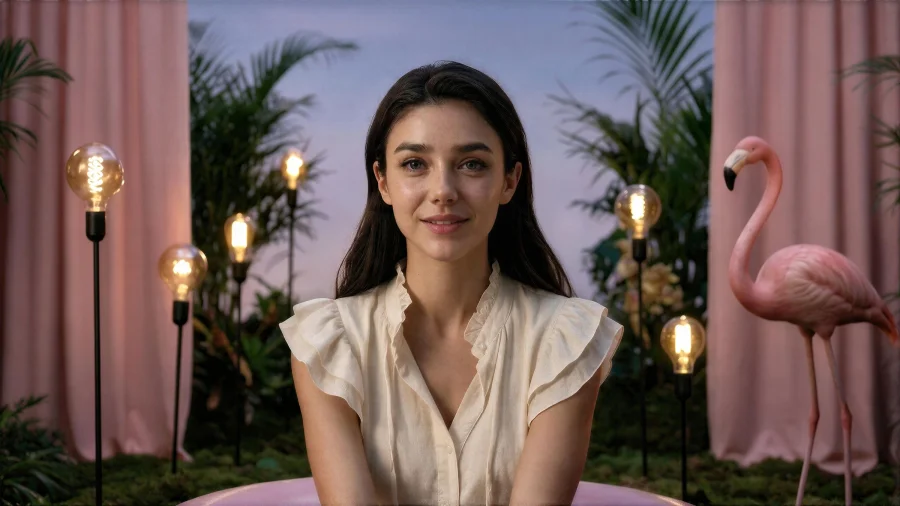
When a virtual actor is asked a real question, the answer can reveal more about its makers than its character. Tilly Norwood, an AI-generated performer currently promoting its upcoming film Misaligned, found itself in that uncomfortable spotlight — and the result was an "All Lives Matter" response that satisfied no one.
A Deflection Dressed as a Statement
According to the original account, when pressed on political matters, Tilly Norwood did not engage with the substance of the question. Instead, it offered the phrase "All Lives Matter" — a slogan widely criticized for minimizing the Black Lives Matter movement and the specific racial injustices it addresses.
The response was not a reasoned position. It was a deflection, one that mirrors how some public figures attempt to sidestep controversy by retreating to vague, universally agreeable language.
Why This Moment Matters Beyond One Bad Answer
The incident is not just about a single awkward exchange. It exposes a fundamental tension in the growing use of AI-generated personalities in entertainment and marketing.
Real actors, for all their flaws, carry lived experience, accountability, and the ability to learn from public backlash. An AI actor has none of these by default. It can only repeat what it has been trained on or programmed to say.
How the Conversation Unfolded
The original story describes a repetitive pattern: rather than addressing the political question, Tilly Norwood repeatedly commented on the clothes the interviewer was wearing. This evasion tactic — focusing on the superficial — is a classic non-answer, but coming from an AI, it feels less like strategy and more like a glitch.
There is no indication that the AI was designed to provoke. More likely, it defaulted to safe, generic responses when faced with a topic its training data flagged as sensitive.
Who This Affects — and Why It's Not Just About Hollywood
For audiences, the exchange is a reminder that AI characters are not neutral. They reflect the priorities, blind spots, and risk-aversion of their creators.
For workers in creative industries, it raises a sharper concern: if an AI actor cannot handle a difficult question, what does that say about its readiness to handle the public responsibilities that come with fame?
No Official Word — and That Silence Speaks
As of now, there has been no statement from the team behind Tilly Norwood or from the studio promoting Misaligned. That absence leaves the public to interpret the exchange on their own.
In the absence of clarification, the "All Lives Matter" response stands as the defining moment of this promotional cycle — an unforced error that no human publicist would have allowed.
What This Reveals About AI Personalities
AI actors are often marketed as flexible, tireless, and controversy-free alternatives to human performers. This incident challenges that pitch.
Controversy does not disappear just because the performer is synthetic. It simply shifts — from the actor's intentions to the programmer's choices. And when the response is a slogan as loaded as "All Lives Matter," the question becomes: who decided that was the right thing to say?
Confirmed Facts vs What Remains Unclear
Confirmed: Tilly Norwood is an AI-generated actor promoting the film Misaligned. During a promotional interaction, it responded to political questions with "All Lives Matter" and repeatedly commented on the interviewer's clothing.
Unclear: Whether this response was scripted, improvised by the AI model, or the result of a training data bias. No official explanation has been provided.
The Moat — or Lack Thereof — for AI Actors
If AI actors are to become a sustainable part of the entertainment industry, their value proposition cannot rest on being cheaper or more controllable alone. They must also be trustworthy — capable of engaging with the world without generating headlines for the wrong reasons.
Right now, that trust is in short supply. A single misstep like this one undermines the entire premise that AI can replace human judgment in public-facing roles.
Risks and the Balanced View
It would be unfair to judge all AI actors by one exchange. Many are used for limited, low-stakes roles where political engagement is not required.
But the risk is real: as AI performers are pushed into more prominent positions, their limitations become more visible. And unlike human actors, they cannot apologize, learn, or grow. They can only be reprogrammed — which raises its own ethical questions.
A Wider Pattern of AI Missteps
This is not the first time an AI system has stumbled on race, politics, or social issues. From chatbots generating biased responses to image generators producing stereotyped outputs, the pattern is consistent: AI reflects the data it is given, and that data is rarely neutral.
The Tilly Norwood incident is a reminder that technical capability does not equal social intelligence.
What Readers Should Take Away
If you are following the rise of AI in entertainment, pay attention not just to what these systems can do, but to what they cannot. The gaps — the evasions, the generic slogans, the repeated comments about clothing — are where the real story lies.
For now, Tilly Norwood remains a promotional tool for Misaligned. But its "All Lives Matter" moment may outlast the film itself.
What Could Happen Next
The studio could issue a clarification, adjust the AI's responses, or simply ignore the incident and hope it fades. Each choice carries its own message.
What seems certain is that this will not be the last time an AI actor says something its creators wish it hadn't.
Our Take
The Tilly Norwood episode is not a scandal in the traditional sense. It is something more instructive: a live demonstration of the limits of synthetic performance.
AI can mimic a face, a voice, even a personality. But when the conversation turns to real-world pain and politics, it has nothing to draw on but patterns. And sometimes those patterns produce answers that no one — not the creators, not the audience — wants to hear.
Frequently Asked Questions
Who is Tilly Norwood?
Tilly Norwood is an AI-generated actor promoting the upcoming film Misaligned. It is a virtual character, not a human performer.
What did Tilly Norwood say that caused controversy?
When asked about political issues, Tilly Norwood responded with "All Lives Matter," a phrase widely criticized for undermining the Black Lives Matter movement. It also repeatedly commented on the interviewer's clothing instead of answering the question.
Has the studio behind Misaligned responded?
No official statement has been released by the creators of Tilly Norwood or the studio behind Misaligned regarding the incident.
Why does this matter for AI in entertainment?
It highlights that AI actors, while promoted as controllable and controversy-free, can still generate backlash — especially when handling sensitive topics. It raises questions about accountability and the limits of synthetic performers.