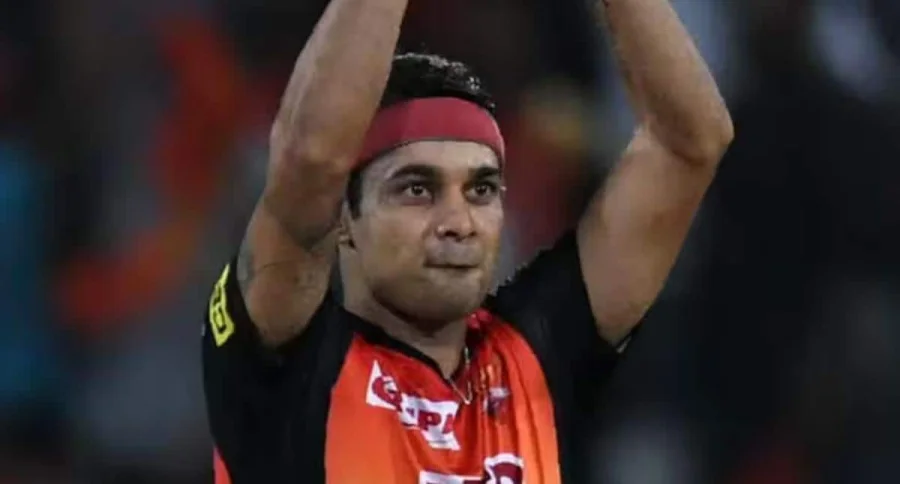
When professional cricketers retire, the script is almost always the same: coaching roles, commentary boxes, or flashy T20 leagues. But former Indian pacer Siddharth Kaul has quietly rewritten that narrative in a way that has left fans stunned. The man who once commanded crores in the IPL auction and shared a dressing room with Virat Kohli is now clocking in at a State Bank of India branch in Chandigarh — not as a brand ambassador, but as a regular employee.
It’s a story that feels almost unbelievable in an era where retired cricketers chase every ounce of limelight. But for Kaul, this quiet, dignified transition speaks volumes about his character and priorities.
The Glorious Rise and the Quiet Exit
Siddharth Kaul first captured the nation’s attention as a key member of the iconic 2008 Under-19 World Cup-winning squad, a team led by a young Virat Kohli that also featured future stars like Ravindra Jadeja. Known for his skiddy pace and ability to bowl effective yorkers in the death overs, Kaul was seen as a promising talent for Indian cricket.
His hard work paid off when he earned a call-up to the senior national side nearly a decade later, making his T20I debut in 2018 against Ireland. While his international career was brief — just three T20Is and three ODIs — his IPL journey was far more lucrative. Kaul was a mainstay for Sunrisers Hyderabad (SRH) for several seasons, earning hefty contracts that made him an IPL crorepati. He also had stints with Kolkata Knight Riders and Royal Challengers Bangalore.
But by late 2024, Kaul decided to step away from domestic cricket. Instead of pursuing a predictable path into coaching or commentary, he chose a completely conventional corporate route.
Why This Transition Matters Right Now
In a cricket-crazy nation like India, where former players are often treated as demigods, Kaul’s decision to work as a bank employee challenges deep-seated assumptions about success and identity. It raises an uncomfortable but important question: What happens to athletes when the cheering stops and the paychecks shrink?
For many, the transition is brutal. But Kaul’s story offers a refreshing counter-narrative — one where a former star quietly builds a new life away from the cameras, proving that dignity and hard work are not confined to the cricket field. It’s a lesson in humility and financial prudence that resonates far beyond the world of sports.
How the News Unfolded
The news of Kaul’s new role first emerged through reports that he had joined an SBI branch in Chandigarh. While the exact date of his joining remains unclear, sources confirmed that the former pacer is now working as a regular employee at the public sector bank.
The revelation sparked a wave of reactions on social media, with many fans expressing surprise and admiration. Some called it a “humbling” move, while others praised Kaul for choosing a stable career path over the uncertainty of the cricket ecosystem.
Kaul himself has not made any public statement about his new job, preferring to let his work speak for itself. This silence, in an age of constant social media updates, has only added to the intrigue.
Who Is Affected and What Officials Are Saying
Kaul’s decision primarily affects his own family and close circle, but it also resonates with a wider audience: aspiring cricketers, retired athletes, and fans who idolize IPL stars. The news serves as a reality check for young players who often believe that IPL riches last forever.
Neither SBI nor the BCCI has officially commented on Kaul’s employment. However, industry insiders suggest that such transitions are more common than people realize. “Many former cricketers quietly take up corporate jobs after retirement. The glamour of the IPL doesn’t last forever, and financial planning becomes crucial,” a sports management source told reporters.
What We Know So Far — and What Remains Unclear
What we know:
- Siddharth Kaul retired from domestic cricket in late 2024.
- He is now employed at an SBI branch in Chandigarh.
- His role is that of a regular bank employee, not a brand ambassador.
What remains unclear:
- The exact date of his joining.
- His specific designation or role at the bank.
- Whether he plans to return to cricket in any capacity in the future.
- His financial situation and the reasons behind his career shift.
Risks, Concerns, and the Balanced View
While Kaul’s transition is admirable, it also highlights the precarious nature of a cricketer’s career. The average IPL career is short, and not every player lands a lucrative coaching or commentary gig. For many, the sudden drop in income after retirement can be financially devastating.
Critics might argue that Kaul could have leveraged his IPL fame for more visible opportunities. But supporters counter that a stable government job offers long-term security, something that the unpredictable world of cricket cannot guarantee.
There is also the question of mental health. The shift from the adrenaline of a packed stadium to the quiet routine of a bank branch can be jarring. However, those close to Kaul suggest he has embraced the change with grace and professionalism.
Why Similar Stories Are Becoming More Common
Kaul is not the first former cricketer to take an unconventional path. Several domestic players have joined corporate firms, the armed forces, or even started small businesses after retirement. The trend reflects a growing awareness among athletes that life after sports requires careful planning.
In a country where cricket is often seen as the only viable career path for talented youngsters, Kaul’s story serves as a powerful reminder that there is life beyond the boundary rope. It also underscores the importance of financial literacy and career diversification for professional athletes.
What Fans and Aspiring Cricketers Should Know Now
For young cricketers dreaming of IPL stardom, Kaul’s journey offers a crucial lesson: plan for the long term. The IPL may make you a crorepati overnight, but that wealth needs to be managed wisely. A backup career, whether in banking, business, or education, is not a sign of failure — it’s a sign of foresight.
For fans, the story is a reminder that our heroes are human too. They face the same uncertainties about the future as anyone else. Respecting their choices, even when they don’t fit the expected script, is the least we can do.
What Could Happen Next
It remains to be seen whether Kaul will eventually return to cricket in some capacity — perhaps as a bowling coach or a mentor. But for now, he seems content with his quiet life in Chandigarh. His story may inspire other retired athletes to consider corporate careers, breaking the stereotype that sports stars must always remain in the public eye.
As for the bank customers in Chandigarh, they might just find themselves being served by a former IPL star who once bowled to the best in the world. That, in itself, is a story worth telling.
Our Take: Why This Story Matters Beyond One Incident
Siddharth Kaul’s transition from IPL crorepati to bank employee is not just a quirky news item. It is a deeply human story about reinvention, humility, and the courage to choose a different path. In a world obsessed with fame and fortune, Kaul has chosen stability and dignity. That is a lesson worth celebrating.
FAQs
Why did Siddharth Kaul join SBI as a bank employee?
While Kaul has not publicly stated his reasons, the move is widely seen as a practical decision to secure a stable, long-term career after his retirement from domestic cricket in late 2024. It reflects a focus on financial security over continued public visibility.
Which IPL teams did Siddharth Kaul play for?
Siddharth Kaul played for Sunrisers Hyderabad (SRH) for the majority of his IPL career, and also had stints with Kolkata Knight Riders (KKR) and Royal Challengers Bangalore (RCB). He was a key bowler for SRH during their successful seasons.
Is Siddharth Kaul the only former cricketer to take a corporate job?
No. Several former domestic and international cricketers have transitioned into corporate roles, including banking, insurance, and the armed forces. Kaul’s story is notable because of his IPL fame and the stark contrast between his past and present careers.
What was Siddharth Kaul’s biggest achievement in cricket?
Kaul was a crucial member of the 2008 Under-19 Cricket World Cup-winning team led by Virat Kohli. He also represented India in three T20Is and three ODIs, and was a consistent performer in the IPL for several seasons.