India
Deep Research · 5 sources
Jun 01, 2026· min read
Old faces, regional discontent, new aspirations: Bengal cabinet expands
## Emotional Hook
For weeks, West Bengal watched and waited. Chief Minister Suvendu Adhikari's first major cabinet expansion was expected to be a balancing act...
Rajendra Singh
News Headline Alert
728 x 90Header Slot
TL;DR — Quick Summary
Chief Minister Suvendu Adhikari's first major cabinet expansion in West Bengal has inducted 35 new ministers, including veteran politicians, former journalists, teachers, doctors, farmers, and a former domestic worker. The move has been welcomed by BJP supporters but has also sparked debate over controversial appointments like Arjun Singh and questions of regional representation.
Key Facts
Key Point
35 new ministers sworn in, bringing total cabinet strength to 41.
Key Point
Arjun Singh, a controversial figure with a history of switching parties, inducted as a cabinet minister.
Key Point
New ministers include a former domestic worker, teachers, doctors, and farmers.
Key Point
Debate emerges over regional representation and controversial appointments.
Key Point
Expansion is the first major reshuffle under Chief Minister Suvendu Adhikari.
## Emotional Hook
For weeks, West Bengal watched and waited. Chief Minister Suvendu Adhikari's first major cabinet expansion was expected to be a balancing act—between old loyalists and fresh faces, between regions, between communities. But when the 35 new ministers took oath on Sunday, the result was something far more complex.
A former domestic worker now holds a ministerial portfolio. A politician who has switched parties four times in five years is now a cabinet minister. Teachers, doctors, farmers, and former journalists now sit around the same table.
For BJP supporters, this is a moment of celebration—a sign that the party is building a government that reflects Bengal's diversity. For critics, it raises uncomfortable questions: Are some appointments driven by political convenience rather than merit? And does this expansion truly address the regional discontent that has simmered beneath the surface?
## Quick Answer
Chief Minister Suvendu Adhikari expanded his cabinet by inducting 35 new ministers, bringing the total strength of the Council of Ministers to 41. The new inductees include a diverse mix of backgrounds—veteran politicians, former journalists, teachers, doctors, farmers, and a former domestic worker. The most controversial appointment is Arjun Singh, a powerful figure from the Barrackpore industrial belt who has switched parties multiple times. While the expansion has been welcomed by BJP supporters, it has also sparked debate over regional representation and the inclusion of politically controversial figures.
## Core Update
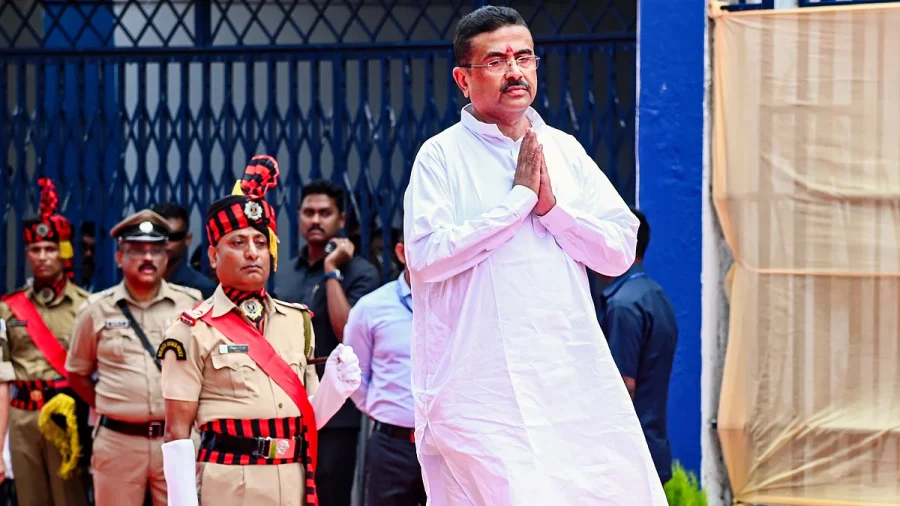
The expansion marks the first major reshuffle of Adhikari's government since he took office. Governor R N Ravi administered the oath to the new ministers in a ceremony held at Raj Bhavan.
Among the most discussed names is Arjun Singh, who has been inducted as a cabinet minister. A powerful figure from the Barrackpore industrial belt, Singh has switched parties several times during his political career. After leaving the Trinamool Congress for the BJP in 2019, he was elected to Parliament, before returning to the Trinamool and then rejoining the BJP ahead of the 2024 elections.
His appointment has divided opinion. Supporters say he brings grassroots connect and organizational strength. Critics point to his history of party-hopping and question whether his induction rewards political opportunism.
But Singh is not the only figure generating discussion. The inclusion of a former domestic worker as a minister has been hailed as a symbol of social mobility and inclusive governance. Former journalists, teachers, and doctors bring professional expertise to the cabinet. Farmers represent rural Bengal's agrarian base.
## Why This Matters Right Now
This expansion is not just about filling portfolios. It comes at a critical moment for the BJP in West Bengal.
The party has been working to consolidate its position after a fiercely contested election. Regional discontent—particularly in districts like North Bengal, the Sundarbans, and the industrial belt—has been a persistent challenge. The cabinet expansion was seen as an opportunity to address these grievances by giving representation to underrepresented regions and communities.
The inclusion of figures like Arjun Singh also signals the BJP's strategy of absorbing influential local leaders from rival parties, a tactic that has both strengthened and complicated the party's organizational structure.
For ordinary Bengalis, this expansion means a government that now includes voices from diverse backgrounds—but also one that carries the baggage of controversial political alliances.
## Timeline of Events
### H3 Timeline
- **2019:** Arjun Singh leaves Trinamool Congress for BJP, wins parliamentary election.
- **2021:** Singh returns to Trinamool Congress.
- **2024:** Singh rejoins BJP ahead of general elections.
- **June 1, 2025:** Chief Minister Suvendu Adhikari expands cabinet, inducting 35 new ministers including Singh.
- **June 1, 2025:** Governor R N Ravi administers oath at Raj Bhavan.
- **June 1, 2025:** Total cabinet strength reaches 41 ministers.
## How This Affects People
For residents of Bengal, this expansion has direct implications.
**Political workers** see opportunities for patronage and influence. The inclusion of diverse backgrounds means more communities now have a voice in government.
**Voters in the Barrackpore industrial belt** will watch Arjun Singh's performance closely. His appointment could either strengthen BJP's hold in the region or become a source of internal friction.
**Women and marginalized communities** may see the appointment of a former domestic worker as a hopeful sign of social mobility and inclusive politics.
**Opposition parties** are already sharpening their criticism, pointing to controversial appointments as evidence of political opportunism.
## What Authorities Are Saying
**BJP supporters** have welcomed the expansion, calling it a reflection of the party's commitment to inclusive governance. Party spokespersons have highlighted the diverse backgrounds of the new ministers as evidence of the BJP's broad-based appeal.
**Critics** have raised questions about the inclusion of figures like Arjun Singh. Opposition leaders have accused the BJP of rewarding political defectors and undermining democratic principles.
**Political analysts** note that the expansion reflects a delicate balancing act—between rewarding loyalists, accommodating defectors, and addressing regional aspirations.
## Detailed Analysis
The expansion reveals several strategic calculations.
First, the BJP is clearly prioritizing organizational strength over ideological purity. The induction of figures like Arjun Singh—who has switched parties multiple times—suggests that the party values local influence and electoral math over political consistency.
Second, the diversity of backgrounds—from former journalists to domestic workers—is a deliberate messaging strategy. It projects an image of a government that represents all sections of society, even as critics question whether these appointments are substantive or symbolic.
Third, the expansion addresses regional discontent in a limited way. While some districts and communities have gained representation, others remain underrepresented. This could fuel further demands for inclusion in future reshuffles.
## What We Know vs What Remains Unclear
### Confirmed Facts
- 35 new ministers have been inducted into the cabinet.
- Total cabinet strength is now 41.
- Arjun Singh has been appointed as a cabinet minister.
- New ministers include a former domestic worker, teachers, doctors, farmers, and former journalists.
- Governor R N Ravi administered the oath.
### What Remains Unclear
- The specific portfolios assigned to each minister.
- The full list of ministers and their backgrounds.
- Whether the expansion will address regional discontent in the long term.
- The internal dynamics within the BJP over controversial appointments.
## Risks & Concerns
The expansion carries several risks.
**Internal friction:** The inclusion of controversial figures like Arjun Singh could create tensions within the BJP's organizational structure. Party loyalists who have worked for years may feel sidelined in favor of defectors.
**Regional backlash:** If some regions feel underrepresented, the expansion could deepen rather than resolve regional discontent.
**Credibility concerns:** Critics may use controversial appointments to question the government's integrity and decision-making.
**Political instability:** The induction of multiple defectors could encourage further party-hopping, destabilizing the political landscape.
## Trend Analysis
This expansion fits a broader pattern in Indian politics: the increasing fluidity of party loyalties. Politicians switching parties has become common, and parties often reward defectors with ministerial positions.
The BJP's strategy in Bengal mirrors its approach in other states—absorbing influential local leaders from rival parties to build organizational strength. This has been effective in expanding the party's footprint but has also led to accusations of political opportunism.
The inclusion of diverse backgrounds—from domestic workers to professionals—also reflects a growing trend towards symbolic representation in Indian politics. Whether this translates into substantive policy changes remains to be seen.
## What Readers Should Know Now
- The cabinet expansion is the first major reshuffle under Chief Minister Suvendu Adhikari.
- 35 new ministers have been inducted, bringing the total to 41.
- Arjun Singh's appointment is the most controversial, given his history of switching parties.
- The expansion includes diverse backgrounds, from former domestic workers to former journalists.
- Debate continues over regional representation and the inclusion of controversial figures.
## What Could Happen Next
The coming weeks will reveal the specific portfolios assigned to each minister. This will provide clearer insight into the government's priorities and power dynamics.
Opposition parties are likely to intensify their criticism, particularly targeting controversial appointments. The BJP will need to manage internal dissent while defending its decisions.
Regional discontent may persist if some areas feel underrepresented. Future reshuffles could address these gaps.
The performance of new ministers—particularly figures like Arjun Singh—will be closely watched. Success could strengthen the BJP's position; failure could become a political liability.
## Our Take
This cabinet expansion is a masterclass in political balancing—but it is not without risks. The inclusion of diverse backgrounds is commendable and reflects a genuine attempt at inclusive governance. However, the induction of controversial figures like Arjun Singh raises legitimate questions about the trade-offs between political expediency and democratic principles.
The real test will come in the months ahead. Will these ministers deliver for their constituents? Will the expansion address regional discontent or deepen it? And will the BJP's strategy of absorbing defectors strengthen the party or create internal fractures?
For now, Bengal has a cabinet that is as diverse as it is controversial—a reflection of the complex political landscape the BJP is navigating.
## FAQs
### Why is Arjun Singh's appointment controversial?
Arjun Singh has switched parties multiple times—from Trinamool Congress to BJP, back to Trinamool, and then to BJP again. Critics question whether his induction rewards political opportunism rather than merit or loyalty.
### What does the inclusion of a former domestic worker signify?
It is seen as a symbol of social mobility and inclusive governance. Supporters say it reflects the BJP's commitment to representing all sections of society, while critics question whether it is substantive or symbolic.
### Will this expansion address regional discontent in Bengal?
The expansion gives representation to some regions and communities, but others remain underrepresented. Whether it fully addresses regional discontent depends on future appointments and policy decisions.
### How many ministers are now in the Bengal cabinet?
The total strength of the Council of Ministers is now 41, following the induction of 35 new ministers.
Rajendra Singh Tanwar is a staff correspondent at News Headline Alert, one of India's digital news platforms covering national and state developments across politics, health, business, technology, law, and sport. He reports on government decisions, policy announcements, corporate developments, court rulings, and events that affect people across India — drawing on official documents, named sources, expert commentary, and verified public records.
His work spans breaking news, policy analysis, and public interest reporting. Before each article is published, it is reviewed by the News Headline Alert editorial desk to ensure accuracy and editorial standards are met. Corrections, sourcing queries, and editorial feedback can be directed to editorial@newsheadlinealert.com.