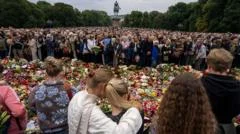
The silence outside the Royal Palace in Oslo says what words cannot. Thousands have gathered, flowers in hand, tears on their faces, to say goodbye to a king who was more than a monarch — he was the quiet constant of modern Norway. The news of King Harald's passing has triggered an outpouring of grief across the nation, even as history quietly turns its page.
A Nation Stops to Remember a Beloved Monarch
Norway mourns King Harald as the country collectively processes the loss of a figure who reigned through decades of profound social and economic transformation. From the oil boom to the digital age, King Harald was the steady hand and unifying presence that Norwegians often took for granted — until now.
Mourners have lined the streets outside the palace, leaving tributes and sharing memories. Politicians from across the spectrum have paused their work to issue statements, while royals from other European houses are expected to travel to Oslo for the funeral.
Why This Succession Matters for Every Norwegian
This is not just a royal transition; it is a generational shift in national identity. King Harald was the last living link to the wartime generation, a king who symbolized Norway's resilience and its post-war rebuilding. For many older citizens, his passing feels like the closing of a chapter they personally lived through.
For younger Norwegians, the ascension of Haakon VIII represents a modern monarchy stepping into a new era. The new king's adoption of the family motto "all for Norway" is a deliberate signal — a promise that the institution will remain relevant, unifying, and devoted to the nation's welfare.
From a Reluctant Heir to a Nation's Anchor
King Harald's journey to the throne was not a straightforward one. Born in 1937 during the German occupation, he spent his early years in exile in the United States and the United Kingdom. He returned to a Norway rebuilding itself, and his own path to the crown was marked by personal challenges that endeared him to the public.
His marriage to Sonja Haraldsen in 1968 was a love story that broke convention — she was a commoner, and the union was initially met with resistance. Over time, the couple's devotion to each other and to Norway won over the nation, and Queen Sonja became a beloved figure in her own right. King Harald's reign, which began in 1991, was defined by his accessibility, his dry humour, and his deep commitment to the Norwegian people.
The Human Face of a National Loss
For the people gathering outside the palace, this is deeply personal. "He was our king, but he felt like family," one mourner told reporters. Another described him as "the grandfather of the nation." These are not scripted tributes; they are the genuine expressions of a public that saw their monarch at sporting events, at community gatherings, and during national crises.
King Harald was also a passionate athlete, representing Norway in sailing at the Olympics. This relatability — a king who competed, who loved the outdoors, who spoke plainly — is what made him so universally respected. His health had been fragile in recent years, with multiple hospitalizations, but his passing still comes as a profound shock to a nation that hoped he would endure.
Official Tributes and the Path Forward
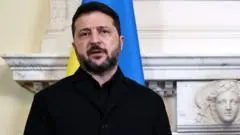
Prime Minister Jonas Gahr Støre has led the official tributes, describing King Harald as "a king for all of Norway" whose "dignity and warmth" defined his reign. The royal palace has confirmed that the new king, Haakon VIII, has formally adopted the family motto "all for Norway," a phrase that echoes his father's own dedication to the nation.
The government has announced a period of national mourning, with flags at half-mast across the country. Details of the state funeral are expected to be released shortly, with world leaders and foreign royals anticipated to attend.
What This Transition Really Means
The ascension of Haakon VIII is more than a ceremonial change. It marks the beginning of a reign that will need to navigate a different set of challenges than his father faced. Norway is now a wealthy, modern, and increasingly diverse nation. The monarchy's role in a society that values egalitarianism is a delicate balance, and the new king will need to define his own place in that landscape.
Haakon VIII has already shown signs of his approach. He has been vocal on issues like climate change and mental health, and he has a more informal, digital-native style. His adoption of the "all for Norway" motto suggests he intends to build on his father's legacy of unity while adapting to the times.
Confirmed Facts vs What Remains Unclear
What is confirmed: King Harald has died, and his son has ascended the throne as King Haakon VIII. The new king has adopted the motto "all for Norway." Mourners have gathered outside the palace, and official tributes have been made.
What remains unclear: The exact cause and timing of the king's death have not been officially detailed. The schedule for the coronation and state funeral has not yet been announced. The full extent of international attendance at the funeral is still to be confirmed.
The Monarchy's Enduring Role in a Modern Norway
Norway's monarchy is among the most popular in Europe, with approval ratings that consistently exceed 80 percent. This is not accidental. King Harald worked tirelessly to be a unifying figure, avoiding political controversy while championing national causes. The institution's strength lies in its ability to represent the nation's values — resilience, fairness, and a deep connection to nature.
Haakon VIII inherits this legacy, but he also inherits the challenge of maintaining it. A younger, more critical generation may ask harder questions about the cost and relevance of the monarchy. The new king's response to those questions will shape the institution's future.
Risks and the Road Ahead for the New King
While the nation is united in grief, the transition is not without its challenges. Republican sentiment, though a minority, exists in Norway. The new king will face scrutiny over the monarchy's funding, its role in a secular society, and its ability to connect with a multicultural population.
There is also the personal weight of succession. Haakon VIII steps into the shoes of a father who was deeply loved. The expectations are immense, and the comparison will be inevitable. How he navigates this emotional and public terrain will define the early years of his reign.
A Wider Pattern of European Royal Transitions
King Harald's passing is part of a broader wave of change sweeping through European monarchies. From Queen Elizabeth II's death in the UK to the abdication of Queen Margrethe II in Denmark, a generation of long-serving monarchs is giving way to younger, more modern heirs. These transitions are testing the adaptability of royal institutions across the continent.
Norway's experience will be watched closely. If Haakon VIII can successfully modernize the monarchy while preserving its unifying power, it could serve as a model for other royal houses facing similar generational shifts.
What Norwegians Should Do Now
For those wishing to pay their respects, the palace has opened books of condolence, and public gatherings are being organized across the country. Citizens are encouraged to participate in the official mourning period and to attend the state funeral when details are announced.
For those watching from abroad, the coming days will bring more information about the succession and the funeral arrangements. The new king's first official addresses and engagements will offer a glimpse into the tone and priorities of his reign.
What Happens Next in the Succession
The immediate future will be defined by ritual and ceremony. The formal proclamation of Haakon VIII as king will be made by the government, followed by a coronation ceremony. The state funeral for King Harald will be a national event, with full military honours and international dignitaries in attendance.
Beyond the ceremonies, the new king will begin to set his agenda. His first official visits, speeches, and policy priorities will signal the direction of his reign. The motto "all for Norway" suggests a continuation of his father's ethos, but the execution will be his own.
Our Take
The death of King Harald is a moment of profound national reflection for Norway. He was a monarch who embodied the country's journey from post-war recovery to modern prosperity. His legacy is not just in the institutions he upheld, but in the affection he inspired across generations.
For Haakon VIII, the path ahead is both a burden and an opportunity. He inherits a monarchy that is strong, but he must prove it can remain relevant. The motto "all for Norway" is a noble promise — the challenge will be living up to it in a nation that is changing faster than ever. This is not just a royal story; it is the story of a country saying goodbye to one era and cautiously embracing the next.
Frequently Asked Questions
Who is the new King of Norway?
King Haakon VIII is the new King of Norway, having ascended the throne following the death of his father, King Harald. He has adopted the family motto "all for Norway."
When did King Harald of Norway die?
The exact date and time of King Harald's death have not been officially detailed in the available information. The announcement of his passing has triggered a period of national mourning in Norway.
What does the motto "all for Norway" mean?
The motto "all for Norway" is the royal family's motto, adopted by the new King Haakon VIII. It signifies the monarch's dedication to the unity and welfare of the Norwegian nation and its people.
Where can I pay my respects to King Harald?
Books of condolence have been opened at the Royal Palace in Oslo, and public gatherings are being organized across Norway. Details of the state funeral are expected to be announced by the government in the coming days.