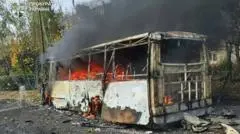
An informal understanding that had quietly kept refineries, pipelines and power plants off the target list for weeks appears to have collapsed — and both Moscow and Kyiv are now pointing at each other for ending it.
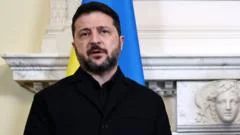
Russia's defence ministry accused Ukraine of attacking one of its oil refineries, according to Russian state media. The accusation came hours after Ukrainian President Volodymyr Zelensky said the pause on striking energy sites was over, following what he described as fresh Russian attacks.
What Actually Happened — and Why the Timing Matters
The sequence is the story. Zelensky declared the pause finished first. Russia then accused Ukraine of hitting a refinery. Whether the refinery strike was a direct response or a coincidental event is not yet clear from public statements.
What is clear is that the mutual restraint on energy infrastructure — never a signed agreement, only a tacit understanding — no longer holds. Both sides are now speaking about energy targets in the open.
Why Energy Infrastructure Is the Most Sensitive Target in This War
Refineries and power plants are not just military-adjacent assets. They are the backbone of civilian life. Strikes on them translate directly into fuel shortages, blackouts, heating failures and higher prices — often felt far beyond the front line.
For Russia, refineries are also an economic lifeline. Damaged refining capacity affects domestic fuel supply and export revenue. For Ukraine, the power grid has already absorbed multiple winters of attacks, and another round would test repair crews and air defences again.
How the Pause Emerged — and Why It Was Always Fragile
The pause was never formalised in a treaty or announced with a joint statement. It emerged as a de facto lull, understood by both sides but never guaranteed. That is precisely why it was vulnerable.
Informal arrangements depend on continued mutual benefit. Once one side concludes the other has broken the pattern — as Zelensky says happened — the logic holding the pause together disappears.
Who Feels This First
Ordinary people on both sides. In Ukraine, renewed grid strikes mean scheduled blackouts, disrupted water supply and difficult winter conditions. In Russia, refinery damage can mean local fuel shortages and price spikes in regions far from the war.
Beyond the two countries, global oil markets watch Russian refining capacity closely. Even the perception of sustained disruption can move prices, which feeds into fuel costs worldwide.
What Moscow and Kyiv Are Saying
Russian officials have framed the refinery strike as a violation and used it to justify their own posture. Ukrainian officials have framed the end of the pause as a response to Russian attacks, not an initiation.
Both narratives are consistent with each side's broader messaging. Independent verification of the specific refinery claim is not yet available from neutral sources.
The Strategic Logic Behind Striking Refineries
Refineries are high-value, high-visibility targets. A single successful strike can disrupt output for weeks, force rerouting of supply and create domestic political pressure. That makes them attractive militarily — and equally attractive as retaliation targets.
The problem is escalation symmetry. Every refinery strike invites a grid strike. Every grid strike invites another refinery strike. The cycle is difficult to break once it restarts.
Confirmed Facts vs What Remains Unclear
Confirmed: Zelensky publicly stated the pause on energy strikes is over. Russia's defence ministry accused Ukraine of attacking a refinery.
Unclear: The exact location and extent of damage to the refinery. Whether Ukraine has formally claimed responsibility. Whether the strike preceded or followed Zelensky's statement. Whether either side had already breached the pause before this week.
Any claim beyond these points should be treated as unverified until corroborated by independent sources.
Risks and the Balanced View
The escalation carries real dangers. Renewed energy strikes raise civilian hardship, complicate any future ceasefire talks and increase the risk of miscalculation. They also make diplomatic off-ramps harder to construct, because each side now has a fresh grievance to cite.
At the same time, both governments frame their actions as defensive responses. Ukraine argues it is retaliating against attacks on its own infrastructure. Russia argues it is responding to strikes on its economic assets. Neither framing resolves the underlying question of who moved first.
The Wider Pattern: Energy as a Bargaining Chip
This is not the first time energy infrastructure has functioned as leverage in the war. Strikes on the grid have previously been used to pressure Kyiv during winter. Refinery attacks have been used to impose economic costs on Moscow.
The pause, while it lasted, was itself a form of signalling — a way to show willingness to de-escalate without formal negotiations. Its collapse suggests that channel has closed, at least for now.
What Readers Should Watch Next
Three signals matter most. First, whether Ukraine officially claims the refinery strike. Second, whether Russia launches a large-scale grid campaign against Ukrainian cities. Third, whether either side signals a willingness to restore the pause.
For observers tracking the war's economic dimension, refinery throughput data and Ukrainian grid damage reports will be the clearest indicators of how far this escalation goes.
Future Outlook
If the pattern holds, the coming weeks are likely to see reciprocal strikes rather than a return to restraint. That does not rule out a renewed pause later — informal arrangements have collapsed and reformed before — but the conditions for one are not currently visible.
Much depends on whether either side concludes that the costs of escalation now outweigh the benefits of restraint. That calculation has shifted before, and it can shift again.
Our Take
The collapse of an informal truce is rarely dramatic in the moment — there is no signing ceremony to mark its end. But it matters. It removes one of the few remaining restraints in a war where restraints are already scarce.
The refinery accusation and Zelensky's statement are two halves of the same development: energy infrastructure is back on the table. What happens next will be measured not in declarations, but in whether the lights stay on.
Frequently Asked Questions
Did Ukraine attack the Russian oil refinery?
Russia's defence ministry accused Ukraine of the attack. Ukraine has not publicly confirmed responsibility for this specific strike at the time of writing. The claim should be treated as an accusation, not independently verified fact.
Why did Zelensky say the pause on energy strikes is over?
Zelensky said the pause ended following fresh Russian attacks. He framed the decision as a response to Russian actions rather than an initiation of escalation.
Was the pause on energy strikes a formal agreement?
No. It was an informal, tacit understanding rather than a signed treaty or publicly announced deal. That is a key reason it was fragile and easy to abandon.
What does this mean for global oil prices?
Russian refinery disruptions can affect global oil sentiment, particularly if strikes are sustained. However, prices depend on many factors, and no specific market impact can be confirmed from this development alone.