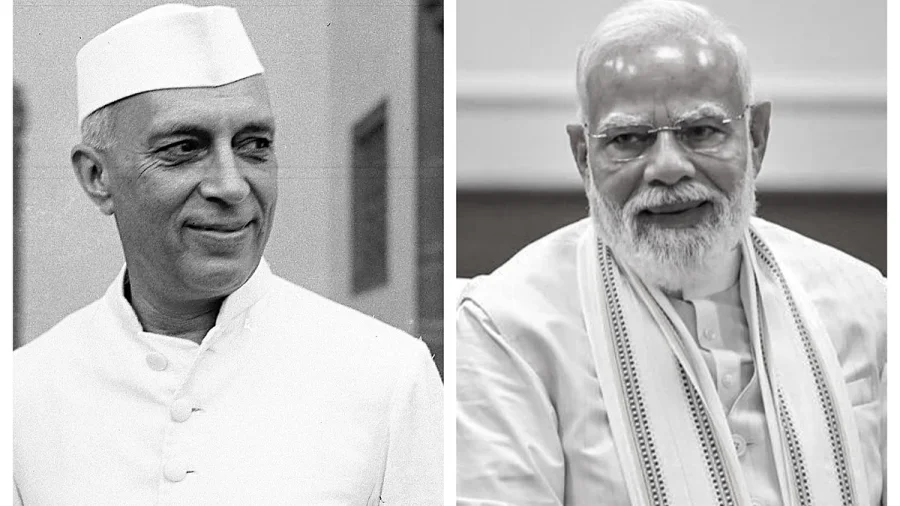
In a sharp political intervention, Nationalist Congress Party (Sharadchandra Pawar) chief Sharad Pawar on Wednesday firmly rejected any comparison between Prime Minister Narendra Modi and India’s first Prime Minister Jawaharlal Nehru. Speaking at his party’s 27th foundation day in Mumbai, the veteran leader acknowledged Modi’s record tenure but insisted Nehru’s legacy remains unmatched.
Pawar’s Unambiguous Stand on Leadership Legacy
Addressing party workers, Pawar directly countered the narrative that Modi’s longevity in office places him in a league of his own. “There is a portrayal that there is no leader like Narendra Modi because he has become the longest-serving prime minister,” Pawar said. “But Nehru’s contribution to nation-building and the freedom struggle cannot be forgotten and must be respected.”
Why This Distinction Matters Now
The comparison between Nehru and Modi has become a recurring theme in Indian political discourse, especially as Modi completes over a decade in power. For many voters, especially younger generations, the debate is about how to weigh the foundational contributions of India’s first PM against the achievements of its current leader. Pawar’s remarks inject a seasoned political voice into this conversation, one that refuses to flatten history into a simple ranking.
The Context of Pawar’s Remarks
Pawar’s statement came during the foundation day event of his party, which he founded after splitting from the original NCP. The event was a platform to reaffirm the party’s ideological roots. By invoking Nehru, Pawar was not just defending a historical figure but also signalling his party’s continued allegiance to the secular, democratic values associated with Nehru’s vision for India.
Who Is Affected by This Debate
This is not just a political elite conversation. For millions of Indians who study history, who vote, and who form opinions about their nation’s direction, the way leaders are compared shapes public memory. Pawar’s intervention reminds citizens that leadership is not just about tenure but about the context of a leader’s contribution—Nehru’s role in the freedom movement and building post-independence institutions is a different category of service.
What the Veteran Leader Actually Said
Pawar did not attack Modi’s performance. Instead, he drew a clear line: “Nehru’s sacrifices during the independence movement set the foundation for modern India.” He urged that this contribution must be respected, regardless of any contemporary leader’s achievements. The tone was respectful but firm, avoiding personal attacks while defending a historical figure.
Deeper Meaning: History vs. Tenure
The core of Pawar’s argument is a distinction between two types of political greatness. One is measured by longevity and administrative impact. The other is measured by foundational, nation-defining contributions. Pawar’s point is that Nehru belongs to the latter category, and that category cannot be compared to the former. This is a nuanced position that rejects the zero-sum game of “who is better.”
Confirmed Facts vs What Remains Unclear
Confirmed: Sharad Pawar made the statement at the NCP (SP) foundation day in Mumbai. He acknowledged Modi’s record as longest-serving PM. He explicitly said Nehru’s contribution to the freedom struggle and nation-building is unparalleled.
Unclear: Whether Pawar’s remarks were a direct response to any specific recent statement by BJP leaders. The full transcript of his speech beyond the quoted lines is not yet available.
Risks and Balanced View
Pawar’s stance may invite criticism from BJP supporters who see Modi’s tenure as transformative. Some may argue that Nehru’s legacy is also subject to critique, particularly on economic policy and the Kashmir issue. Pawar’s position, while defending Nehru, does not engage with these critiques. The debate risks becoming polarized, with each side refusing to acknowledge the other’s valid points.
Wider Pattern in Indian Political Discourse
This is part of a larger trend where historical figures are increasingly used as political symbols. The ruling party has often invoked Nehru’s legacy critically, while opposition parties defend it. Pawar’s intervention is significant because he is a regional satrap with national stature, not a standard-bearer of the Congress party. His defence of Nehru carries weight beyond party lines.
Practical Guidance for Readers
For citizens trying to make sense of this debate, it is useful to separate historical fact from political rhetoric. Nehru’s role in the freedom movement and early nation-building is well-documented. Modi’s achievements in governance and global standing are also on record. Comparing them requires understanding the different eras and challenges each faced. Pawar’s advice: respect both, but do not conflate their contributions.
Future Outlook
This statement is unlikely to be the last word. As the 2029 general elections approach, historical comparisons will only intensify. Pawar’s remarks may embolden other opposition leaders to defend Nehru more openly. The BJP, in turn, may double down on its critique of Nehru’s legacy. The debate will likely remain a fixture of Indian political discourse.
Our Take
Sharad Pawar has done something rare in today’s polarized politics: he has drawn a distinction without demonizing either side. By acknowledging Modi’s record while defending Nehru’s unique place in history, he offers a more mature framework for evaluating leadership. This is not about who is better—it is about understanding that different leaders serve different historical purposes. In an era of instant comparisons, Pawar’s call for nuance is a welcome reminder that history is not a ranking list.
Frequently Asked Questions
Why did Sharad Pawar compare Nehru and PM Modi?
Pawar was responding to a narrative that PM Modi, as the longest-serving prime minister, is unparalleled. He argued that Nehru’s role in the freedom struggle and nation-building is a different, foundational category that cannot be compared.
What did Sharad Pawar say about PM Modi’s tenure?
Pawar acknowledged that Modi has become the longest-serving prime minister of India. However, he insisted that this does not diminish Nehru’s unique contribution to the country’s founding.
Is Sharad Pawar criticizing PM Modi?
No. Pawar did not attack Modi’s performance or record. He simply rejected the comparison itself, arguing that Nehru’s historical role is in a different league.
What is the significance of this statement?
It comes from a veteran opposition leader who is not from the Congress party, making it a notable defence of Nehru’s legacy. It also highlights the ongoing political debate over how to evaluate historical vs contemporary leadership in India.