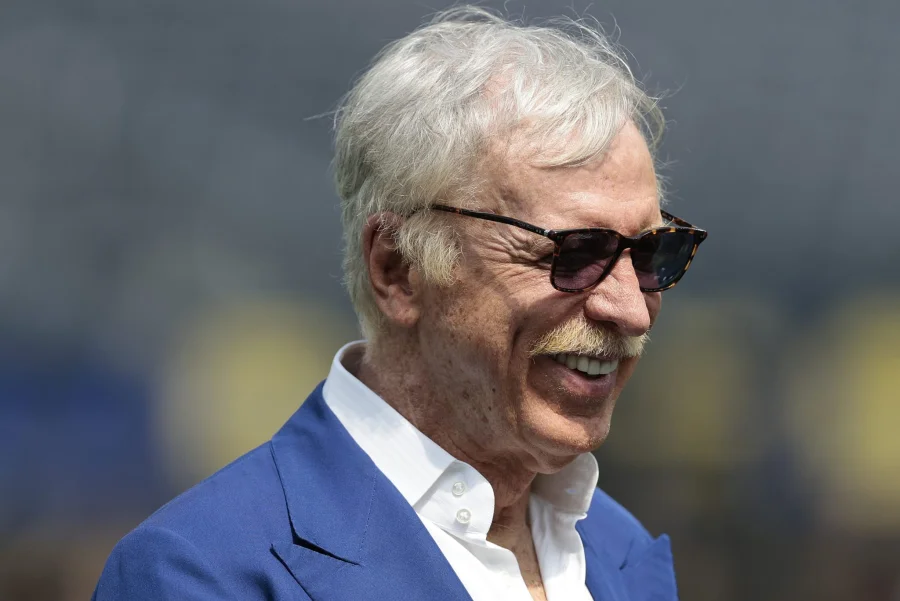
Stan Kroenke just bought a baseball team. But the land beneath your feet — millions of acres of it — may already belong to him. The man who will soon own the Los Angeles Angels has quietly assembled the largest private land empire in America, holding more territory than Bill Gates and Jeff Bezos combined. And most people have never heard him say a word about it.
The Quiet Billionaire Behind the Angels Deal
Kroenke announced Tuesday that he would purchase the LA Angels from Arte Moreno, who has owned the franchise since 2003. The transaction is expected to close in the first quarter of 2027, pending league approval. For a man nicknamed "Silent Stan" for his aversion to press conferences, the move speaks volumes about his ambitions in Southern California sports.
He already controls the LA Rams, who play just down the road at SoFi Stadium — a venue Kroenke built and owns outright. Adding the Angels gives him a rare dual presence in America's second-largest media market.
2.7 Million Acres: How Kroenke's Land Stacks Up
According to the 2025 Land Report, Kroenke owns approximately 2.7 million acres of private land across the United States. To put that in perspective: that's roughly 2 million football fields, or an area larger than Yosemite National Park. His holdings dwarf those of other famous landowners — Bill Gates owns about 275,000 acres, while Jeff Bezos holds roughly 420,000 acres.
The bulk of Kroenke's acreage sits in the American West, with significant ranches in Montana, Wyoming, and his home state of Colorado. These are working cattle operations, not idle investments — though their value has appreciated considerably as development pressure grows across the region.
From Missouri Farmland to Western Ranches
Kroenke's land story begins in the 1970s, when he started acquiring farmland in his native Missouri. Over five decades, he expanded methodically westward, purchasing ranches that were often on the market for years before he struck a deal. His approach has been consistent: buy large, hold long, and never discuss the details publicly.
His wife, Ann Walton Kroenke, is an heir to the Walmart fortune, and together they have deployed significant capital into real estate that most institutional investors overlook. The strategy has made Kroenke not just a sports mogul but one of the most consequential private landowners in American history.
What the Angels Purchase Means for Southern California
For Angels fans, the Kroenke era brings both promise and questions. His track record with the Rams — including the construction of SoFi Stadium, one of the most expensive sports venues ever built — suggests he is willing to spend on infrastructure and talent. But his ownership of Arsenal FC has drawn criticism from fans who feel the club prioritizes commercial returns over on-field success.
The Angels have not won a playoff game since 2009, despite fielding generational talent like Mike Trout and Shohei Ohtani. Kroenke's arrival signals a potential shift in how the franchise approaches roster construction and stadium investment.
Kroenke's Response and Public Silence
True to form, Kroenke has made no public statements about the Angels acquisition beyond the official announcement. Moreno, who will remain in control until the deal closes, called Kroenke "the right steward" for the franchise in a prepared statement. The league's ownership committee will review the transaction in the coming months.
Those who have worked with Kroenke describe him as deliberate and data-driven, rarely making impulsive decisions. His purchase of the Rams in 2010 took years of negotiation, and his land acquisitions often span a decade or more from first approach to final signature.
Why One Man Owns So Much American Land
Kroenke's land strategy reflects a broader trend among America's ultra-wealthy. Land is finite, inflation-resistant, and offers tax advantages that other assets cannot match. For billionaires like Kroenke, Gates, and Bezos, large-scale land ownership serves as both a hedge and a legacy play.
But Kroenke differs from his peers in one key respect: he actually uses his land. His ranches are operational cattle businesses, and he has been known to visit them regularly, often flying himself in a private plane to check on operations. This is not a passive investment — it is a working empire.
What's Confirmed vs. What Remains Unclear
What we know: Kroenke owns 2.7 million acres, making him America's largest private landowner. He has agreed to buy the Angels, with the deal closing in early 2027. What remains unclear: the exact purchase price, which has not been disclosed, and whether Kroenke will make significant changes to the Angels' front office or roster before the 2027 season.
It is also uncertain how Kroenke's ownership will affect the Angels' long-term stadium situation. Angel Stadium's lease runs through 2029, and Moreno had previously explored moving the team before abandoning those plans. Kroenke's experience building SoFi Stadium suggests he may have his own ideas about the team's future home.
The Kroenke Playbook: Sports, Land, and Leverage
Kroenke's business model is built on a simple premise: own assets that appreciate while generating cash flow. His sports teams provide the cash flow and cultural relevance; his land provides the long-term appreciation and collateral. This combination has made him one of the wealthiest sports owners in the world, with an estimated net worth exceeding $12.8 billion.
His sports holdings now include Arsenal FC in London, the LA Rams, the Denver Nuggets, the Colorado Avalanche, and now the LA Angels. No other owner in American sports holds franchises in both the NFL and MLB in the same market — a position of unusual leverage in Southern California.
Concerns and Criticism: What Critics Point Out
Not everyone is celebrating Kroenke's expanding footprint. Land conservation groups have raised concerns about the concentration of American land in the hands of a few billionaires, arguing that it reduces public access and drives up prices for working farmers and ranchers. Kroenke's ranches are largely closed to public recreation, a point of tension in communities where hunting and fishing on private land has historical precedent.
Arsenal fans, meanwhile, have been vocal about their frustrations with Kroenke's ownership, particularly his role in the failed European Super League project in 2021. Some Angels fans worry that Kroenke's attention will be divided across his many properties, leaving the baseball team without the focus it needs to compete.
The Bigger Pattern: Billionaires Buying America
Kroenke is part of a broader wave of ultra-wealthy individuals acquiring vast tracts of American land. Gates has assembled farmland across the Midwest. Bezos owns ranches in Texas. The late Ted Turner accumulated nearly 2 million acres before his death. This trend raises fundamental questions about who controls America's rural landscape and what that means for communities that depend on access to it.
For now, Kroenke's position at the top of the landowner list appears secure. His acquisitions have slowed in recent years, but his existing holdings continue to appreciate, and his new baseball venture adds another layer to a portfolio that already spans continents.
What Should Fans and Observers Watch For
For Angels fans, the next 18 months will be a waiting period. Moreno remains in charge until the deal closes, but Kroenke's team is likely already conducting due diligence on the franchise's finances, roster, and stadium situation. Watch for early signals: front office changes, contract extensions for key players, and any hints about stadium plans.
For those interested in land policy, Kroenke's continued dominance of the landowner rankings is worth monitoring. The 2026 Land Report will show whether he has added to his holdings or begun divesting — either move would be significant.
What Happens Next
The Angels sale will proceed through league approval in 2026, with the transaction expected to close in Q1 2027. Kroenke will then assume control of a franchise that has struggled to build a consistent winner despite significant payroll investment. His first major decisions — hiring or retaining a general manager, extending Mike Trout's contract, and addressing the team's pitching depth — will set the tone for his tenure.
On the land front, no major acquisitions have been reported in recent months, suggesting Kroenke may be in a holding phase. But his history suggests he is always watching for the right opportunity.
Our Take
Stan Kroenke's purchase of the Angels is not just a sports story — it is a story about how concentrated wealth shapes American institutions. One man will soon control two major sports franchises in Los Angeles, millions of acres of land across the West, and some of the most valuable real estate in the country. Whether that concentration serves fans, communities, and the public interest depends on how he chooses to wield it.
Kroenke's record is mixed. He built SoFi Stadium, a genuine civic asset. He also backed the European Super League, a plan that would have fundamentally damaged the sport he profits from. Angels fans should hope they get the builder, not the disruptor.
Frequently Asked Questions
How much land does Stan Kroenke own?
Stan Kroenke owns approximately 2.7 million acres of private land across the United States, making him America's largest private landowner according to the 2025 Land Report. His holdings are primarily concentrated in Montana, Wyoming, and Colorado.
Is Stan Kroenke really buying the LA Angels?
Yes, Kroenke has agreed to purchase the Los Angeles Angels from Arte Moreno. The transaction is expected to close in the first quarter of 2027, pending approval from Major League Baseball's ownership committee.
How does Kroenke's land compare to Bill Gates and Jeff Bezos?
Kroenke's 2.7 million acres far exceeds both. Bill Gates owns approximately 275,000 acres, while Jeff Bezos holds roughly 420,000 acres. Kroenke's holdings are larger than both combined.
What other sports teams does Stan Kroenke own?
Kroenke owns Arsenal FC in London, the LA Rams, the Denver Nuggets, the Colorado Avalanche, and the Colorado Rapids. He also owns SoFi Stadium, where the Rams play.