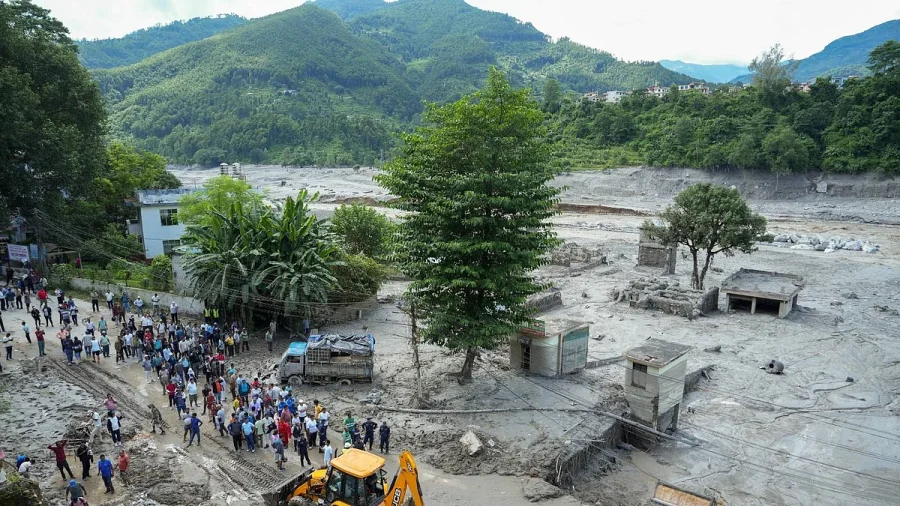
The ground had barely stopped shaking in Rasuwa district when a new worry emerged — a barrier lake sitting where no lake should be. Days after the Bhote Koshi river unleashed a deadly torrent that killed hundreds and tore through bridges and settlements, scientists are now asking whether the mountain has stored another disaster in waiting.
What Scientists Are Now Investigating Along the Bhote Koshi
Preliminary analysis of satellite imagery suggests that a large volume of ice and rock may have collapsed into the Lhende River, a tributary of the Bhote Koshi. The debris, experts believe, could have temporarily blocked the river and created a natural dam.
When that blockage gave way, the sudden release of water may have produced the catastrophic flash flood that struck on Wednesday near the Rasuwagadhi border crossing. The theory now under examination is whether a glacial collapse and ice-rock avalanche triggered the entire chain of events.
Why a New Barrier Lake Changes the Risk Picture
The concern is not just what happened — it is what could happen next. If a new barrier lake has formed upstream, the same mechanism that caused the first disaster could repeat itself. A second breach would send another surge of water downstream, potentially hitting communities already weakened by the first flood.
For residents along the Bhote Koshi, the threat is no longer theoretical. The river that once sustained their villages has become an unpredictable force, and the presence of a new lake adds a layer of uncertainty to an already fragile recovery.
How the Disaster Unfolded in Rasuwa District
The flash flood struck Rasuwa district on Wednesday with little warning. A powerful torrent rushed downstream, overwhelming the landscape and destroying bridges, roads, and other critical infrastructure across several districts. The scale of destruction has left hundreds dead and many more displaced.
Initial theories about the sudden surge included a glacial lake outburst flood and an avalanche. But the latest satellite analysis points toward a different sequence — a large ice-rock avalanche falling into the Lhende River, creating a temporary dam that later burst.
Who Is Affected by the Growing Flood Threat
The immediate victims are the families who lost loved ones and homes in the first flood. But the new barrier lake extends the threat to a wider population. Communities downstream of the Bhote Koshi, including those near the Rasuwagadhi border crossing, remain on edge as scientists assess the stability of the new blockage.
Infrastructure that survived the first flood could be vulnerable to a second event. Bridges, communication lines, and supply routes that are still intact may not withstand another surge, complicating relief and recovery efforts.
Official Response and the Race to Assess the Damage
Scientists are now working to determine whether the landslide dam that formed the new barrier lake is stable or at risk of breaching. Satellite imagery provides a broad view, but ground-level assessments are needed to confirm the exact conditions.
Officials have not yet issued definitive statements about the stability of the new lake. The investigation is ongoing, and the lack of confirmed data means that authorities are proceeding with caution rather than certainty.
What the Satellite Evidence Actually Shows
The preliminary analysis indicates a large volume of ice and rock fell into the Lhende River. The debris field is consistent with a glacial collapse, though the exact sequence of events remains under investigation.
What is clear is that the river was temporarily blocked. The natural dam that formed would have held back water until pressure built to a breaking point. When it failed, the released water would have surged downstream with enormous force — matching the destructive pattern seen on Wednesday.
Confirmed Facts vs What Remains Unclear
What is confirmed: A flash flood struck Rasuwa district on Wednesday, killing hundreds and destroying infrastructure. Satellite imagery shows a large ice-rock deposit in the Lhende River, a Bhote Koshi tributary.
What remains unclear: Whether the new barrier lake is stable or could breach again. Whether the original flood was caused by the landslide dam burst or another mechanism. Whether a second flood event is likely in the near term. These questions can only be answered by further investigation and ground-level monitoring.
Why This River Valley Is Especially Vulnerable
The Bhote Koshi river runs through a steep, mountainous corridor that is naturally prone to landslides and glacial activity. The combination of high-altitude terrain, fragile geology, and seasonal weather patterns makes the region susceptible to sudden hydrological events.
Climate change has added another layer of risk. Glacial retreat and changing precipitation patterns are increasing the frequency of glacial lake outburst floods and related hazards across the Himalayas. The Bhote Koshi disaster fits a broader pattern of mountain valleys facing new and unpredictable threats.
Risks and the Challenge of Predicting Mountain Hazards
The scientific community faces a difficult task. Predicting when a natural dam will breach is notoriously difficult, even with good data. The terrain is remote, access is limited, and conditions can change rapidly.
There is also the risk of overreaction. A barrier lake that appears dangerous may remain stable for years, while a seemingly benign one can fail without warning. Balancing precaution with practicality is a constant challenge for authorities and scientists alike.
The Wider Pattern of Himalayan Flood Disasters
The Bhote Koshi disaster is not an isolated event. Across the Himalayas, glacial lakes and landslide dams have caused devastating floods in recent years. Each event provides new data, but also reveals how much remains unknown about these complex mountain systems.
The international scientific community is watching the situation closely. The findings from this investigation could inform how other vulnerable valleys in Nepal, India, Bhutan, and China assess their own risks.
What Residents and Authorities Should Do Now
For residents living downstream of the Bhote Koshi, the immediate priority is to stay informed and follow official guidance. If authorities issue evacuation warnings based on the new barrier lake assessment, those warnings should be taken seriously.
For authorities, the focus should be on rapid ground-level assessment of the new lake, establishing monitoring systems, and preparing contingency plans in case of a second breach. Communication with affected communities must be clear and timely.
What Happens Next in the Investigation
The coming days will be critical. Scientists need to determine whether the new barrier lake is growing, stable, or showing signs of instability. Ground teams may need to be deployed to the remote site to install monitoring equipment.
If the lake is deemed unstable, authorities may consider controlled drainage or other mitigation measures. If it is stable, the immediate threat may recede, but long-term monitoring will still be necessary.
Our Take
The Bhote Koshi disaster has already caused immense suffering, and the possibility of a second flood adds a cruel layer of uncertainty. What stands out is how much remains unknown about the very forces that shape these mountain valleys. The scientific investigation now underway is not just about explaining the past — it is about protecting the future. For the people of Rasuwa and the wider region, the hope is that answers come before the next disaster does.
Frequently Asked Questions
What caused the Bhote Koshi flash flood in Nepal?
Preliminary satellite analysis suggests a glacial collapse and ice-rock avalanche fell into the Lhende River, a tributary of the Bhote Koshi. The debris may have created a temporary natural dam that later burst, releasing a devastating torrent of water downstream.
What is a barrier lake and why is it dangerous?
A barrier lake forms when debris such as rock and ice blocks a river, causing water to pool behind it. The danger is that the natural dam can fail suddenly, releasing a massive volume of water in a short time and causing flash floods downstream.
Is another flood likely on the Bhote Koshi river?
Scientists are investigating whether a new barrier lake has formed and whether it is stable. No definitive assessment has been released yet. The risk depends on the size and stability of the new blockage, which requires ground-level investigation to confirm.
What should people living near the Bhote Koshi do now?
Residents should stay informed through official channels and follow any evacuation warnings issued by authorities. The situation is under investigation, and official guidance should take priority over unverified information.