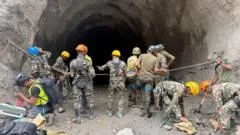
The sound of controlled explosions now echoes through Nepal's mountains as rescue teams deploy explosives to tear through a collapsed hillside. Beneath the rubble, hydropower workers remain trapped — and their families stand helplessly nearby, counting every passing hour.
Desperate Measures in the Search for Survivors
Rescuers have resorted to blasting the hillside after conventional digging failed to reach the trapped workers quickly enough. The decision reflects the grim reality of the operation: time is running out, and heavy machinery alone cannot move fast enough.
The use of explosives is a high-risk strategy. Each blast could destabilise the debris further, but officials believe there is no other viable option left.
Flooding Death Toll Climbs to 939
The broader catastrophe has now claimed at least 939 lives across Nepal. Entire villages have been submerged, roads washed away, and communication lines severed. The hydropower site is just one front in a much larger disaster.
For the families of the missing workers, the national scale of the tragedy offers little comfort. Their focus remains fixed on the mound of earth and rock where their loved ones were last seen.
How the Disaster Unfolded
The flooding was triggered by relentless monsoon rains that overwhelmed rivers and triggered landslides across the Himalayan nation. The hydropower project, located in a mountainous region, was particularly vulnerable to the cascading debris.
Eyewitness accounts describe a sudden wall of water and mud that swept through the area with little warning. Workers had little time to evacuate before the hillside gave way.
Families Wait in Anguish
At the rescue site, the atmosphere is tense. Women and children huddle together, watching every movement of the rescue teams. Some hold photographs of their missing relatives. Others simply stare at the rubble, hoping for a miracle.
"We just want answers," one family member was reported as saying. "Whether good or bad, we need to know."
Authorities Race Against Time
Nepal's disaster response teams have been mobilised in full force. Army personnel, police, and volunteer rescuers are working in shifts around the clock. Medical teams stand by, ready to provide emergency care the moment anyone is pulled from the debris.
Officials have not confirmed the exact number of workers still trapped, citing the instability of the site. They have, however, assured the public that every possible resource is being deployed.
Why the Rescue Operation Is So Difficult
The terrain is brutally unforgiving. The hillside is steep, the soil is waterlogged, and the risk of secondary landslides remains high. Rescuers must balance speed against safety — for both the trapped workers and themselves.
The decision to use explosives underscores just how challenging the conditions have become. It is a calculated gamble, born of desperation.
Confirmed Facts vs What Remains Unclear
What is confirmed: the flooding death toll has reached 939, rescuers are using explosives to clear the hillside, and families are waiting at the site. What remains unclear: the exact number of trapped workers, their condition, and whether anyone has survived the initial collapse.
Officials have not yet released an official casualty count specific to the hydropower site. Until they do, all numbers should be treated as provisional.
The Human Cost of Nepal's Hydropower Ambitions
Nepal has invested heavily in hydropower as a cornerstone of its economic future. But this disaster highlights the risks faced by workers in remote, high-altitude projects. Safety protocols, emergency planning, and infrastructure resilience are now under renewed scrutiny.
For the families affected, the national economic narrative offers little solace. Their loss is personal, immediate, and devastating.
Risks and the Road Ahead
The use of explosives carries inherent dangers. A miscalculation could trigger further collapse, endangering both the trapped workers and the rescue teams. Critics may question whether faster evacuation protocols could have prevented this tragedy.
There are also broader concerns about the safety standards at Nepal's hydropower sites, particularly as the country pushes to expand its energy infrastructure.
A Nation in Mourning, A Community in Hope
Across Nepal, the flooding has left a trail of destruction that will take years to repair. But at the rescue site, the focus remains narrow: find the workers, bring them home, and give their families closure.
Every blast of the explosives is a reminder of the fragility of life in the mountains — and the determination of those who refuse to give up.
What Happens Next
Rescue operations are expected to continue for at least the next 24 to 48 hours. Authorities will likely provide updates as the site stabilises. For the families, the wait continues.
The broader recovery effort — rebuilding homes, restoring roads, and supporting the displaced — will take months, if not years.
Our Take
This is a story about the limits of human effort against nature's fury. The use of explosives is not a sign of progress; it is a sign of desperation. It reflects a reality where every second counts, and where the tools available are blunt instruments against an unforgiving landscape.
The tragedy also raises uncomfortable questions about the cost of development. As Nepal pushes forward with its hydropower projects, it must ensure that the workers who build them are protected — not just by contracts, but by robust safety systems and emergency preparedness.
For now, the world watches and waits. The hillside will yield its secrets soon enough. The only question is whether it will yield survivors.
Frequently Asked Questions
How many people have died in the Nepal flooding?
The flooding death toll has reached 939, according to officials. This number may rise as rescue operations continue and more areas are reached.
Why are rescuers using explosives in Nepal?
Rescuers are using explosives to blast through a collapsed hillside at a hydropower site because conventional digging methods have been too slow to reach trapped workers in time.
How many hydropower workers are trapped in Nepal?
The exact number of trapped workers has not been officially confirmed. Authorities have not released a specific count due to the instability of the site.
What caused the Nepal flooding in 2025?
The flooding was caused by relentless monsoon rains that triggered landslides and overwhelmed rivers across Nepal, particularly in mountainous regions where hydropower projects are located.