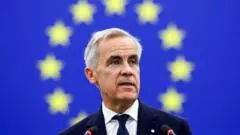
After months of tension that rattled one of the world's most strategically sensitive regions, Denmark and the United States have reached an agreement over Greenland — a deal NATO has welcomed and that President Donald Trump says gives America "permanent security control" over the Arctic island.
The announcement marks a sharp turn from a period in which Trump repeatedly threatened to annex the territory, unsettling allies and raising questions about the future of NATO's northern flank.
What the Greenland Agreement Actually Changes
At its core, the deal appears to formalise a stronger American security footprint in Greenland without altering Danish sovereignty over the island. Trump's framing — "permanent security control" — suggests a long-term US military and strategic presence rather than a transfer of territory.
That distinction matters. Greenland is not a piece of real estate to be bought or annexed; it is an autonomous territory within the Kingdom of Denmark. Any arrangement that reshapes its security role touches on Danish sovereignty, Greenlandic self-governance, and NATO's collective defence framework.
Why the Arctic Island Matters More Than Ever
Greenland sits between North America and Europe, controls key Arctic shipping routes emerging as ice retreats, and hosts the US Thule Air Base — a critical node in early-warning and space surveillance.
For Washington, the island is a forward operating position against Russian and Chinese activity in the High North. For Denmark, it is a sovereign responsibility. For NATO, it is a gap in the alliance's northern defences that the deal may now help close.
From Annexation Threats to a Signed Deal
The path to this agreement was anything but smooth. Trump's repeated suggestions that the US should acquire Greenland — echoing a proposal he first floated during his first term — triggered diplomatic friction with Copenhagen and unease across Europe.
Those threats have now given way to a negotiated outcome, though the source material does not detail the specific terms, timelines, or concessions involved. What is clear is that both sides have chosen cooperation over confrontation.
Who Is Affected — and How
Greenland's roughly 56,000 residents are the most directly impacted. Their homeland's strategic value has made it a bargaining chip in great-power politics, even as Greenlandic leaders have consistently asserted their right to determine their own future.
Danish taxpayers and NATO members also have a stake: any expanded US role could shift the burden-sharing calculus within the alliance. And for Arctic watchers, the deal signals that the region is now a permanent front line in global competition.
NATO's Welcome — and What It Signals
NATO's public welcome of the agreement is significant. It suggests the alliance views a stronger US presence in Greenland as reinforcing, not undermining, collective security.
That endorsement also serves a diplomatic purpose: it reframes what began as a unilateral American demand into a multilateral security arrangement, giving Denmark political cover and reassuring European allies wary of Trump's territorial ambitions.
Reading Between the Lines of 'Permanent Security Control'
The phrase is deliberately broad. It could mean expanded basing rights, upgraded radar and missile-defence infrastructure, or a long-term lease arrangement. Without the full text of the agreement, the precise scope remains unclear.
What is evident is that the US has secured something it has sought for years: a durable, uncontested foothold in the Arctic. Whether that translates into formal treaty commitments or informal understandings will determine how binding the arrangement truly is.
Confirmed Facts vs What Remains Unclear
Confirmed: Denmark and the US have reached an agreement; NATO has welcomed it; Trump says it gives the US "permanent security control."
Unclear: The specific terms, duration, military assets involved, financial arrangements, and Greenland's own role in negotiations. Any claims beyond these points should be treated as speculation until official documents are released.
Risks and the Balanced View
Critics may argue the deal sets a precedent that great-power pressure can extract strategic concessions from smaller allies. Greenlandic politicians could object to being sidelined in decisions about their own territory.
Supporters counter that a formalised US presence is preferable to the uncertainty of Trump's annexation threats, and that NATO's backing legitimises the outcome. Both views carry weight — and the long-term consequences will depend on how the agreement is implemented.
A Wider Pattern: The Militarisation of the Arctic
The Greenland deal fits a broader trend. Russia has expanded its Arctic military infrastructure; China has declared itself a "near-Arctic state"; and NATO has increasingly focused on northern defence.
Greenland is no longer a remote curiosity. It is now a central piece in the strategic competition that will define the next decade.
What Readers Should Watch For
For now, the key is to track official statements from Copenhagen, Nuuk, and Washington, and to watch whether the agreement's details are published. Investors in defence and Arctic shipping should note the shift, but avoid overreacting to headlines.
For ordinary readers, the takeaway is simpler: a deal that was unthinkable months ago has now been struck, and it will shape the Arctic for years to come.
Future Outlook
If the agreement holds, expect expanded US military infrastructure, deeper NATO Arctic coordination, and renewed debate over Greenland's place in the Kingdom of Denmark. If details remain opaque, questions about sovereignty and consent will persist.
Either way, the Arctic has moved from the margins of geopolitics to its centre — and Greenland is now at the heart of it.
Our Take
This is a story about power, sovereignty, and the quiet redrawing of strategic maps. The deal may be welcomed in Brussels and Washington, but its real test will be whether Greenlanders and Danes see it as partnership or pressure. That question will define its legacy.
Frequently Asked Questions
What is the Greenland deal between Denmark and the US?
It is an agreement that strengthens the US security presence in Greenland without changing Danish sovereignty. Trump says it gives the US "permanent security control," though full details have not been released.
Why has NATO welcomed the agreement?
NATO sees a stronger US presence in Greenland as reinforcing Arctic security and collective defence, and the welcome helps frame the deal as a multilateral arrangement rather than a unilateral US demand.
Does the deal mean the US now owns Greenland?
No. Greenland remains an autonomous territory within the Kingdom of Denmark. The agreement concerns security and military cooperation, not a transfer of sovereignty.
What happens next with the Greenland agreement?
Officials are expected to release further details. The focus will be on implementation, Greenland's role in the process, and how the arrangement affects NATO's Arctic strategy.