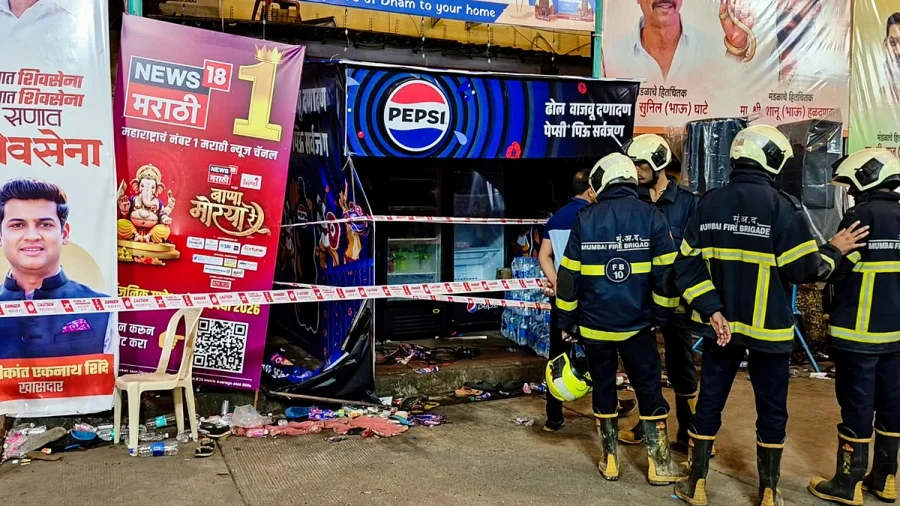
What should have been a night of devotion ended in grief. An eight-year-old girl and a woman lost their lives, and four others were injured, after an apparent electrical short circuit at a temporary stall near a Ganapati pandal in Mumbai's Kalachowki area early Sunday. The tragedy unfolded amid the city's biggest festival, when lakhs of devotees walk the streets until dawn.
A Night of Devotion, a Morning of Loss
The incident took place in the early hours of Sunday, 20 September, according to the original report. A temporary stall near the pandal is believed to have carried an electric current. Two people died at the scene or shortly after; four others were injured.
The identities of the deceased and injured have not been independently confirmed in the source material. What is clear is that a family celebration turned into a tragedy within moments.
Why Kalachowki and Lalbaug Become a Pressure Cooker Every Year
Kalachowki sits adjacent to Lalbaug, the spiritual heart of Mumbai's Ganapati celebrations. Every year, thousands of devotees converge on this belt — narrow lanes, dense crowds, and pandals that draw visitors from across the city and beyond.
When crowds swell beyond capacity, even a small obstruction — a stall, a barricade, a parked vehicle — can become a flashpoint. That is the fear that played out on Sunday.
What Eyewitnesses Say Happened
Eyewitnesses and residents told reporters that heavy crowds and jostling near the pandal may have caused people to be pushed into the stall, where electric current was detected. This account has not been independently verified by officials in the source material.
The sequence — crowd pressure, a push, contact with a live stall — is consistent with how stampede-like incidents unfold at crowded religious gatherings. But the exact chain of events remains under investigation.
The Crowd Control Question Mumbai Keeps Asking
Locals alleged inadequate police deployment and poor crowd management as thousands of devotees thronged Lalbaug and Kalachowki during the festival. This is not the first time such concerns have been raised.
Mumbai's Ganapati festival involves hundreds of pandals, processions, and lakhs of visitors over ten days. Managing that flow requires coordination between police, civic bodies, pandal organisers, and volunteers. When any link weakens, the risk multiplies.
Who Is Affected — and Why It Matters Beyond One Pandal
The immediate victims are the families of the deceased and injured. But the impact ripples outward: every devotee who visits a pandal this week, every organiser who sets up a stall, every police officer assigned to crowd duty.
For Mumbai, the Ganapati festival is not just a religious event — it is an economic and cultural lifeline for thousands of small vendors, artists, and workers. A safety failure at one pandal casts a shadow over the entire ecosystem.
What Officials Have Said So Far
Based on the source material, no official statement from the Mumbai Police or the Brihanmumbai Municipal Corporation (BMC) has been quoted. Locals have alleged inadequate deployment, but that remains a public claim, not an official finding.
In similar past incidents, authorities have typically ordered inquiries, reviewed electrical safety at pandals, and reassessed crowd management plans. Whether that happens here will depend on official action in the coming days.
Confirmed Facts vs What Remains Unclear
Confirmed: Two people died — an eight-year-old girl and a woman — and four others were injured at a temporary stall near a Ganapati pandal in Kalachowki early Sunday. An apparent electrical short circuit is suspected.
Unclear: The exact cause of death, the identities of the victims, whether the stall had proper electrical clearance, the role of crowd pressure versus electrical failure, and whether any arrests or official inquiries have been initiated. All of this remains unverified in the source material.
Risks and the Balanced View
It would be premature to assign blame. Electrical short circuits can result from faulty wiring, overloaded connections, or water exposure — all common risks at temporary stalls during monsoon-adjacent months. Crowd pressure can compound any such hazard.
At the same time, allegations of inadequate police deployment cannot be dismissed. If true, they point to a systemic gap in how Mumbai manages its largest public gatherings. The festival is not new; the risks are not new. What remains new is the recurring nature of these tragedies.
The Wider Pattern: Festival Safety in India's Megacities
Mumbai is not alone. From Kumbh Mela to temple festivals in the south, India's mass religious gatherings repeatedly test the limits of crowd management and infrastructure. Each incident prompts reviews, but sustained reform is rare.
The Ganapati festival, with its decentralized pandal structure and massive street presence, is uniquely challenging. Unlike a single-venue event, crowds here move through neighbourhoods — making real-time control far harder.
What Devotees and Organisers Should Keep in Mind
If you are visiting a pandal in the coming days: avoid peak hours if possible, stay aware of exit routes, and do not push against crowd flow. If you see exposed wiring or unsafe stalls, alert volunteers or police on duty.
For organisers: electrical safety audits, clear barricading, and trained volunteers are not optional. The cost of neglect is measured in lives.
What Could Happen Next
Official inquiries, if ordered, will likely examine electrical safety certifications, crowd density at the time, and police deployment. The BMC and Mumbai Police may issue fresh advisories for pandals. Whether these translate into lasting change — or remain reactive measures — is the real question.
For now, a family is grieving, four people are recovering, and Mumbai is left asking the same question it has asked before: how many more?
Our Take
This is not just a story about one stall or one short circuit. It is a story about the price of scale without safety. Mumbai's Ganapati festival is a spectacle of faith and community — but spectacle without guardrails becomes a hazard. The city has the resources, the manpower, and the experience to manage it better. What it needs is the will to treat safety as non-negotiable, not as an afterthought once tragedy strikes.
Frequently Asked Questions
What happened at the Kalachowki Ganapati pandal?
An eight-year-old girl and a woman died, and four others were injured, after an apparent electrical short circuit at a temporary stall near a Ganapati pandal in Kalachowki, Mumbai, early Sunday. Crowd pressure may have pushed people into the stall.
Was it a stampede or an electrical accident?
Both factors may be involved. Eyewitnesses said heavy crowds and jostling preceded the incident, and electric current was detected at the stall. The exact cause is still under investigation.
Have the police or BMC responded officially?
No official statement has been quoted in the source material. Locals have alleged inadequate police deployment and crowd management, but these remain public claims.
Is it safe to visit Ganapati pandals in Mumbai right now?
The festival continues, and lakhs of devotees are visiting pandals daily. Devotees are advised to avoid peak hours, stay alert to their surroundings, and report unsafe conditions to volunteers or police.