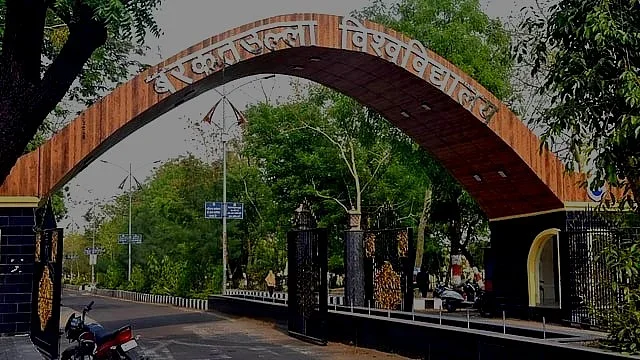
In a move that has reignited a bitter debate over history and identity in Madhya Pradesh, the Executive Council of Barkatullah University in Bhopal has approved a proposal to rename the institution after the 11th-century Paramara king Raja Bhoj. The proposed new name — “Vagdevi Bhojpal University” — has been forwarded to Governor Mangubhai Patel for final approval, setting the stage for a major political confrontation.
Why the Name Change Has Sparked Outrage
For many, the proposal is not just a bureaucratic exercise. It is seen as a direct assault on the legacy of Maulana Barkatullah Bhopali, a revered freedom fighter and revolutionary who fought against British colonial rule. Barkatullah University was originally established as Bhopal University in 1970, but was renamed in 1988 to honour the Maulana’s contributions to India’s independence movement. Critics argue that replacing his name with that of a medieval king is a deliberate attempt to rewrite history and undermine the sacrifices of freedom fighters.
The Legacy of Maulana Barkatullah Bhopali
Maulana Barkatullah Bhopali (1854–1927) was a prominent figure in the Indian independence movement. He was a close associate of revolutionaries like Raja Mahendra Pratap and worked tirelessly abroad to garner support for India’s freedom. He served as the Prime Minister of the provisional government of India established in Afghanistan in 1915. His name is synonymous with anti-colonial struggle and secular nationalism. For many in Bhopal, the university named after him is a living memorial to that legacy.
What the Proposal Says About Raja Bhoj
The proposal seeking the name change highlights the historical and intellectual legacy of Raja Bhoj, the celebrated 11th-century Paramara ruler. It states that Raja Bhoj authored nearly 80 scholarly treatises, of which 27 are believed to survive today. The document also describes Dhara (present-day Dhar) as a major centre of learning during his reign. Supporters of the rename argue that Raja Bhoj’s contributions to art, literature, and governance deserve greater recognition, and that the university’s name should reflect that heritage.
Who Is Affected and Why It Matters
The controversy directly impacts students, faculty, and alumni of Barkatullah University, many of whom feel a deep emotional connection to the current name. For the broader public in Madhya Pradesh, the issue taps into a larger debate about how the state chooses to remember its past. It also raises questions about the BJP government’s cultural priorities — whether it is more invested in glorifying medieval Hindu kings than in honouring modern freedom fighters who represent a pluralistic, anti-colonial vision of India.
Political Reactions and Official Response
The opposition Congress party has condemned the move, calling it “an insult to the freedom struggle.” Local Congress leaders have announced plans to hold protests and approach the Governor to block the proposal. The university administration, meanwhile, has maintained that the decision was taken by the Executive Council through due process. No official statement has been issued by the state government, but the proposal’s approval by the council — which includes government nominees — suggests tacit support from the ruling BJP.
What This Move Really Means
This is not the first time the BJP government in Madhya Pradesh has pushed for renaming institutions or cities after Raja Bhoj. In 2011, the government faced similar controversy when it proposed renaming Bhopal as “Bhojpal.” That proposal was eventually shelved after widespread protests. The current move to rename Barkatullah University appears to be a continuation of that cultural project — an attempt to foreground a particular version of history that emphasises Hindu kingship and medieval glory over the secular, anti-colonial narrative of the freedom movement.
Confirmed Facts vs What Remains Unclear
Confirmed: The Executive Council of Barkatullah University has approved the proposal to rename the university as “Vagdevi Bhojpal University.” The proposal has been forwarded to Governor Mangubhai Patel for final approval. The university was originally named after Maulana Barkatullah Bhopali in 1988.
Unclear: The exact timeline for the Governor’s decision. Whether the state government will publicly endorse or distance itself from the proposal. The extent of student and faculty opposition, which is still emerging.
Risks and Concerns: What Critics Are Saying
Critics argue that the rename is part of a broader pattern of the BJP government attempting to “saffronise” education and erase Muslim and secular icons from public memory. They point to similar controversies in other states, such as the renaming of Allahabad to Prayagraj and the push to rename Mughal-era monuments. There are also concerns that the move could deepen communal polarisation in a state that has seen its share of religious tension. Supporters, however, dismiss these concerns as political overreaction, arguing that honouring Raja Bhoj is a matter of regional pride.
A Wider Pattern: The Politics of Renaming in India
The Barkatullah University controversy is part of a larger national trend. Over the past decade, several BJP-ruled states have renamed cities, universities, and institutions to reflect what they describe as “Indian” or “Hindu” heritage. From the renaming of Mughal Gardens at Rashtrapati Bhavan to the push to rename Aurangzeb Road in Delhi, the pattern is clear: a deliberate effort to reshape public memory and assert a particular cultural identity. Critics see this as an attempt to marginalise the contributions of Muslims and other minorities to India’s history.
What Students and Citizens Should Know
For students at Barkatullah University, the immediate concern is whether the name change will affect their degrees, certificates, or the university’s academic standing. University officials have said that existing degrees will remain valid, but the transition could cause administrative confusion. For citizens, the issue is a reminder of the ongoing battle over India’s historical narrative. Those who wish to oppose the rename can write to the Governor’s office or join protests organised by student unions and political parties.
What Happens Next
The ball is now in Governor Mangubhai Patel’s court. He can either approve the proposal, reject it, or seek further clarification from the university. Given the political sensitivity of the issue, the Governor may choose to consult with the state government before making a decision. If approved, the rename will likely face legal challenges in court. If rejected, it could be seen as a setback for the BJP’s cultural agenda in Madhya Pradesh. Either way, the controversy is far from over.
Our Take
This controversy is not just about a name. It is about whose history gets remembered and whose gets erased. Maulana Barkatullah Bhopali represents a vision of India that is secular, anti-colonial, and inclusive. Raja Bhoj represents a pre-colonial Hindu kingdom that, while culturally rich, is far removed from the struggles of modern India. By seeking to replace one with the other, the BJP government is sending a clear signal about the kind of history it wants to celebrate. That signal is deeply troubling for anyone who believes that India’s freedom fighters — regardless of their religion — deserve to be honoured. The debate over this rename is, at its core, a debate over the soul of the nation.
Frequently Asked Questions
Why is Barkatullah University being renamed?
The university’s Executive Council approved a proposal to rename it as “Vagdevi Bhojpal University” to honour the 11th-century king Raja Bhoj, whom the proposal credits with significant contributions to learning and culture.
Who was Maulana Barkatullah Bhopali?
Maulana Barkatullah Bhopali (1854–1927) was a freedom fighter and revolutionary who played a key role in the Indian independence movement. He served as Prime Minister of the provisional government of India in Afghanistan and is remembered as a symbol of anti-colonial struggle.
Has the name change been finalised?
No. The proposal has been forwarded to Governor Mangubhai Patel, who serves as the university’s Chancellor. He will make the final decision.
What happens to students’ degrees if the name changes?
University officials have said that existing degrees and certificates will remain valid. However, the transition could cause administrative delays and confusion for current students and alumni.