Eight days after an ITBP jawan walked into the Kanpur Police Commissioner's office carrying his 56-year-old mother's amputated hand in an ice box, a revised medical inquiry has delivered a damning verdict. Two private hospitals have been held guilty of "serious negligence" and excessive delay in treatment — a finding that has now triggered criminal proceedings against them. For the family, the official acknowledgment of negligence offers little solace. For the public, it raises a deeply unsettling question: how far must a citizen go to be heard?
What the Revised Inquiry Found: Two Hospitals Under the Scanner
The fresh investigation, ordered by Police Commissioner Raghubir Lal, has fixed responsibility squarely on Krishna Hospital and Paras Hospital in Kanpur. According to officials, the inquiry concluded that both institutions failed to provide timely and adequate medical intervention, which directly contributed to the deterioration of the patient's condition and the eventual amputation of her hand. The report specifically cites "serious negligence" and "excessive delay" as the primary factors behind the tragic outcome.
Why This Matters Right Now
This case has struck a raw nerve across the country. It is not just about one family's tragedy — it is about the systemic failure that forces ordinary citizens to resort to desperate measures to get justice. The image of a uniformed jawan carrying his mother's severed limb in a thermocol box has become a symbol of a broken grievance redressal system. The revised inquiry's findings are a rare instance of accountability, but they also highlight how often such negligence goes unpunished. For the medical community, it is a stark warning. For the public, it is a reminder that the fight for justice often begins only after a tragedy becomes a spectacle.
How the Incident Unfolded: From Complaint to Confrontation
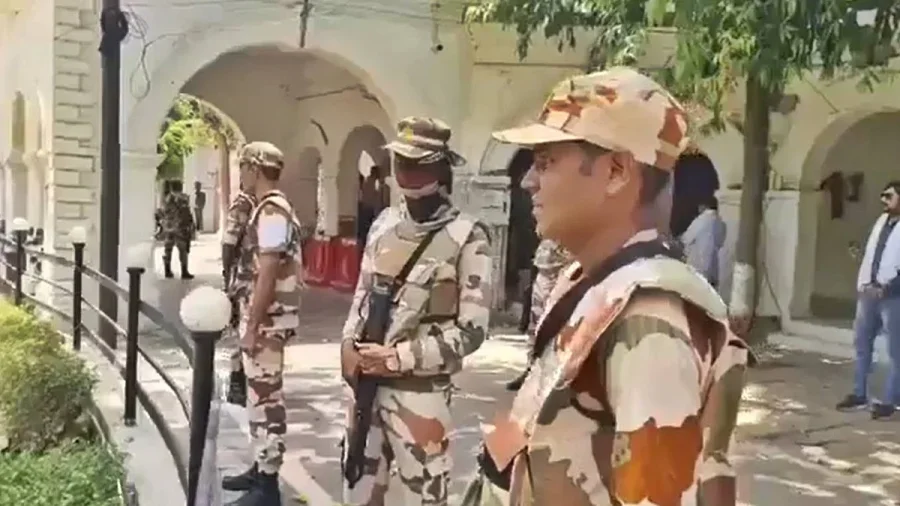
The story began weeks before the dramatic protest. ITBP jawan Vikas Singh had been shuttling between Krishna Hospital and Paras Hospital, seeking treatment for his mother's worsening condition. When her hand turned black and doctors allegedly delayed critical intervention, Singh filed multiple complaints with the Kanpur police, alleging medical negligence. According to sources, the complaints were met with inaction. Frustrated and desperate, Singh made the decision that would capture national attention: he placed his mother's amputated hand in an ice box, drove to the Police Commissioner's office, and demanded action. His arrival, accompanied by around 50 armed ITBP personnel, immediately sparked rumors of a "gherao" and forced the police to take the matter seriously.
Who Is Affected and What Officials Are Saying
The immediate victims are Vikas Singh and his 56-year-old mother, whose life has been permanently altered. But the ripple effects extend far beyond. The two hospitals now face criminal proceedings, which could lead to legal penalties, license revocation, and a loss of public trust. Police Commissioner Raghubir Lal confirmed on Monday that the revised inquiry had been completed and that "criminal proceedings have been initiated against the institutions." He added that the investigation was thorough and that the findings were based on medical records and expert testimony. The ITBP, while denying that the gathering of its personnel constituted a "gherao," has publicly supported its jawan, calling for a fair and transparent probe.
What We Know So Far — and What Remains Unclear
What is confirmed: The revised medical inquiry has formally blamed Krishna Hospital and Paras Hospital for serious negligence and delay. Police have initiated criminal proceedings. What remains unclear: the exact timeline of medical decisions that led to the amputation, whether the hospitals will face any immediate suspension of operations, and whether any individual doctors will be held personally liable. The full medical report has not been made public, and the hospitals have not yet issued a detailed response to the findings. Questions also linger about why the initial police complaints did not trigger a faster response.
Risks, Concerns, and the Balanced View
While the inquiry's findings are a victory for the family, there are risks to consider. The hospitals may challenge the report in court, potentially delaying justice for years. There is also the danger of this case becoming a precedent for vigilante-style protests, where citizens feel compelled to use shock tactics to get authorities to act. Critics argue that while the jawan's desperation is understandable, the presence of armed personnel at a police station could have escalated into a law-and-order crisis. On the other hand, supporters say the protest was the only language the system understood. The balance lies in ensuring that such tragedies are prevented through systemic reform, not just punished after the fact.
Why Similar Cases of Medical Negligence Are Growing
This case is not an isolated incident. Across India, reports of medical negligence in private hospitals have been rising, with patients and families often struggling to get timely justice. A 2023 study by the Indian Medical Association found that complaints against private hospitals had increased by 40% over five years, with delays in emergency care being the most common grievance. The lack of a robust regulatory framework and the high cost of litigation often leave victims with no recourse. The Kanpur case has become a flashpoint, forcing a national conversation about accountability in the healthcare sector.
- Complaints against private hospitals in India have risen by 40% over five years, according to a 2023 IMA study.
- Delays in emergency care are the most common type of medical negligence complaint.
- Many cases go unreported due to the high cost and complexity of legal proceedings.
"Serious negligence and excessive delay in treatment were the primary causes that led to the amputation." — Police Commissioner Raghubir Lal, on the revised inquiry findings.
What Readers, Users, or Investors Should Know Now
For patients and families: This case underscores the importance of documenting every step of medical treatment, including prescriptions, reports, and communication with doctors. If you suspect negligence, file a formal complaint with the local police and the state medical council immediately. Do not wait. For hospital administrators: This is a clear warning that delays in emergency care can have severe legal and reputational consequences. For investors in private healthcare: This case could lead to stricter regulatory oversight, which may impact operational costs and liability insurance premiums.
What Could Happen Next
The immediate next step is the filing of a formal criminal case against Krishna Hospital and Paras Hospital. The police will likely summon hospital administrators and doctors for questioning. The state medical council may also initiate a separate inquiry, which could result in the suspension or revocation of the hospitals' licenses. The family is expected to pursue compensation through civil court. On a broader level, this case could prompt the Uttar Pradesh government to review its medical grievance redressal mechanisms and push for faster action on negligence complaints.
Our Take: Why This Story Matters Beyond One Incident
The Kanpur case is a mirror held up to a system that often fails its most vulnerable citizens. It is easy to focus on the dramatic protest, but the real story is the months of silence that preceded it. The revised inquiry's findings are a step toward accountability, but they are not justice. Justice would be a system where a jawan does not have to carry his mother's amputated hand to a police station to be heard. This case should not be remembered for the spectacle, but for the systemic failures it exposed. The question now is whether the authorities will act on this lesson — or wait for the next ice box.
FAQs
Which hospitals have been blamed in the ITBP jawan's mother's amputation case?
A revised medical inquiry has held Krishna Hospital and Paras Hospital in Kanpur guilty of serious negligence and excessive delay in treatment, which allegedly led to the amputation of the jawan's mother's hand.
What action has the Kanpur police taken against the hospitals?
Police Commissioner Raghubir Lal confirmed that criminal proceedings have been initiated against both hospitals based on the findings of the revised inquiry.
Why did the ITBP jawan carry his mother's amputated hand to the police station?
ITBP jawan Vikas Singh carried his mother's amputated hand in an ice box to the Kanpur Police Commissioner's office to protest alleged police inaction on his repeated complaints of medical negligence against the two hospitals.
What does the revised medical inquiry specifically say about the hospitals' actions?
The inquiry found that both Krishna Hospital and Paras Hospital were guilty of "serious negligence" and "excessive delay" in providing medical intervention, which directly contributed to the deterioration of the patient's condition and the eventual amputation.