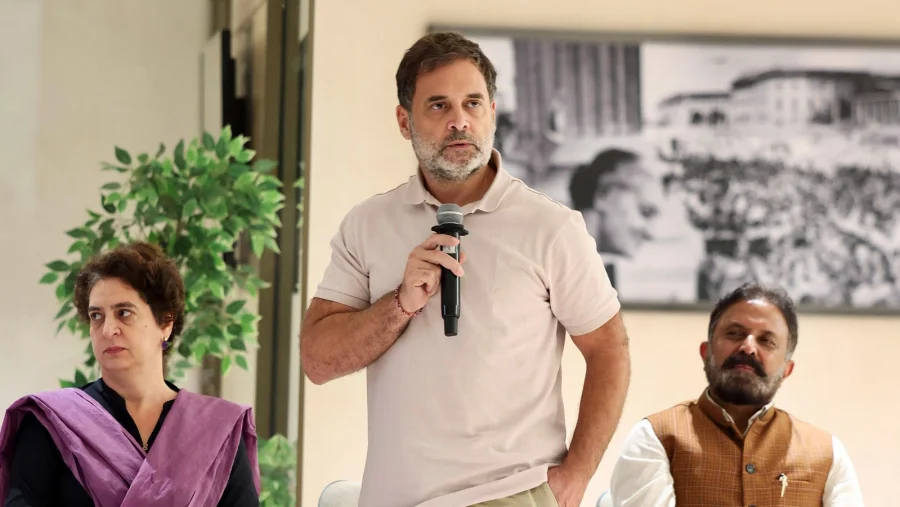
The political temperature over India's digital payment ecosystem just spiked. Rahul Gandhi has issued a direct, unambiguous demand to Prime Minister Narendra Modi: roll back the new rules affecting UPI transactions immediately. Calling it a "UPI tax," the Congress leader has framed the regulatory change not as a technical adjustment, but as a direct hit on the wallets of ordinary Indians.
The 'UPI Tax' Flashpoint: What Rahul Gandhi Said
In a sharp public message, Rahul Gandhi targeted the government's new digital payment framework. He labeled the changes a "UPI tax," a phrase designed to simplify a complex regulatory shift into a visceral economic concern for the common voter. The demand was direct: "Modi ji, roll back the UPI tax. Now."
The statement signals that the opposition is preparing to make digital transaction costs a central political battleground, framing the issue as a burden on the aam aadmi rather than a corporate or technical necessity.
Why This Matters to Every UPI User and Small Merchant
UPI is no longer a luxury; it is the backbone of daily commerce in India. From a street vendor selling vegetables to a chaiwala, digital transactions have become the default. Any change in the cost structure of these transactions is felt immediately at the grassroots level.
If the new rules lead to even a marginal increase in transaction costs or introduce new charges, it could disrupt the zero-cost model that made UPI ubiquitous. For small businesses operating on razor-thin margins, the difference between a free transaction and a taxed one is significant.
The Political Timeline: From Technical Rule to Political Weapon
The controversy stems from recent regulatory updates governing digital payments. While the technical details of the framework are complex, the political narrative has been simplified rapidly. The Congress party has seized on the changes, arguing that the government is quietly taxing a service that was promised as a public good.
This is not the first time digital payments have entered the political arena. However, the direct appeal to "Modi ji" and the use of the word "tax" escalates the rhetoric, moving from policy critique to a direct challenge of the Prime Minister's pro-poor economic narrative.
Who Feels the Pinch? The Human Cost of Digital Rules
The impact is not abstract. For a daily wage worker in a metro city who relies on UPI to send money home, a new charge is a direct cut in income. For a small shop owner, it is an added operational cost that cannot be easily absorbed.
The opposition's framing suggests that the government is out of touch with the financial reality of the common user. By using the term "UPI tax," Rahul Gandhi is attempting to create a direct emotional link between a policy decision in Delhi and the financial stress of a household in a small town.
Official Silence and the Opposition's Offensive
As of now, the government has not issued a specific rebuttal to Rahul Gandhi's demand. The absence of an immediate response allows the opposition to control the narrative, at least in the short term.
Typically, the government defends such moves as necessary for system sustainability or security. However, the challenge for the administration is to explain why a system that was promoted as a free public utility now requires a new cost structure. The lack of a clear, immediate public explanation could fuel further criticism.
Decoding the 'Tax': Is It a Fee, a Charge, or a Rule?
The term "UPI tax" is a political simplification. In technical terms, the new rules likely involve changes to the Merchant Discount Rate (MDR) or other transaction processing fees. The government has historically absorbed these costs to promote digital adoption.
The political debate hinges on whether the new rules shift this burden. If the cost is passed on to the user or the merchant, the "tax" label sticks. If it is absorbed by the banks or the government, the opposition's charge loses its sting. The lack of clarity is precisely what the opposition is exploiting.
Confirmed Facts vs. What Remains Unclear
Confirmed: Rahul Gandhi has publicly demanded a rollback of new digital payment rules, specifically using the phrase "UPI tax." The demand is directed at PM Modi.
Unclear: The exact nature of the new rules, whether they introduce direct user charges, and the official government rationale behind them. It is also unclear if the government will engage with the opposition's demand or ignore it as political posturing.
The Political Moat: Why UPI is a Sensitive Subject
UPI is one of the few success stories of India's digital public infrastructure that has cross-party appeal. It is a symbol of national pride and technological advancement. Attacking it, or being perceived as attacking it, is politically risky.
The BJP has long claimed credit for the UPI revolution. The Congress is now attempting to flip that narrative by arguing that the BJP is now taxing the very revolution it claims to have built. This is a battle for ownership of India's digital success story.
Risks and the Balanced View: Is the Opposition Overplaying Its Hand?
While the "UPI tax" narrative is potent, there are risks for the opposition. If the new rules are technically necessary to prevent fraud or ensure system stability, the Congress could be accused of fear-mongering.
Furthermore, if the government clarifies that the cost is negligible or borne by banks, the opposition's emotional appeal might fall flat. The political effectiveness of this demand depends entirely on the actual financial impact on the end user.
The Wider Trend: Digital Populism vs. Regulatory Reality
This clash is part of a broader global trend. Governments worldwide are grappling with how to fund and regulate digital public infrastructure. The initial phase of "free" services is often followed by a phase of "sustainable" cost recovery.
The political challenge is managing this transition without alienating the user base. In India, where digital payments are now a daily necessity, the tolerance for new charges is extremely low. This makes UPI a permanent political minefield.
What Should UPI Users Do Now?
For the average user, the immediate advice is to stay informed. Do not panic based on political headlines alone. Check official bank notifications and NPCI guidelines to understand if any new charges apply to your specific transactions.
Small merchants should review their transaction statements carefully. If new fees appear, they should seek clarification from their payment service providers. The situation is evolving, and clarity will emerge as the government responds.
Future Outlook: Will the Government Blink?
The government's next move is critical. If public pressure mounts, a review or a clarification is possible. If the government holds firm, the opposition will likely escalate the issue into a major campaign theme.
The coming days will reveal whether this remains a social media skirmish or becomes a sustained political movement. The key indicator will be whether other opposition parties and trade associations join the call for a rollback.
Our Take
This is less about the technicalities of a payment rule and more about the political narrative of who pays for India's digital future. Rahul Gandhi's demand is a strategic attempt to position the Congress as the defender of the common user's wallet. The government's response will determine if this becomes a temporary talking point or a defining economic debate for the upcoming political season.
Frequently Asked Questions
What is the new UPI tax Rahul Gandhi is referring to?
Rahul Gandhi is using the term "UPI tax" to describe new regulatory rules affecting digital payments. The exact nature of these rules involves changes to transaction processing frameworks, though the specific financial impact on users is still being debated.
Will UPI transactions now cost money for regular users?
It is currently unclear if the new rules will result in direct charges for regular users. The political controversy centers on whether the cost burden will be passed on to consumers or merchants. Users are advised to check official bank communications for specific details.
Why is Rahul Gandhi calling it a 'tax'?
The term "tax" is a political framing designed to highlight the potential financial burden on ordinary citizens. It simplifies a complex regulatory change into an emotional economic issue, aiming to mobilize public opinion against the government's policy.
Has the government responded to Rahul Gandhi's demand?
As of this report, there has been no direct official response from the government or the Prime Minister's Office to Rahul Gandhi's specific demand for a rollback. The situation is ongoing.