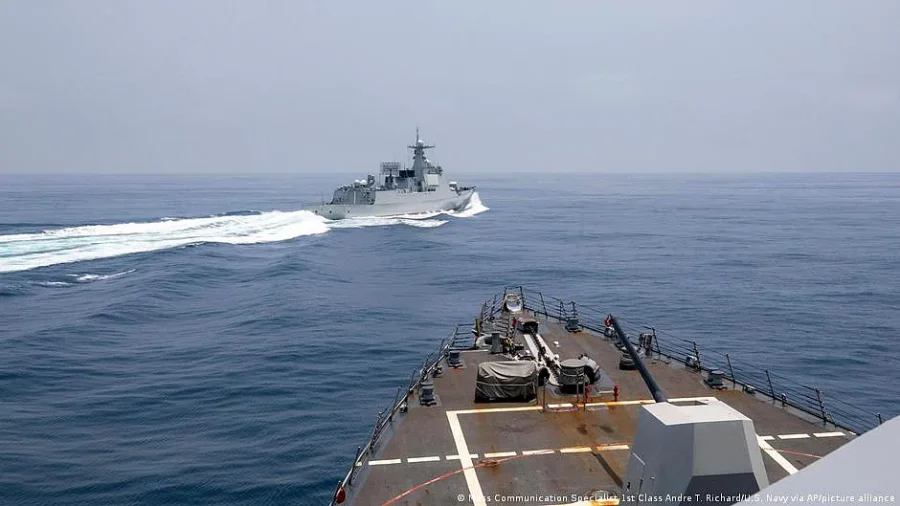
The Arabian Sea became the stage for a dangerous encounter between two nuclear-armed neighbours this week. An Indian Navy ship and a Pakistan Navy vessel collided in international waters — and New Delhi's response was swift and sharp.
On Wednesday, India summoned Pakistan's Charge d'Affaires in New Delhi, lodging what the Ministry of External Affairs called a "strong protest" over the "unacceptable and unprofessional conduct" of Pakistani naval units at sea.
What Exactly Happened in the Arabian Sea
According to the MEA, a Pakistan Navy vessel collided with an Indian Navy ship in international waters. The incident, described as a result of "unprofessional conduct," prompted India to formally summon Pakistan's top diplomat in the capital.
The Charge d'Affaires — Pakistan's senior-most diplomatic representative in India in the absence of a full ambassador — was called to the Ministry of External Affairs and handed India's protest directly.
Why This Collision Matters Beyond the Headlines
This is not just a maritime mishap. A collision between naval vessels of two countries with a history of conflict carries serious implications — for military safety, regional stability, and the fragile diplomatic channels that still exist between them.
The Arabian Sea is a critical waterway for global trade and energy shipments. Any military incident there risks escalation, miscalculation, or unintended confrontation.
How India Framed Its Protest
India's message was direct: Pakistan must ensure its military units exercise due care at sea and respect relevant bilateral agreements meant to prevent such incidents.
The MEA said the Pakistani diplomat was asked to convey this to authorities in Islamabad. The phrasing — "unacceptable and unprofessional" — signals that India views this not as an accident, but as a lapse in conduct.
Who Is Affected — and Why It Matters to Real People
While the incident involved naval vessels, its ripple effects reach beyond the military. Fishermen operating in the Arabian Sea, merchant shipping crews, and coastal communities depend on predictable maritime behaviour from all navies in the region.
For ordinary Indians and Pakistanis, the incident is a reminder of how quickly tensions between the two countries can resurface — even in domains like the sea, where established protocols are meant to prevent exactly this kind of collision.
Pakistan's Response — and What We Don't Know Yet
As of now, Pakistan has not issued a public statement on the incident or India's protest. It remains unclear whether Islamabad will acknowledge the collision, dispute India's account, or propose de-escalatory measures.
Details about the extent of damage to either vessel, the number of personnel involved, or the exact location of the collision have not been officially disclosed by either side.
Confirmed Facts vs What Remains Unclear
Confirmed: India summoned Pakistan's Charge d'Affaires. A protest was lodged. The MEA described the conduct as "unacceptable and unprofessional." The collision occurred in international waters in the Arabian Sea.
Unclear: The exact time and coordinates of the collision. Whether there were injuries or casualties. The nature and extent of damage to either ship. Whether any pre-existing agreement was specifically invoked. Pakistan's official position.
Any claims beyond what the MEA has stated should be treated as unverified until confirmed by official sources.
The Bigger Picture: A Pattern of Maritime Friction
India and Pakistan have longstanding maritime boundary disputes and a history of naval tensions, particularly since the 1971 war. Both countries are signatories to certain bilateral agreements aimed at preventing incidents at sea, though the effectiveness of these mechanisms is now in question.
This collision — and India's decision to summon a diplomat rather than escalate militarily — suggests New Delhi is currently choosing the diplomatic route. But the incident underscores how quickly a single encounter can reignite broader tensions.
What Should Readers and Stakeholders Watch For
For now, the key indicators will be: whether Pakistan responds officially, whether both sides agree to a joint investigation or review, and whether any military-to-military communication channels are activated to prevent recurrence.
For those tracking India-Pakistan relations, this incident is a reminder that even without active conflict, the potential for dangerous encounters remains high — especially in shared maritime spaces.
What Could Happen Next
If Pakistan acknowledges the incident and commits to reviewing its naval protocols, the situation may de-escalate quickly. If Islamabad disputes India's account or remains silent, diplomatic friction could persist.
Either way, the incident has already added a new layer of strain to an already fraught relationship — and the coming days will reveal whether both sides can keep the situation contained.
Our Take
This is a story about more than a collision. It is about the thin line between routine military presence and dangerous miscalculation in one of the world's most volatile regions. India's decision to summon Pakistan's diplomat — rather than issue a public military statement — signals a preference for diplomatic channels. But the incident also exposes how fragile those channels remain. The real test will be whether both countries can turn this into a moment for reinforcing maritime safety protocols, or whether it becomes another flashpoint in a long history of mistrust.
Frequently Asked Questions
What happened between the Indian Navy and Pakistan Navy in the Arabian Sea?
An Indian Navy ship and a Pakistan Navy vessel collided in international waters in the Arabian Sea. India's Ministry of External Affairs described the incident as resulting from "unacceptable and unprofessional conduct" by Pakistani naval units.
Why did India summon Pakistan's Charge d'Affaires?
India summoned Pakistan's Charge d'Affaires to lodge a formal protest and to ask Pakistan to ensure its military units exercise due care at sea and respect bilateral agreements aimed at preventing such incidents.
Has Pakistan responded to India's protest?
As of now, Pakistan has not issued a public response to India's protest or acknowledged the collision. The situation remains diplomatically open.
Where exactly did the collision take place?
The collision occurred in international waters in the Arabian Sea. The exact coordinates and time have not been officially disclosed by either side.