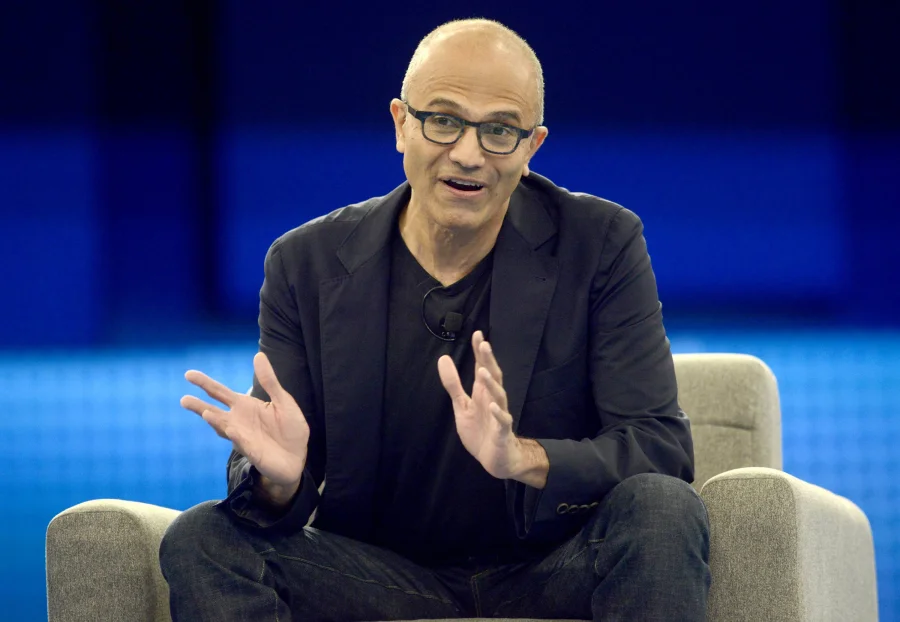
The world’s most powerful tech leaders are no longer whispering about AI risks — they are shouting. Microsoft CEO Satya Nadella has publicly backed Palantir CEO Alex Karp’s stark warning that artificial intelligence, left unchecked, could spiral into an existential threat. This is not a fringe dystopian fantasy. It is a rare moment of alignment between two titans who rarely agree on anything.
What exactly did Nadella and Karp warn about?
Alex Karp, the famously outspoken CEO of Palantir Technologies, has long argued that AI development is outpacing humanity’s ability to control it. He has warned that without immediate, binding regulation, AI could be weaponized, destabilize economies, or cause irreversible harm. Now, Satya Nadella — the man steering Microsoft’s massive investment in OpenAI — has effectively said: he is right.
Why this moment matters for every Indian reader
India is the world’s second-largest internet market and a major hub for AI development. Indian IT firms, startups, and government agencies are racing to deploy AI in healthcare, agriculture, banking, and education. If the CEOs of Microsoft and Palantir are worried, Indian policymakers and business leaders cannot afford to ignore the warning. The stakes are not abstract — they involve jobs, privacy, national security, and even democratic processes.
The timeline of a growing alarm
The warning did not emerge overnight. In March 2023, over 1,000 AI researchers and tech leaders, including Elon Musk and Steve Wozniak, signed an open letter calling for a six-month pause on training AI systems more powerful than GPT-4. Karp has been a consistent voice since then. Nadella’s recent endorsement marks a significant escalation — a mainstream tech CEO publicly validating a more controversial peer’s stance.
Who is affected and how real people feel it
For the average person, the AI warning translates into very real anxieties: Will my job be automated? Can I trust AI-generated news or medical advice? Will deepfakes destroy trust in video evidence? Parents worry about children interacting with AI chatbots. Workers fear displacement. Voters worry about manipulated elections. Nadella and Karp are not speaking to boardrooms alone — they are speaking to every household that uses a smartphone.
What Microsoft and Palantir are saying officially
Neither company has issued a joint statement. The alignment is based on Nadella’s public remarks and interviews where he echoed Karp’s concerns. Microsoft has its own AI safety principles, including responsible AI frameworks, but critics argue these are voluntary and lack enforcement. Palantir, known for its work with intelligence agencies, has called for government-led oversight, not corporate self-regulation.
Why this warning carries weight now
The timing is critical. Generative AI tools like ChatGPT, Gemini, and Copilot are being integrated into everything from customer service to legal research. The speed of adoption has outstripped the speed of regulation. When two CEOs who compete in the same space agree on a danger, it signals that the risk is not theoretical — it is operational. Nadella’s backing gives Karp’s warning institutional credibility it previously lacked.
Confirmed facts vs what remains unclear
Confirmed: Nadella has publicly supported calls for stronger AI regulation and has acknowledged existential risks. Karp has repeatedly warned about AI’s potential for catastrophic misuse. Both CEOs have urged governments to act. Unclear: Whether this alignment will translate into concrete policy changes. The specific timeline for any new regulations remains uncertain. It is also unclear if other major tech CEOs like Sundar Pichai (Google) or Sam Altman (OpenAI) will join this chorus.
What makes Microsoft and Palantir different from other AI players
Microsoft’s moat lies in its deep integration of AI into enterprise products (Azure, Office, GitHub) and its partnership with OpenAI. Palantir’s moat is its government and defense contracts, where AI is used for surveillance, logistics, and decision-making. Both companies have skin in the game — but they also have the most to lose if AI goes wrong. Their warning is not altruistic; it is also self-preservation.
Risks and the other side of the argument
Critics argue that Nadella and Karp’s warnings are self-serving — designed to shape regulation in ways that favor incumbents over startups. Some AI researchers believe the existential risk narrative is overblown and distracts from more immediate harms like bias, misinformation, and job displacement. Others point out that both Microsoft and Palantir continue to deploy AI aggressively, raising questions about their sincerity. The debate is far from settled.
A wider pattern: tech leaders turning cautious
This is not an isolated incident. In 2023, the “Godfather of AI” Geoffrey Hinton quit Google to warn about AI risks. Elon Musk co-founded xAI partly to build a “safe” AI. The pattern is clear: the people building AI are now the ones most afraid of it. Nadella and Karp’s alignment fits into a broader shift from techno-optimism to techno-caution.
What readers, students, and professionals should do now
For students and professionals in tech: stay informed about AI ethics and regulation. For investors: watch for regulatory signals that could impact AI stocks. For everyday users: be skeptical of AI-generated content, verify sources, and understand how your data is used. For policymakers: the message is clear — waiting is no longer an option.
What happens next
The most likely near-term outcome is increased political pressure. US Congress may hold hearings. The EU AI Act, already in progress, could gain momentum. India’s Ministry of Electronics and IT may release new guidelines. However, meaningful global regulation remains years away. The warning has been sounded — whether the world listens is the open question.
Our Take
This is a pivotal moment. When two of the most influential CEOs in the world agree on a danger, it moves the conversation from “if” to “how fast.” The real test will be whether their words translate into action — both from their own companies and from governments. For now, the warning is clear: AI is not a toy, and the time to act is now. The Indian audience, in particular, should pay close attention, as the country’s AI ambitions could be shaped by these global debates.
Frequently Asked Questions
What exactly did Microsoft CEO Satya Nadella say about AI?
Satya Nadella publicly endorsed Palantir CEO Alex Karp’s warning that unregulated AI poses existential risks. He has called for stronger government oversight and responsible AI development, though he has not proposed specific policies.
Why is Palantir CEO Alex Karp warning about AI?
Alex Karp has warned that AI development is outpacing humanity’s ability to control it, potentially leading to catastrophic outcomes including weaponization, economic destabilization, and loss of human agency. He advocates for immediate, binding regulation.
How does this affect AI regulation in India?
India is a major AI hub. The warnings from global tech leaders could influence Indian policymakers to accelerate AI governance frameworks. Currently, India has no comprehensive AI law, but the government is working on a national AI strategy that includes ethical guidelines.
Is AI really an existential threat or is this exaggerated?
There is genuine debate. Some experts, including Geoffrey Hinton and Elon Musk, believe existential risk is real. Others argue that immediate harms like bias, misinformation, and job loss are more pressing. The alignment of Nadella and Karp adds weight to the existential risk camp, but the issue remains contested.