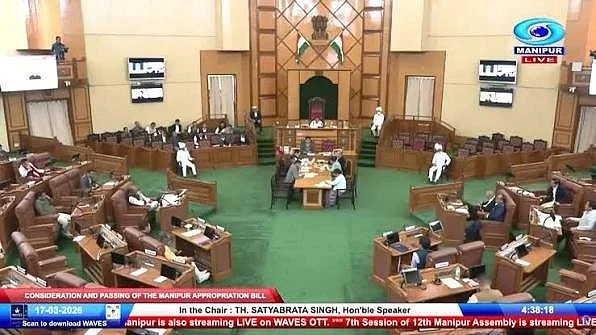
The Manipur Assembly has once again placed the National Register of Citizens (NRC) at the centre of its political discourse. On Wednesday, lawmakers adopted a fresh resolution urging the Centre to update the NRC in the state before the next Census is conducted. The move is not new — it is the third such demand since 2022 — but its persistence signals how deeply demographic anxieties are shaping the state's legislative agenda.
Why Manipur lawmakers are pressing for an NRC update before Census
The core concern driving the resolution is demographic change. Lawmakers argue that alleged illegal immigration from neighbouring Myanmar has altered the population balance in Manipur. By updating the NRC before the Census, they believe the state can establish a clearer picture of who legally belongs — a step they describe as vital for both Manipur and the nation.
Speaker Th Satyabrata Singh said the House reaffirmed its earlier resolutions passed on August 5, 2022, and March 1, 2024. The repetition is deliberate — it keeps the issue alive at the central level and signals that the Assembly will not let the matter fade quietly.
The backstory: Three resolutions, one persistent demand
The first resolution came in August 2022, when the Assembly initially urged the Centre to update the NRC in Manipur. A second followed in March 2024, reinforcing the same demand. Wednesday's resolution marks the third time the House has formally pressed the issue.
This pattern suggests a coordinated, long-term legislative strategy rather than a reactive response to a single event. Each resolution builds on the last, creating a documented record of the Assembly's position that the Centre cannot easily overlook.
Who is affected and why this matters beyond Manipur
The NRC is not just a Manipur issue — it carries national implications. A nationwide NRC update has been discussed at various levels, and Manipur's repeated resolutions add pressure on the central government to clarify its stance. For residents of border states, the question of citizenship is not abstract; it affects access to land, resources, and political representation.
For the Kuki-Zo and Meitei communities, who have been at the centre of ethnic tensions in the state, demographic questions are deeply sensitive. Any central action on the NRC would likely have profound consequences for inter-community relations and the ongoing conflict dynamics in Manipur.
What the Speaker's statement tells us
Speaker Th Satyabrata Singh's remarks were measured but firm. He said the House reaffirmed its previous resolutions "in the interests of the state in particular and the nation in general." The phrasing is significant — it frames the NRC demand not as a regional concern but as a matter of national importance.
The reference to earlier resolutions also serves a procedural purpose. By formally reaffirming previous stands, the Assembly ensures that its position remains on record, regardless of changes in political leadership or central government priorities.
Reading between the lines: What is really driving this push
The resolution must be understood against the backdrop of Manipur's ongoing ethnic violence, which began in May 2023. Demographic fears have been a recurring theme in the conflict, with different communities expressing anxieties about population shifts. The NRC demand is, in many ways, an institutional response to those fears.
However, it is important to note that the resolution does not provide specific data on illegal immigration. The claims of demographic change rest on reported concerns rather than publicly cited statistics. This is a point of contention — supporters see the NRC as a necessary safeguard, while critics question both the feasibility and the potential consequences of such an exercise in a state already fractured along ethnic lines.
Confirmed facts vs what remains unclear
What is confirmed: The Manipur Assembly passed a resolution on Wednesday urging the Centre to update the NRC before the Census. This is the third such resolution, following those of August 2022 and March 2024. Speaker Th Satyabrata Singh made the announcement publicly.
What remains unclear: The Centre's response to these resolutions has not been detailed. The timeline for the next Census has not been officially confirmed. And the specific demographic data underpinning the lawmakers' concerns has not been made public. Claims about illegal immigration from Myanmar remain allegations raised in the Assembly, not established findings.
The wider pattern: Border states and the citizenship question
Manipur is not alone in raising citizenship concerns. Other northeastern states, including Assam, have grappled with NRC-related debates. Assam conducted its own NRC update, which was published in 2019 and excluded over 19 lakh applicants — a process that sparked widespread controversy and legal challenges.
Manipur's repeated resolutions suggest that lawmakers in the state are watching Assam's experience closely. They see the NRC as a tool to address demographic anxieties, but the Assam example also highlights the administrative complexity and social disruption such exercises can cause.
What should residents and observers watch for now
For residents of Manipur, the immediate takeaway is that the Assembly has kept the NRC issue firmly on the political agenda. The next steps depend largely on the Centre — whether it acknowledges the resolution, initiates any consultation process, or clarifies the timeline for the Census.
For observers, the key signals to watch are: any central government response to the resolution, announcements about Census scheduling, and whether the NRC demand becomes a factor in future political mobilisation in the state. The ethnic conflict in Manipur remains unresolved, and any citizenship-related development could influence its trajectory.
What could happen next
The resolution now rests with the Centre. Possible outcomes include a formal response from the Union government, a parliamentary discussion, or a quiet deferral. The timing of the Census itself is a separate variable — if it is delayed, the NRC question may also be pushed back.
What is certain is that the Manipur Assembly has demonstrated its intent to keep pressing the issue. Whether the Centre acts on it — and how — will determine whether this third resolution becomes a turning point or simply another entry in a growing file.
Our Take
The Manipur Assembly's persistence on the NRC reflects a deeper reality: demographic anxiety is not fading in the state. Three resolutions in three years show that this is not a passing political gesture but a sustained legislative priority. At the same time, the absence of public data on illegal immigration means the debate remains driven more by perception than by verifiable evidence.
The Centre now faces a delicate balancing act. Ignoring the resolution risks deepening alienation in Manipur. Acting on it without a clear, consultative framework could inflame tensions in a state already scarred by conflict. The NRC question in Manipur is not merely an administrative matter — it is a test of how India manages citizenship, identity, and border security in its most fragile regions.
Frequently Asked Questions
What is the National Register of Citizens (NRC)?
The NRC is a register containing names of Indian citizens. In Manipur's context, the Assembly is urging the Centre to update this register to identify genuine citizens and address concerns over alleged illegal immigration from Myanmar.
Why does the Manipur Assembly want the NRC updated before the Census?
Lawmakers believe that updating the NRC before the Census will provide an accurate demographic picture of the state. They argue that alleged illegal immigration has changed the population balance, and an updated NRC would help establish who is legally entitled to reside in Manipur.
How many times has the Manipur Assembly passed such a resolution?
This is the third such resolution. The earlier ones were passed on August 5, 2022, and March 1, 2024. Wednesday's resolution formally reaffirmed both previous stands.
What happens after the Assembly passes this resolution?
The resolution is forwarded to the central government for consideration. The Centre may respond formally, initiate discussions, or defer action. The timeline for the next Census and any NRC update has not been officially announced.